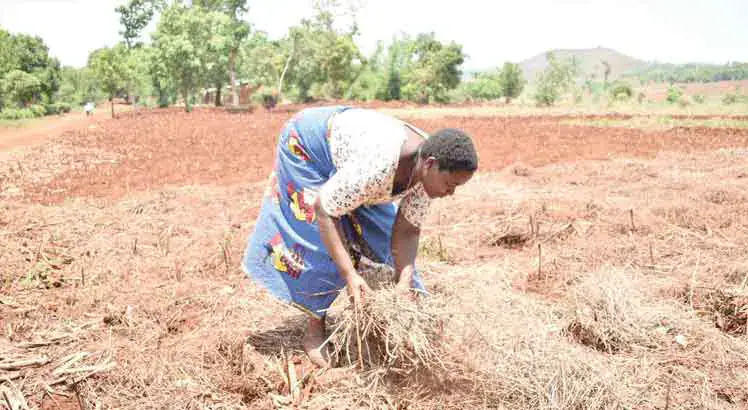
In Mulanje, Malawi, farmers have begun adopting climate-smart agriculture practices to boost their crops' resilience to the impending El Nino effects. The Water and Soil Accelerator (Wasa) project, led by Catholic Relief Services (CRS), aims to support farmers in managing water and conserving land. Farmers have started preparing their fields to harvest rainwater and replenish soil fertility. This approach enables them to mitigate the potential impacts of El Nino on their crops.
Lead farmer Davie Thasa explained that nearly every field in Milonde Extension Planning Area has implemented water harvesting structures. These structures include check-dams, swales, and trenches, which help collect and store rainwater. Additionally, farmers are applying Mbeya manure to maintain soil moisture and fertility. Some farmers are also using pit planting as a strategy to enhance crop resilience. These efforts aim to ensure that crops thrive despite the challenges posed by El Nino.
Another farmer, Rose Lester, emphasized the importance of diversifying crops to enhance resilience. She mentioned that farmers are planting a mix of maize, beans, cassava, and sweet potato. This approach allows them to hedge their bets, as one or two crops may perform better during El Nino. By diversifying their crops, farmers can reduce their reliance on a single crop and minimize potential losses.
Catholic Relief Services' land restoration technical advisor, Juma Masumba, expressed the organization's commitment to supporting farmers. He stated that CRS is working with farmers to implement water management and land conservation activities on a large scale. The Wasa project, implemented by a CRS-led consortium, aims to enhance farmers' resilience to climate change. The project also involves the International Water Management Institute, Mwapata Institute, Churches Action in Relief and Development, and Illovo Sugar (Malawi) plc.
The Wasa project focuses on promoting climate-smart agriculture practices among farmers. By adopting these practices, farmers can improve their crop yields and reduce their vulnerability to climate-related shocks. The project's efforts aim to contribute to Malawi's agricultural development and enhance food security.
The implementation of climate-smart agriculture practices in Mulanje is crucial, given the region's vulnerability to climate change. El Nino events can have devastating impacts on crops, leading to food insecurity and economic losses. By supporting farmers in adopting climate-resilient practices, the Wasa project can help mitigate these impacts and promote sustainable agriculture.
The project's success will depend on its ability to scale up climate-smart agriculture practices among farmers. With the support of organizations like CRS and the International Water Management Institute, farmers in Mulanje can enhance their resilience to climate change. This, in turn, can contribute to Malawi's overall agricultural development and food security.
Key points
- Farmers in Mulanje are adopting climate-smart agriculture practices to enhance crop resilience to El Nino effects.
- The Water and Soil Accelerator (Wasa) project, led by Catholic Relief Services, aims to support farmers in managing water and conserving land.
- The project promotes practices such as water harvesting, soil conservation, and crop diversification to enhance farmers' resilience to climate change.