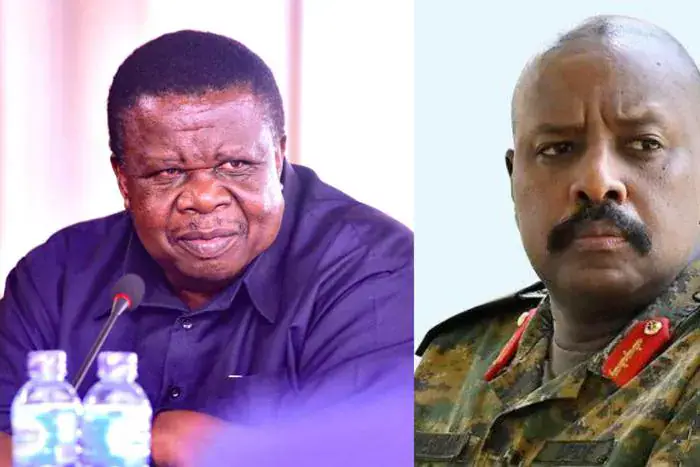
Uganda's Chief of Defence Forces, Gen Muhoozi Kainerugaba, has sparked a fresh political debate after issuing a warning to veteran politicians, commonly known as NRM historicals, to stop making public statements. In a post on his official X account, Muhoozi expressed frustration with the group, including Dr Kizza Besigye, and announced that they were forbidden from making public statements. He stated that anyone who ignores his directive will face punishment.
The affected politicians, including former Internal Affairs Minister Gen Kahinda Otafiire and government spokesperson Ofwono Opondo, have previously been involved in public political discussions. Muhoozi's statement proposed that they direct their concerns to his uncle, Gen Salim Saleh, who would receive their complaints and communicate them to him. This move has raised questions about the relationship between the younger generation of leaders and veteran figures within Uganda's political establishment.
The NRM historicals, veteran members who participated in the political and military struggle that brought the National Resistance Movement to power in 1986, have over the years publicly raised concerns about leadership, accountability, and the direction of the ruling party and the country's political future. Muhoozi's warning has brought renewed attention to the right of politicians and other citizens to express their views and raise concerns publicly.
Although Muhoozi threatened punishment for those who defy his directive, he did not explain what form the punishment would take or identify any legal authority behind the proposed restriction. His statement was a social media declaration, and no formal government or legal order implementing the ban was announced. This has sparked concerns about the implications of the ban on free speech and the country's democratic space.
The ban has drawn attention to the relationship between the ruling party and its historical figures, who have been critical of the party's leadership and direction. Dr Kizza Besigye, a former close associate of President Yoweri Museveni, has become one of his most prominent political opponents. The move has also raised questions about the role of the military in politics and the limits of free speech in Uganda.
The directive has sparked a mixed reaction, with some questioning the legitimacy of the ban and others supporting Muhoozi's move to silence the veteran politicians. The incident has highlighted the tensions within Uganda's political establishment and the challenges facing the country's democratic development. As the situation unfolds, many will be watching to see how the ban is enforced and its implications for Uganda's politics.
The development has significant implications for Uganda's democratic space, particularly in regards to free speech and the role of the military in politics. The international community and human rights organizations have been monitoring the situation closely, and many are concerned about the potential erosion of democratic freedoms in Uganda. The ban's effectiveness and the consequences of Muhoozi's directive remain to be seen.
Key points
- Gen Muhoozi Kainerugaba has ordered NRM historicals to stop making public statements, warning of punishment for those who disobey.
- The ban has sparked concerns about free speech and the country's democratic space.
- The move has highlighted tensions within Uganda's political establishment and the challenges facing the country's democratic development.