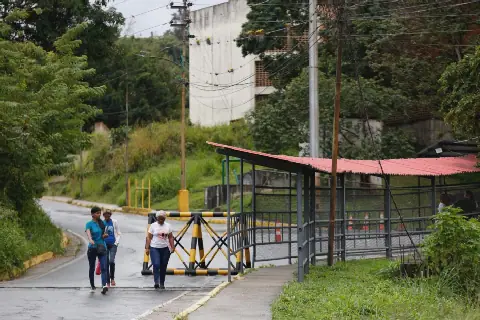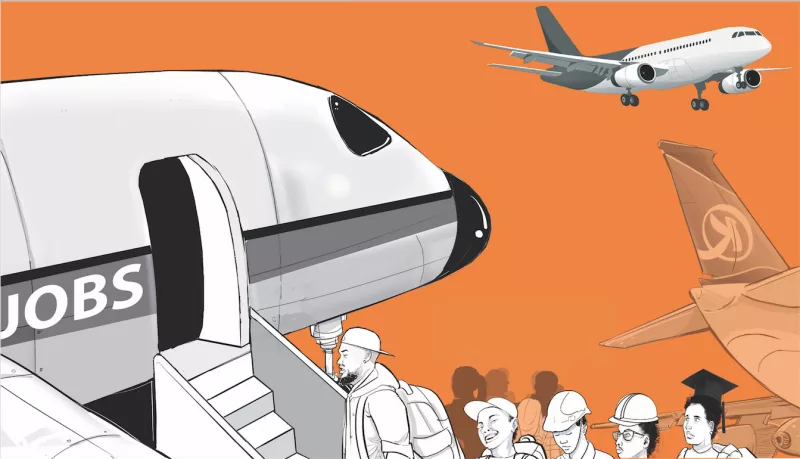
The issue of human movement across borders has been a persistent phenomenon throughout history. As the world becomes increasingly interconnected, people are moving from one place to another in search of better opportunities, education, and a more peaceful life. The author, Collins Mudogo, recounts his personal experience of attempting to cross the border from Kenya to a neighboring country, only to face numerous challenges, including bureaucratic hurdles and harassment by authorities.
Mudogo notes that human movement is not a new phenomenon, citing biblical examples such as Abraham and the Israelites. He also references the concept of the "global village" coined by Marshall McLuhan in the 1960s, which describes a world where people from different parts of the globe are connected through the sharing of information, ideas, and culture. The increasing ease of movement and communication has led to a surge in cross-border interactions, making it imperative for governments to rethink their approach to border management.
The author argues that governments should invest in technology and data systems to make borders smarter, safer, and more responsive. Such systems would enable individuals to register their details, while governments securely collect and store information on citizens, visitors, their movements, and activities. This would facilitate better coordination across borders, particularly in cases of cross-border pandemics or crime.
Mudogo suggests that with the help of technology, governments can deal with the sudden panic about neighbors crossing borders. He cites the example of a power-wielding government minister who approached him and his friend at a hotel, only to warm up to them after being briefed on their activities. The author emphasizes that humans will continue to move across borders for various reasons, including population growth, land shortages, internal conflicts, and the search for fertile grounds to thrive.
The concept of globalization, popularized by Theodore Levitt in 1983, refers to a world where national borders are becoming less restrictive to the flow of people, goods, services, money, technology, and ideas. However, in 2026, governments are still grappling with the issue of border control, often asking their citizens and those of neighboring countries not to cross borders. Mudogo argues that this approach is outdated and that governments should focus on building better systems to manage human movement.
The author emphasizes that investing in technology and data systems is crucial for making borders smarter, safer, and more responsive. This would enable governments to track relevant individuals, contacts, and activities across borders, particularly in cases of cross-border pandemics or crime. Mudogo notes that this approach would require appropriate data protection safeguards to ensure the secure collection and storage of information.
In conclusion, Mudogo argues that humans will continue to cross borders, and it is up to governments to build better systems to manage this phenomenon. By investing in technology and data systems, governments can make borders smarter, safer, and more responsive, ultimately facilitating a more harmonious and secure global village. The author, a Postdoctoral Fellow, provides a nuanced perspective on the issue of human movement and border management.
Key points
- Governments should invest in technology and data systems to make borders smarter, safer, and more responsive.