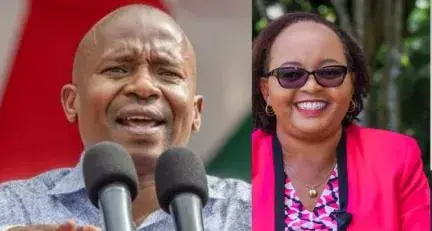
The race for President William Ruto's running mate in the 2027 general election has sparked a contest between Mt Kenya East and Mt Kenya West leaders. Deputy President Kithure Kindiki is seeking to retain his position, while influential politicians from Mt Kenya West, including Kirinyaga Governor Anne Waiguru, Ndia MP George 'GK' Kariuki, and Laikipia East MP Mwangi Kiunjuri, are positioning themselves for the role. This development has exposed a growing political battle between the two blocs.
Mt Kenya West leaders argue that their region deserves another opportunity to occupy the country's second-highest executive office, citing their numerical advantage in voter registration. According to the Independent Electoral and Boundaries Commission (IEBC), Mt Kenya West had approximately 3.1 million registered voters in the 2022 General Election, which has since grown to about 3.3 million. In contrast, Meru, Embu, and Tharaka-Nithi counties in Mt Kenya East had a combined 1,338,373 registered voters in 2022, with provisional IEBC figures for July 2026 placing their combined voter population at 1,570,518.
Mt Kenya East leaders, however, maintain that Kindiki's elevation to the Deputy Presidency was a recognition of the region's political contribution to Ruto's 2022 victory. They argue that removing him would undermine the political understanding that brought the two sides together. Tigania West MP John Mutunga has been vocal in defending Kindiki, warning that Mt Kenya East will not surrender the position without a fight. Mutunga emphasized the importance of massive voter registration in 2027 to secure the Deputy President's seat.
Kindiki has made it clear that he is not prepared to entertain discussions suggesting that his position is available for political redistribution. In August, he dismissed politicians positioning themselves to replace him, insisting that the Deputy Presidency was occupied and that he remained firmly in charge. Kindiki also challenged his Mt Kenya West counterparts to allow their Mt Kenya East neighbours to enjoy their moment in the country's political leadership.
The Deputy President's position received a significant endorsement on August 15 when more than 30,000 elders gathered at Nembure Grounds in Manyatta, Embu County, and declared their support for his continued stay in office. The elders argued that Mt Kenya East had supported leaders from Mt Kenya West for decades and deserved reciprocal political solidarity. This development introduced another dimension to the contest: Kindiki's potential long-term presidential ambitions.
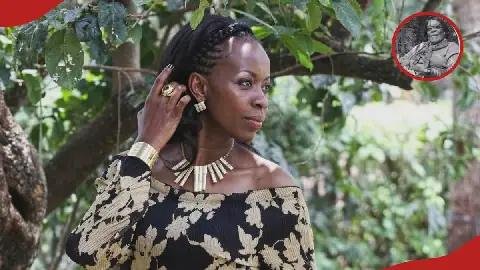
Waiguru believes her administrative experience, political networks, and gender give her a compelling case for consideration. On October 13, she declared her intention to push for women's representation in the country's highest decision-making table, including the Deputy Presidency. Waiguru challenged the assumption that women were less qualified than men to occupy powerful political positions, citing her ability to mobilize and speak.
As the contest for Ruto's running mate continues, leaders from both Mt Kenya East and West are positioning themselves for the role. Kariuki argues that Kirinyaga's geographical location between Mt Kenya East and West gives him an advantage in bridging the emerging regional divisions. Kiunjuri maintains that he is also a potential candidate, with a strong connection to the region. The outcome of this contest will have significant implications for the 2027 general election and the balance of power in the country.
Key points
- Mt Kenya East and West leaders are vying for President Ruto's running mate position in 2027.
- Deputy President Kithure Kindiki faces challenge from influential politicians from Mt Kenya West.
- The contest has sparked a growing political battle between the two blocs, with implications for the 2027 general election.