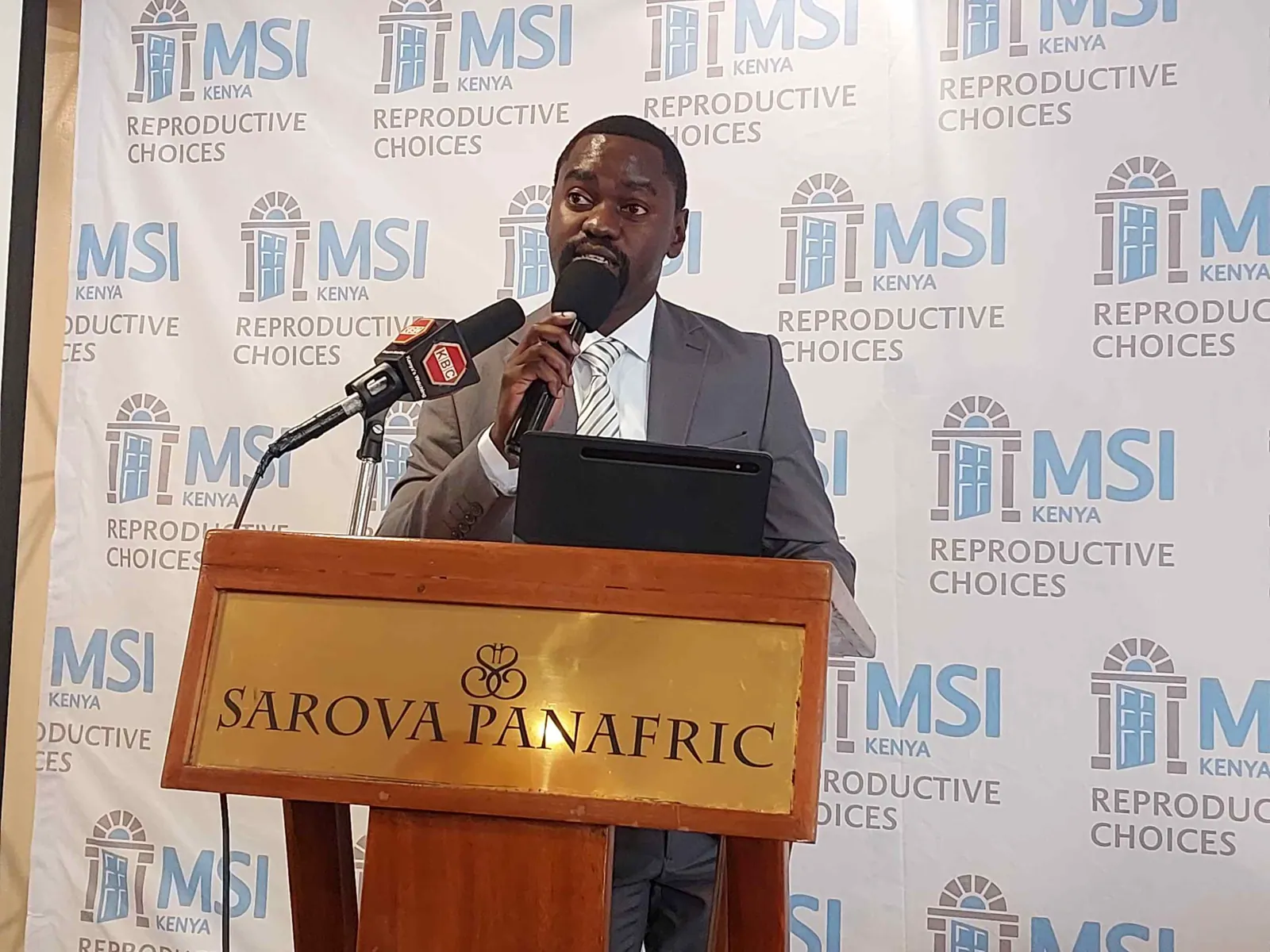
MSI Reproductive Choices Kenya is calling for increased investment in contraceptive supplies as the world prepares to mark World Contraception Day on September 26, 2026. The organisation says access to contraception gives women and girls greater control over their health, bodies and future, while helping them stay in school, pursue careers and plan their families.
According to MSI Kenya, global contraceptive supplies are coming under increasing pressure, with existing stocks that have helped cushion the impact of funding cuts now running low. The organisation warns that the situation could worsen following the collapse of USAID and funding reductions by other governments. This could leave millions more women without access to contraception.
Dr Walter Obita, Country Director of MSI Reproductive Choices Kenya, said World Contraception Day should be used to highlight both the benefits of reproductive choice and the need for sustained investment. He emphasised that celebration must go hand in hand with action to recognise the essential role that contraception plays in protecting health, expanding opportunities and supporting women to thrive.
MSI Kenya is urging governments and donors to increase funding for contraceptive supplies, address the growing global demand and help close the funding gap. The organisation says sustained investment is necessary to ensure women and families can access contraception and make informed decisions about their reproductive health.
Kenya has made significant progress in reproductive health, with more than 6.4 million women using modern contraceptives by 2024, according to the Ministry of Health. The government says this helped avert 2.4 million unintended pregnancies and prevent more than 602,000 unsafe abortions, highlighting the impact of family planning on women, girls and families.
The Kenyan government has set commitments to increase the modern contraceptive prevalence rate among married women from 57 percent to 64 percent by 2030 and reduce the unmet need for family planning among all women from 14 percent to 10 percent. The commitments also seek to ensure sustained availability of family planning commodities, including at the last mile, while strengthening the capacity of health workers to provide accurate information and services.
Kenya also aims to reduce adolescent pregnancy among girls aged 15 to 19 from 15 percent to 10 percent, transform social and gender norms to encourage greater male engagement, remove cultural barriers to family planning, and improve the availability and use of quality data for decision-making. The government has further committed to increasing domestic financing to fully cover family planning commodity needs by 2026, from the current allocation of 30 million US dollars.
Key points
- MSI Reproductive Choices Kenya is calling for increased investment in contraceptive supplies to address the growing global demand and help close the funding gap.
- Kenya has made significant progress in reproductive health, with more than 6.4 million women using modern contraceptives by 2024.
- The Kenyan government has set commitments to increase the modern contraceptive prevalence rate among married women from 57 percent to 64 percent by 2030.