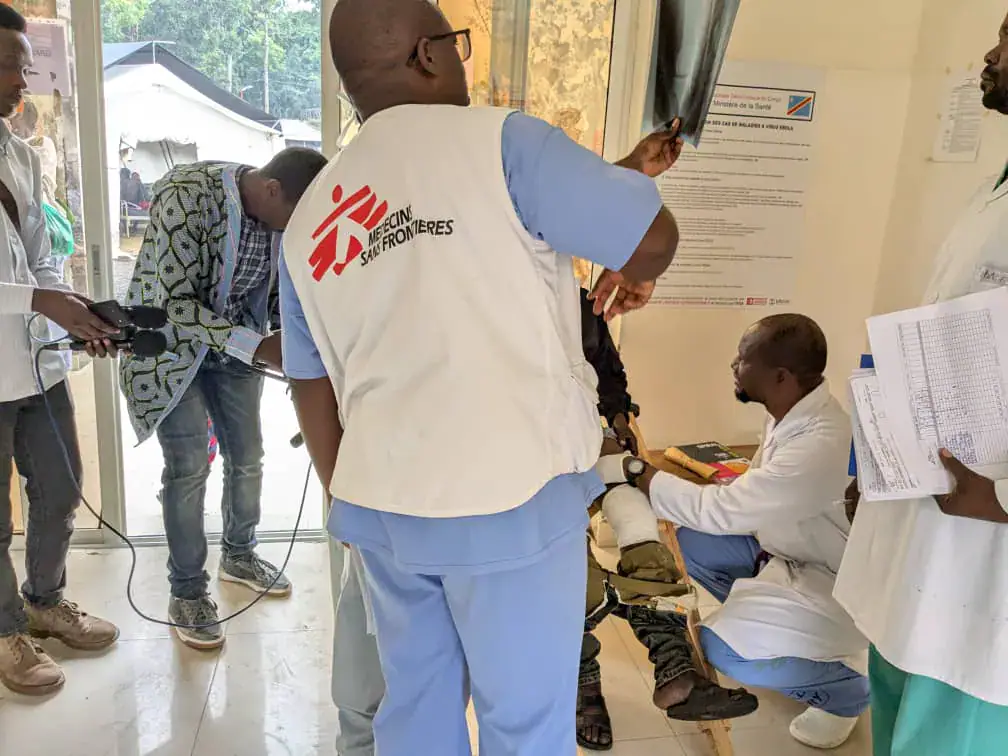
Médecins Sans Frontières (MSF) has expressed concerns over the effectiveness of the Ebola response in the Democratic Republic of Congo, six months after the outbreak began. Despite significant funding, MSF says efforts have been insufficient, citing a persistent gap between announced funds and actual resources available on the ground. According to MSF, frontline structures continue to face significant logistical and operational shortages.
MSF has identified several major dysfunctions hindering the fight against the epidemic. These include unqualified or unpaid health workers, ambulances immobilized due to lack of fuel, and a chronic shortage of epidemiological surveillance teams in affected areas. The organization also notes that a significant proportion of deaths occur directly within communities without prior care.
In addition to these challenges, MSF reports that some health centers in North Kivu and Haut-Uélé lack essential hygiene equipment, risking becoming contamination foci. The organization emphasizes that these issues must be addressed to effectively combat the epidemic. MSF's concerns highlight the need for a more effective response to the outbreak.
MSF is urging Congolese authorities and their partners to strengthen control over resource allocation. The organization believes that ensuring financial aid translates into tangible support on the ground is crucial to halting the virus's spread and saving lives. This call for action comes as the epidemic continues to pose a significant threat to public health.
The situation on the ground remains dire, with communities and health centers facing significant challenges in responding to the outbreak. MSF's critique underscores the importance of a well-coordinated response to the epidemic. By addressing these issues, authorities can improve the effectiveness of their efforts to combat Ebola.
To achieve this, MSF recommends that authorities prioritize transparency and accountability in resource allocation. This includes ensuring that funds are used efficiently and that resources are allocated effectively to support frontline response efforts. By doing so, authorities can help to build trust and confidence in the response to the epidemic.
The response to the Ebola outbreak in the Democratic Republic of Congo requires a concerted effort from authorities, partners, and the international community. MSF's call for greater efficiency and transparency highlights the need for a more effective response to the epidemic. By working together, stakeholders can help to bring the outbreak under control and save lives.
Key points
- MSF criticizes the Ebola response efforts in the DRC for being insufficient despite significant funding.
- The organization cites several major dysfunctions, including unqualified health workers and a lack of essential equipment.
- MSF urges authorities to strengthen control over resource allocation to ensure that financial aid translates into tangible support on the ground.