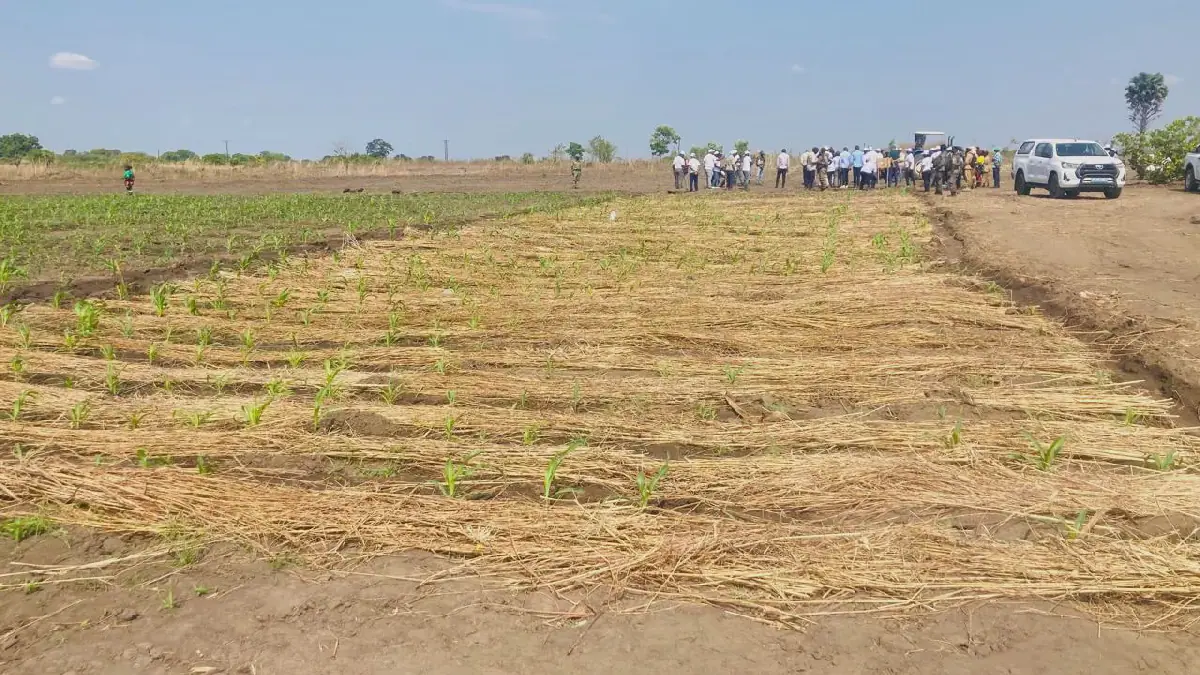
Farmers in Cabo Delgado, Mozambique, are advocating for new techniques to minimize the effects of El Niño on agricultural production. The proposed methods include using dead grass cover, installing greenhouses, and building small dams or reservoirs to collect and store water. These solutions were presented at the launch of the 2026/2027 Agricultural Campaign in the village of Tauane, Balama district. The techniques aim to help farmers adapt to adverse climate conditions and sustain agricultural production.
The use of dead grass cover, also known as mulch, can help conserve soil moisture, while greenhouse production reduces crops' direct exposure to solar radiation. Farmers also suggest building dams or reservoirs to collect and store water for irrigation and livestock watering. These measures are expected to enhance the resilience of farmers in Cabo Delgado and contribute to the continuity of agricultural production in the province.
The proposals were made in response to the challenges posed by El Niño, a climate phenomenon that affects agricultural production in the region. By adopting these techniques, farmers in Cabo Delgado aim to reduce their vulnerability to climate-related shocks and improve their overall productivity. The agricultural campaign, which was launched in Tauane, brings together farmers, policymakers, and other stakeholders to discuss the challenges and opportunities in the sector.
The Mozambican government and its partners have been working to support farmers in Cabo Delgado and other regions affected by El Niño. The launch of the agricultural campaign is part of these efforts, which include providing training, extension services, and access to climate-resilient agricultural technologies. By promoting sustainable agricultural practices, the government aims to enhance food security and improve the livelihoods of rural communities.
Cabo Delgado is one of the provinces most affected by climate change in Mozambique. The region has experienced recurring droughts, floods, and other extreme weather events that have impacted agricultural production and the livelihoods of local communities. The adoption of climate-resilient agricultural techniques is critical to enhancing the resilience of farmers and promoting sustainable agricultural production in the region.
The agricultural sector is a significant contributor to Mozambique's economy, and efforts to promote sustainable agricultural practices are crucial to ensuring the country's food security and economic growth. The launch of the 2026/2027 Agricultural Campaign in Cabo Delgado is part of a broader effort to promote agricultural development and reduce poverty in rural areas.
The use of new techniques, such as dead grass cover and greenhouse production, can help farmers in Cabo Delgado adapt to changing climate conditions and improve their productivity. With the support of the government and its partners, farmers in the region can enhance their resilience and contribute to Mozambique's agricultural development and food security.
Key points
- Farmers in Cabo Delgado propose using dead grass cover, greenhouses, and small dams to mitigate El Niño effects on agriculture.