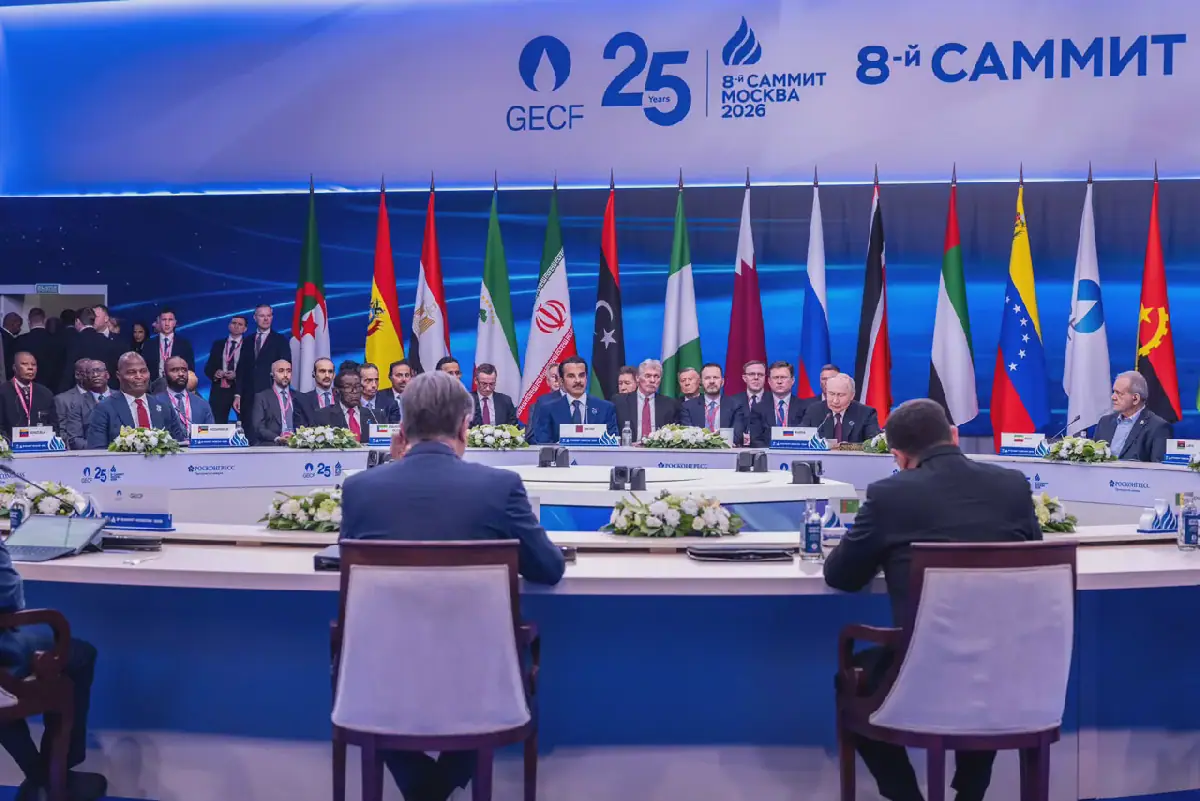
Mozambique's President Daniel Chapo has called for greater coordination between gas-producing and consuming countries to address growing global energy security challenges. Speaking at the 8th Summit of Heads of State and Government of the Gas Exporting Countries Forum (GECF) in Moscow, Chapo emphasized that energy security depends on stable markets, reliable suppliers, and trust among sector stakeholders. He stressed that no country can achieve energy security in isolation.
Chapo highlighted the importance of dialogue and concertation between producers and consumers to ensure that one country's energy sovereignty is not built at the expense of another's insecurity. He noted that energy is central to global security, economic stability, and development, and that natural gas must continue to contribute to global energy supply. The Mozambican President described gas as a strategic commodity that should be a bridge to understanding and prosperity between nations.
Africa has significant potential in the international gas market due to its existing reserves, but Chapo noted that millions of Africans lack access to electricity and modern cooking solutions. He emphasized that Africa cannot continue to illuminate other parts of the world while its own citizens remain in darkness. Mozambique has been exporting liquefied natural gas (LNG) from the Rovuma Basin since 2022 and aims to increase its export capacity to over 35 million tons per year through new projects.
Chapo highlighted Mozambique's long-standing supply of natural gas to regional countries, particularly South Africa, which has been ongoing for over two decades. He emphasized that the exploration of natural resources must be linked to internal economic transformation, with greater incorporation of added value, industrialization, and job creation. Mozambique aims to transition from an economy based on natural resource extraction and export to one that transforms these resources into added value and economic sovereignty.
The Mozambican President cited the example of Temane in Inhambane province, where natural gas is being harnessed to produce cooking gas and generate electricity through a 450-megawatt power plant. He stated that Mozambique intends to expand the use of natural gas in food production, industrial development, and creating opportunities for national companies, young people, and women. The country also aims to apply natural gas revenues to long-term development initiatives, including through the Sovereign Fund and economic diversification.
Chapo advocated for a fair and balanced approach to the energy transition, considering different country realities and allowing for the responsible use of natural gas alongside renewable energy sources. He outlined four priorities for Mozambique within the GECF: promoting a more stable and predictable international gas market, transferring technology and training national cadres, attracting investments for local resource transformation and job creation, and promoting a just energy transition.
In conclusion, Chapo reiterated Mozambique's willingness to deepen its participation in the GECF and develop new partnerships in technology, human resource training, and investment. He emphasized the importance of cooperation and collaboration among GECF member countries to address global energy challenges and promote sustainable development. Mozambique's participation in the GECF is expected to strengthen its position in the international gas market and promote energy security in the region.
Key points
- Mozambique aims to increase its gas export capacity to over 35 million tons per year through new projects.
- The country emphasizes the need for greater coordination between gas-producing and consuming countries to address global energy security challenges.
- Mozambique advocates for a fair and balanced approach to the energy transition, considering different country realities and allowing for the responsible use of natural gas alongside renewable energy sources.