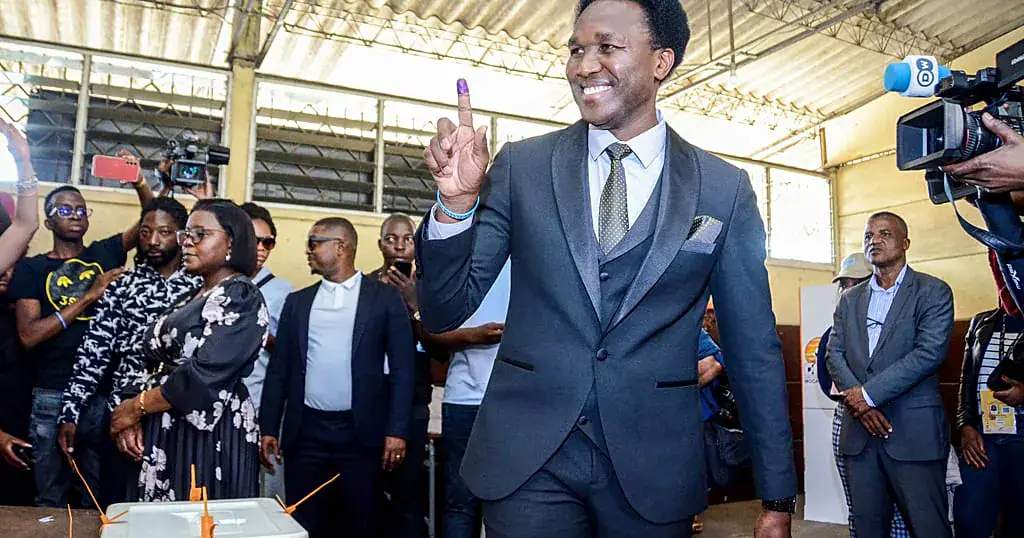
Mozambique's opposition leader Venancio Mondlane has gone on trial on terrorism charges, a case that has revived the bitter fallout from the disputed 2024 election. Mondlane, who heads the Anamola party, came second to President Daniel Chapo in the election, which international observers said was marred by irregularities. The trial, taking place at the Supreme Court in the capital Maputo, has raised concerns about the country's fragile political stability.
Mondlane's trial is a result of months of protests he led after the election, which were met with a violent security crackdown. At least 400 people were killed, according to civil society groups. Prosecutors have brought five charges against Mondlane, including instigation and incitement to terrorism, inciting collective disobedience, and glorifying crime and inciting criminal acts. If convicted on terrorism charges, he faces up to 24 years in prison.
The trial has significant implications for Mozambique's political landscape. Roads leading to the Supreme Court were sealed off or restricted, with police deployed around the building. The National Prison Service ordered all prisons onto combat readiness, redeploying guards from administrative posts to operational duties over fears of trouble erupting in prisons during the trial. A total of 36 witnesses are expected to testify, including 20 for the defence.
Mondlane has portrayed his prosecution as an attempt to silence dissent and turn him into a cautionary example for others who challenge the authorities. In a defiant Facebook address late on Monday, he said the message being sent is that people must remain silent and not challenge the regime. Mondlane, who is popular with the youth, insisted that his imprisonment would not defeat the cause he championed.
The 52-year-old Mondlane said he accepted the prospect of becoming an example, but insisted that his imprisonment would not defeat the cause he championed. He said all empires, dictatorships, and regimes have ultimately failed to prevail against the truth. A meeting between Mondlane and Chapo in March 2025 raised hopes of a political thaw, but Mondlane says he and his allies continue to face persecution.
The trial is expected to last for an uncertain period, with proceedings just beginning. Two experts from mobile phone operators are also expected to appear as witnesses. Mondlane's case has garnered significant attention, both locally and internationally, with many watching to see how the trial unfolds and its implications for Mozambique's democracy.
The outcome of the trial may have far-reaching consequences for Mozambique's political stability and its democratic institutions. If convicted, Mondlane's imprisonment could either quell dissent or further inflame tensions. The case has sparked concerns about the use of terrorism charges to silence opposition leaders and the potential for abuse of power.
Key points
- Mondlane faces up to 24 years in prison if convicted of terrorism charges.
- The trial has significant implications for Mozambique's fragile political stability.
- Mondlane has portrayed his prosecution as an attempt to silence dissent.