The Mozambique-Botswana corridor is gaining momentum, with Mozambican President Daniel Chapo recently visiting Botswana at the invitation of President Duma Gideon Boko. The visit followed a meeting of the Botswana-Mozambique Joint Permanent Commission on Cooperation, which reviewed 18 draft agreements and memoranda covering areas such as trade, science, and technology. The commission's discussions signal a shift towards execution and delivery of existing agreements.
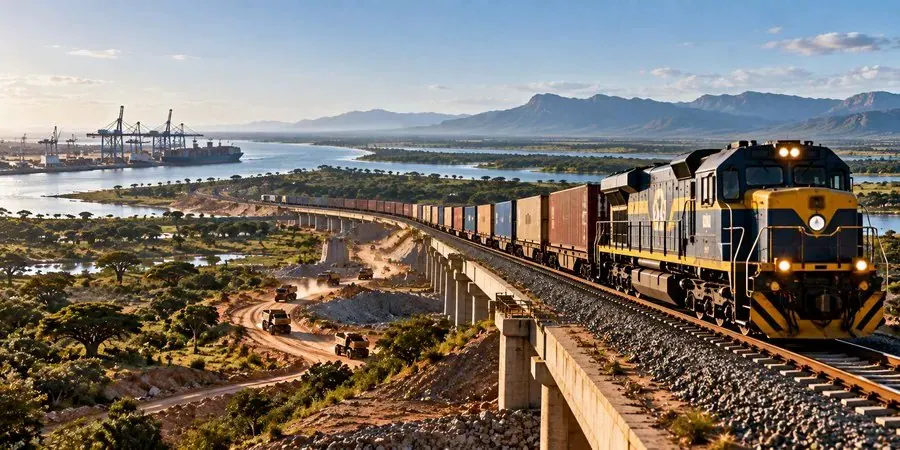
The proposed Techobanine rail and port project aims to link Botswana and Zimbabwe to a deep-water port in southern Mozambique. The project, estimated to cost $6.5bn, would provide landlocked Botswana with reliable maritime access and expand Mozambique's regional logistics network. The project has garnered interest from the African Development Bank, which could support feasibility work and attract co-financiers.
The corridor has the potential to support mineral exports, imported machinery, and regional cargo flows, expanding demand for port handling, warehousing, and customs systems. For Mozambique, transit cargo would strengthen the commercial case for its regional logistics network. The project would also require coordination among three national rail systems and committed long-term users.
To move forward, the project requires bankable cargo volumes, agreed tariff structures, and clear operating frameworks. Zimbabwe's participation is essential, and the country's involvement would help to coordinate the railway and port operations. The African Development Bank's involvement could help to address some of the project's challenges.
Both governments are stressing execution over new commitments, with Mozambique's Director for Africa and the Middle East, Hermenegildo José Caetano, calling for stronger delivery on existing agreements. Botswana's Permanent Secretary for International Relations, Thuso Ramodimoosi, urged officials to identify gaps, assign responsibilities, and set deadlines.
The two countries are also considering upgrading the joint commission into a binational commission, which would give strategic infrastructure projects closer political supervision. This upgrade signals institutional maturity and could improve coordination across ministries, border agencies, and rail operators on both sides.
The corridor represents more than a bilateral transport plan, offering a platform for linking inland mineral and agricultural production to global markets. Investors are tracking project timelines, and the project's success will depend on technical studies and sovereign commitments from all three parties.
Key points
- The proposed $6.5bn Techobanine rail and port project aims to link Botswana and Zimbabwe to a deep-water port in southern Mozambique.
- The project requires bankable cargo volumes, agreed tariff structures, and clear operating frameworks to move forward.
- The African Development Bank has shown interest in the project and could support feasibility work and attract co-financiers.