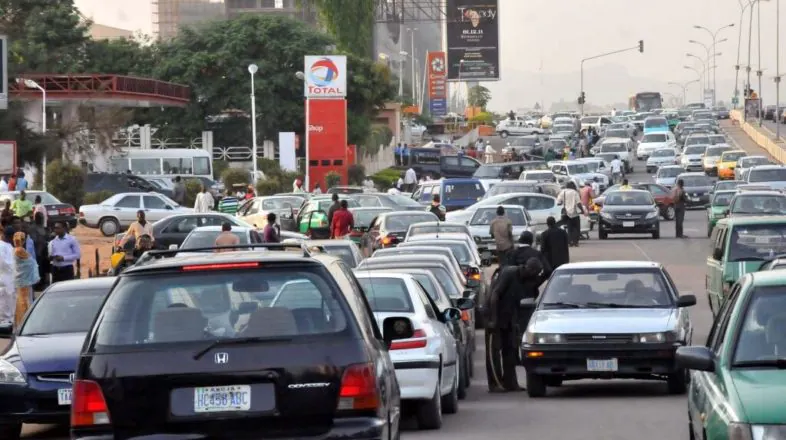
Motorists and commuters in Nigeria's Federal Capital Territory are expressing frustration over the delay in reducing petrol prices by filling stations, despite Dangote Refinery's recent N25 per litre price cut. The refinery had announced a new price of N1,325 per litre, but many stations have not adjusted their prices, leaving motorists to pay higher rates. This has added to the financial burden on households already struggling with rising food, transportation, and household expenses.
Dangote Refinery's price cut comes as international crude oil prices have retreated, with Brent crude trading at $100.40 per barrel, down 3.34 per cent, and West Texas Intermediate at $90.40 per barrel, down 3.83 per cent. However, a check by the News Agency of Nigeria in Abuja showed that some filling stations had yet to adjust their petrol prices. MRS retail outlets were still selling petrol at N1,395 per litre, while NIPCO outlets sold at N1,430 per litre.
Motorists have expressed concerns about the impact of high petrol prices on their daily lives. Mr Olusegun Shokoya, a motorist in Gwarinpa, said he purchased petrol at N1,430 per litre and that the persistent increase in fuel prices was putting growing financial pressure on families. He noted that many Nigerians were finding it increasingly difficult to meet their basic needs due to the rising costs.
The impact of the price increase goes beyond the cost of fuelling vehicles, with many households struggling to cope with the ripple effects of rising fuel costs. Mr Mohamed Hamzat, who bought petrol at N1,430 per litre in Dutse, said that the high cost of fuel was affecting his ability to feed his children three times a day. He urged the Federal Government to intervene and stabilise fuel prices to ease the economic burden on Nigerians.
Commuters are also feeling the pinch, with many fearing that the increase in pump prices will translate into higher transport fares and more expensive goods. Mrs Shotayo Aliyu, a commuter, said that the rising cost of petrol would inevitably push up food prices as traders sought to recover increased transportation expenses. She called on the Federal Government to intervene and stabilise fuel prices to protect the purchasing power of households.
The Petroleum Products Retail Outlets Owners Association of Nigeria has said that stakeholders will not rule out the possibility of a reduction in petrol prices. The National President of PETROAN, Billy Gillis-Harry, said that the interests of Nigerians would be placed first, but not to the detriment of businesses. Meanwhile, the Independent Petroleum Marketers Association of Nigeria has noted that the volatility in international crude oil prices remains a major challenge for independent petroleum products marketers.
The National Publicity Secretary of IPMAN, Mr Chinedu Ukadike, said that changes in international crude oil prices would ultimately affect the prices of refined petroleum products in the global market. He noted that many operators had purchased petroleum products before the latest decline in prices and would need to manage the resulting losses while remaining in business. Ukadike said that the situation was part of the realities of a deregulated market, where competition and market forces determine prices.
Key points
- Motorists and commuters in Nigeria's Federal Capital Territory are decrying the delay in reducing petrol prices following Dangote Refinery's N25 per litre price cut.
- The delay in reducing petrol prices has added to the financial burden on households already struggling with rising food, transportation, and household expenses.
- The Federal Government has been urged to intervene and stabilise fuel prices to ease the economic burden on Nigerians.