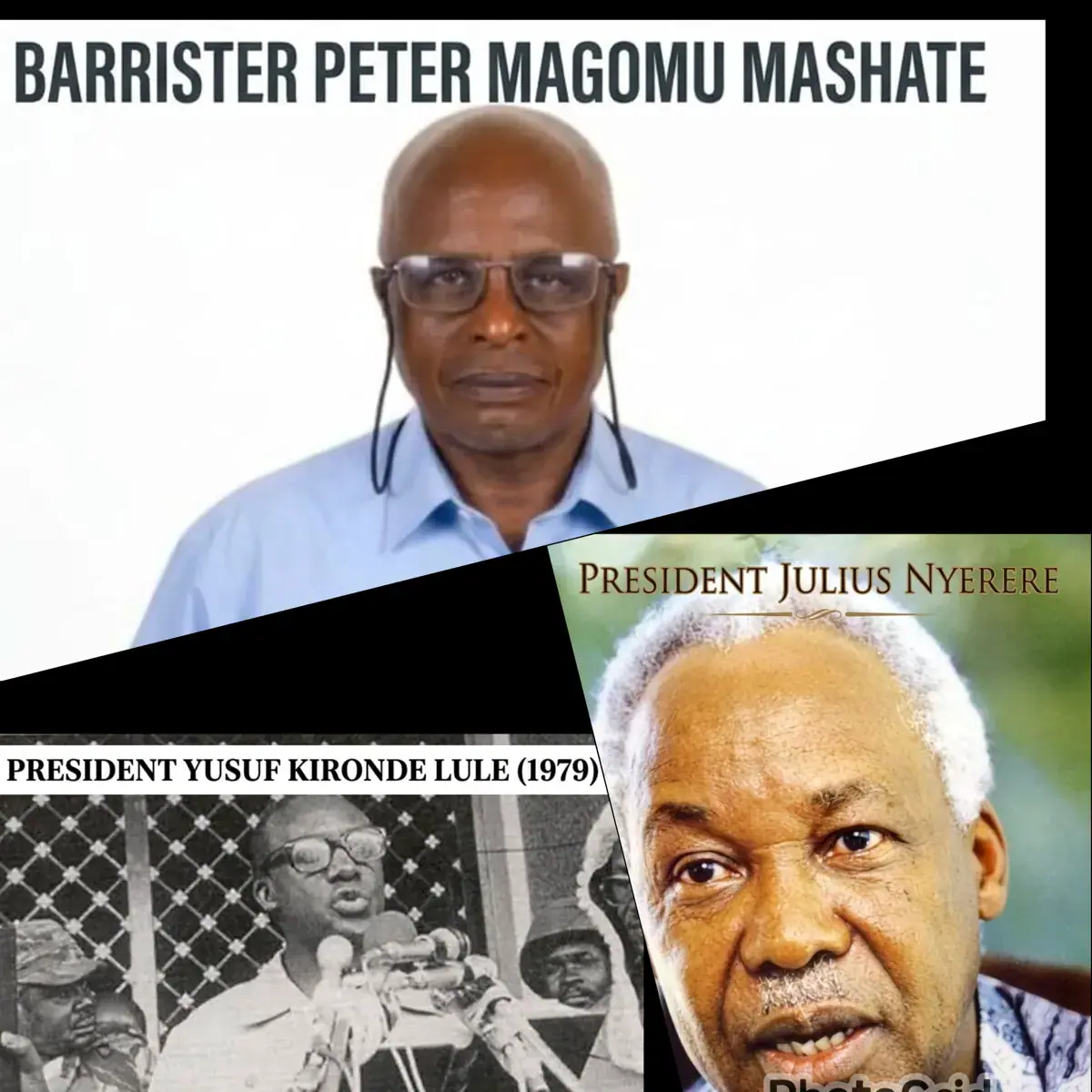
The 1979 Moshi Conference in Tanzania, convened by President Julius Nyerere, brought together over two dozen diaspora and armed opposition groups to form the Uganda National Liberation Front (UNLF). However, Barrister Peter Magomu Mashate claims that this conference was marred by the deliberate exclusion of the "stayees" - millions of Ugandans who survived Idi Amin's regime from within. This exclusion, he argues, laid the seeds for the 1980 disaster and the subsequent chaos of the Paulo Muwanga era.
The Moshi Conference was dominated by exile groups, which resulted in the proliferation of "briefcase" factions - ad-hoc groups hurriedly accredited to secure seats on the National Consultative Council (NCC). Power was parceled out among returning intellectuals and political elites, creating a legitimacy gap between the diaspora leadership and the people at home. This fragile arrangement collapsed almost immediately due to bitter ideological and regional rivalries.
The compromise president, Prof. Yusuf Lule, attempted to broaden his cabinet to include more internal figures and reflect a genuine national balance. However, the exile-dominated NCC, led by the Gang of 4, effectively voted him out after just 68 days. His successor, Godfrey Binaisa, faced a similar fate when he tried to rein in competing armed factions. Out of this institutional paralysis stepped Paulo Muwanga, who exploited the vacuum left by Moshi's fractured politics.
As Chairman of the UNLF Military Commission and a staunch Obote loyalist, Muwanga overthrew Binaisa in May 1980. His six-man Military Commission effectively subordinated civilian governance to the gun. Muwanga's subsequent hijacking of the December 1980 elections, sidelining the Electoral Commission and decreeing himself the sole authority to declare results, was the inevitable climax of a transition that never belonged to the Ugandan people.
The exclusion of the stayees in Moshi and the treatment of the state as a prize for returning elites led to a trade-off between a military dictatorship and factional warfare. This set the stage for the Luwero Bush War and years of deeper bloodshed until the advent of NRA/NRM in 1986. Mashate views Muwanga's actions as a predictable harvest of the foundational political sin of exclusion at the Moshi Conference.
The writer, Barrister Peter Magomu Mashate, is an administrative, constitutional, and human rights barrister-at-law. He was called to the bar by the Honourable Society of Lincoln's Inn of Court London, United Kingdom. Mashate's article provides a critical analysis of the Moshi Conference and its legacy, highlighting the importance of inclusive decision-making in the transition process.
The article has sparked interest and debate among readers, with many calling for a deeper exploration of Uganda's complex history. The Ankole Times, which published the article, is a leading online news platform in Uganda, providing in-depth coverage of national and international news.
Key points
- The Moshi Conference's exclusion of Ugandans who endured Idi Amin's regime laid the seeds for the 1980 disaster and the subsequent chaos of the Paulo Muwanga era.