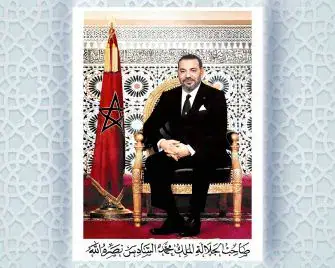
The Royal Cabinet of Morocco announced on October 30, 2026, that the United Nations Security Council had decided not to renew the mandate of the United Nations Mission for the Referendum in Western Sahara (MINURSO). This move is seen as a major development and a significant step towards the definitive closure of the Western Sahara issue at the United Nations. The decision was made during a meeting of the UN Security Council, which coincided with the celebration of Morocco's Unity Day, decreed by King Mohammed VI.
The non-renewal of the MINURSO mandate implies that the presence of the mission in the southern provinces of Morocco, including its personnel, vehicles, equipment, and symbols, will cease in the coming days. According to the Royal Cabinet, this marks the end of a 35-year period during which MINURSO had been an instrument of internationalization of the regional dispute over Morocco's legitimate recovery of its Saharan provinces. The mission was created in 1991 and had been a contentious issue in the region.
The decision not to renew MINURSO's mandate is seen as a significant shift in the management of the Western Sahara issue. The Royal Cabinet stated that this move marks a break in the management of the dossier, shifting from a simple logic of management to an approach of profound transformation of parameters. Morocco views this development as a direct consequence of the efforts made by King Mohammed VI to promote a new dynamic in the region.
The non-renewal of MINURSO's mandate is expected to have far-reaching implications. The Royal Cabinet stated that the periodic statutory meetings of the Security Council devoted to Western Sahara, the reports of the UN Secretary-General, and the briefings of his Personal Envoy will no longer be necessary. This means that the UN's political process on Western Sahara will be suspended, following the blockages created by other parties.
Morocco has welcomed the decision, but remains committed to the ceasefire, in strict respect of its territorial integrity, national security, and the tranquility of its citizens. The Royal Cabinet also stated that Morocco will continue to pursue its dynamic at the bilateral and regional levels, which has already allowed it to capitalize on significant support from over two-thirds of UN member states, including permanent members of the Security Council and influential powers.
The decision not to renew MINURSO's mandate is also seen as a reflection of the changing international landscape on the Western Sahara issue. The Royal Cabinet stated that the dynamic launched by King Mohammed VI will continue, with Morocco seeking to build on the support it has already received. This includes the autonomy under Moroccan sovereignty, which is seen as the only framework for a solution to the regional dispute.
The UN Security Council's decision not to renew MINURSO's mandate was preceded by a double failure, with the United States and Russia vetoing each other's proposals. The US proposal to extend the mission until October 2027, with a new mandate focused on autonomy, was vetoed by Russia, while the Russian counter-proposal to extend the mission as is was vetoed by the United States.
Key points
- Morocco welcomes the non-renewal of MINURSO's mandate as a significant step towards the closure of the Western Sahara issue at the UN.
- The decision marks the end of a 35-year period during which MINURSO had been an instrument of internationalization of the regional dispute over Morocco's Saharan provinces.
- Morocco remains committed to the ceasefire and will continue to pursue its dynamic at the bilateral and regional levels to build on the support it has received.