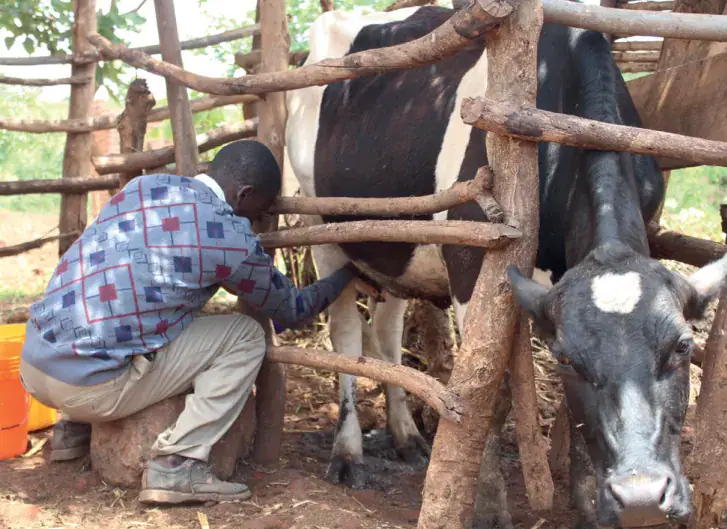
Persistent fuel shortages and prolonged power outages in Malawi are disrupting economic activity, particularly in the milk production sector. The unreliable fuel supplies are making it difficult for farmers to operate generators needed to preserve milk during electricity outages. This has resulted in significant challenges for milk producers, who are struggling to maintain production levels.
The Malawi Milk Producers Association president, Rodrick Mbango, has highlighted the severity of the situation, stating that transport challenges are also affecting the movement of milk to processing plants. This has further compounded the industry's difficulties, resulting in the loss of 17 percent of the 68 million litres of milk produced between January and October this year. The estimated loss is around K1 billion.
Mbango described the situation as one of the major setbacks facing an industry striving to expand production and meet the country's milk requirements. Malawi has an estimated 175,255 dairy cows, which produce about 187,948 litres of milk daily, translating into roughly 68 million litres annually. However, milk consumption in the country remains low, with a per capita consumption of between nine and 10 litres per person annually.
The low milk consumption rates in Malawi are a concern, with the World Health Organisation recommending an annual milk consumption of 100 litres per person. Mbango appealed to the government to consider providing farmers with solar-powered systems to help them cool and preserve milk during electricity outages, thereby reducing losses. He emphasized that milk is a perishable product and requires appropriate storage conditions.
Director of Animal Health and Livestock Development in the Ministry of Agriculture, Joseph Hami, acknowledged the challenges milk producers are facing due to unreliable energy supplies. He stated that the government is exploring alternative interventions to help farmers minimise losses. One potential solution is for milk to be absorbed by industry players and processors at a price that enables farmers to recover their production costs.
The government has taken a step in the right direction by setting the minimum price at which processors should buy milk. This move aims to ensure that farmers receive a fair price for their produce, which could help to mitigate the losses they are experiencing due to energy shortages. However, more needs to be done to address the root causes of the problem and support the growth of the milk production sector.
The impact of energy shortages on milk production in Malawi is a significant concern, with far-reaching consequences for the industry, farmers, and the country as a whole. The situation highlights the need for sustainable solutions to address the energy challenges facing the country and support the growth of key sectors such as milk production.
Key points
- Malawi's milk production sector is facing significant challenges due to persistent fuel shortages and power outages.
- The country's low milk consumption rates are a concern, with a per capita consumption of between nine and 10 litres per person annually.
- The government is exploring alternative interventions to help farmers minimise losses, including the use of solar-powered systems and setting minimum prices for milk.