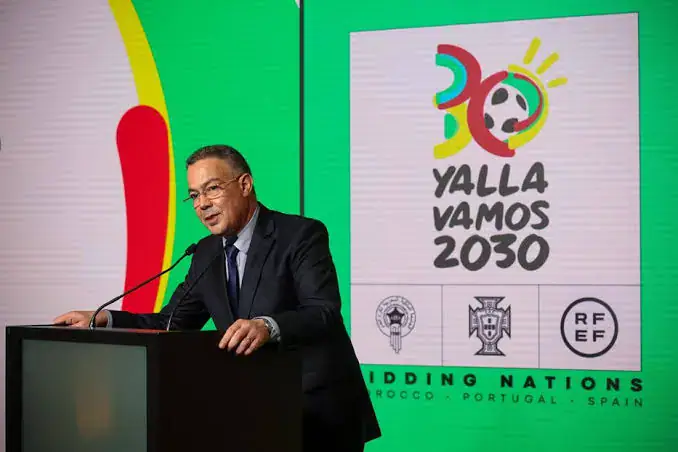
Morocco's bid to host the 2030 World Cup has expanded beyond constructing stadiums and preparing host cities. The government has begun to unveil the economic and financial dimensions of the project, highlighting expected transformations over the coming years. Finance Minister Fouzi Lekjaa presented a detailed vision of investments linked to the World Cup before the House of Representatives' Finance and Economic Development Committee.
Lekjaa disclosed substantial economic projections, including the creation of over 840,000 job opportunities during the preparation phase for the World Cup. The construction and public works sector is expected to account for 52% of these positions, followed by 13.8% in other industries and 6.2% in the accommodation and restaurant sector. The government also anticipates a 21.2% cumulative increase in total investment between 2023 and 2030.
The tourism sector is central to Morocco's plans, with a target of 26 million tourists by 2030 and a projected domestic tourist revenue of 189 billion dirhams at current prices. The government expects tourism-related income to exceed 156 billion dirhams and create over 150,000 additional jobs. These numbers reflect Morocco's ambition to leverage the global presence of the World Cup to enhance its tourism capacity and position itself as a major international tourist destination.
The infrastructure plan includes six host cities: Casablanca, Rabat, Tangier, Marrakech, Agadir, and Fez. The government is preparing over 30 centers for team accommodations and training sessions across different cities and regions. In addition to stadium development, the plan involves upgrading the transportation network, including a high-speed train project linking Kenitra and Marrakech over 430 kilometers.
The financial aspects of the World Cup hosting were also addressed, with Lekjaa clarifying the relationship between the host countries' commitments and FIFA's expenses. Host countries are responsible for providing facilities and infrastructure, while FIFA manages the operational and organizational aspects of the tournament.
The government has introduced temporary tax exemptions for FIFA and entities related to the tournament organization, including exemptions from corporate tax, value-added tax, and registration duties. Customs facilitation for importing necessary equipment and installations is also part of the plan. These measures are tied to the hosting commitments and have specified timeframes for utilization.
Morocco's comprehensive plan for the 2030 World Cup focuses on substantial investment in transportation, stadiums, and tourism. The goal is to convert the six-week global competition into lasting economic and structural benefits extending beyond the tournament.
Key points
- Morocco aims to create over 840,000 job opportunities and host 26 million tourists by 2030.
- The government expects a 21.2% increase in total investment between 2023 and 2030.
- Morocco has introduced temporary tax exemptions for FIFA and related entities.