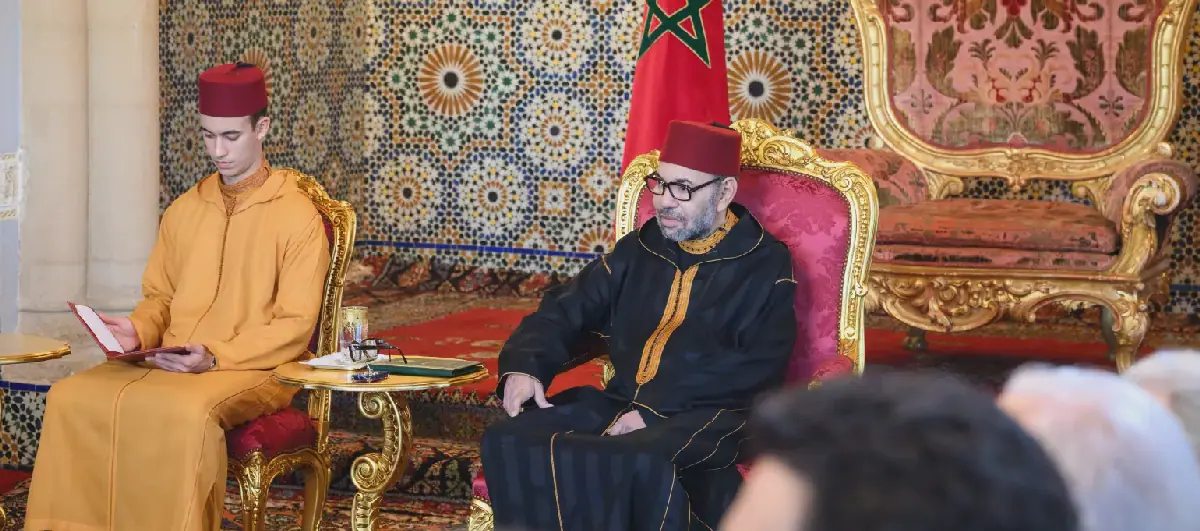
On November 25, 2026, King Mohammed VI, accompanied by Crown Prince Moulay El Hassan, chaired a ceremony at the Royal Palace in Rabat to sign two framework conventions. These agreements focus on financing the roadmap for developing Morocco's national defense and security industry, as well as mobilizing the private and financial sectors for its deployment. The project has an allocated budget of nearly 22 billion dirhams, sourced from public partners.
The strategic project aims to generate at least 50 billion dirhams in annual revenue and create 50,000 direct and indirect jobs by 2035. According to Ali Seddiki, Director General of the Moroccan Agency for Development of Investments and Exports (AMDIE), the development of this new sector aligns with Morocco's industrial transformation and positioning in high-added-value sectors. Seddiki emphasized that the Royal Vision is to establish a sovereign, efficient, innovative, and competitive national Defense and Security Industrial and Technological Base.
The development of the defense and security industry serves a dual purpose: strengthening national production capacities to meet some of the Kingdom's needs and positioning Moroccan industries in international markets. The mobilization of public partners has enabled the collection of nearly 22 billion dirhams to support the implementation of this roadmap. The goal is to allow Moroccan industries to cover 40% of the needs of the Royal Armed Forces (FAR) and security bodies, thereby contributing to the reinforcement of the Kingdom's industrial sovereignty in this domain.
The international dimension occupies a central place in this strategy, with the national defense and security industry expected to generate at least 50 billion dirhams in annual revenue, with over 65% from exports. In terms of social impact, projections anticipate the creation of at least 50,000 direct and indirect jobs by 2035. The development of this sector will also be accompanied by investments in training, research, and development, including the establishment of a national research and innovation ecosystem.
To oversee the implementation of this roadmap, a new strategic agency will be created, named DIFAA (Defense Industry Facilitation and Acceleration Agency) by King Mohammed VI. This agency will play a crucial role in structuring the national defense industry. The development of this sector aligns with Morocco's ambitions to strengthen its industrial sovereignty and position itself in high-added-value sectors.
The project's success will depend on the mobilization of local competencies and those of Moroccans abroad, as well as the involvement of the private and financial sectors. The roadmap's implementation will require close collaboration between public and private stakeholders to achieve the set objectives. The project's impact is expected to be significant, both economically and socially, by contributing to the Kingdom's industrial development and job creation.
The development of Morocco's national defense industry marks a significant step towards achieving the Kingdom's industrial and economic ambitions. With a budget of 22 billion dirhams and a clear strategy, the project aims to position Morocco as a key player in the international defense industry while reinforcing its industrial sovereignty.
Key points
- The project aims to generate 50 billion dirhams in annual revenue and create 50,000 jobs by 2035.
- The development of the national defense industry will contribute to Morocco's industrial transformation and positioning in high-added-value sectors.
- A new strategic agency, DIFAA, will be created to oversee the implementation of the roadmap and structure the national defense industry.
Reporting sources
- Défense et sécurité : 22 MMDH pour développer une base industrielle nationale · La Nouvelle Tribune