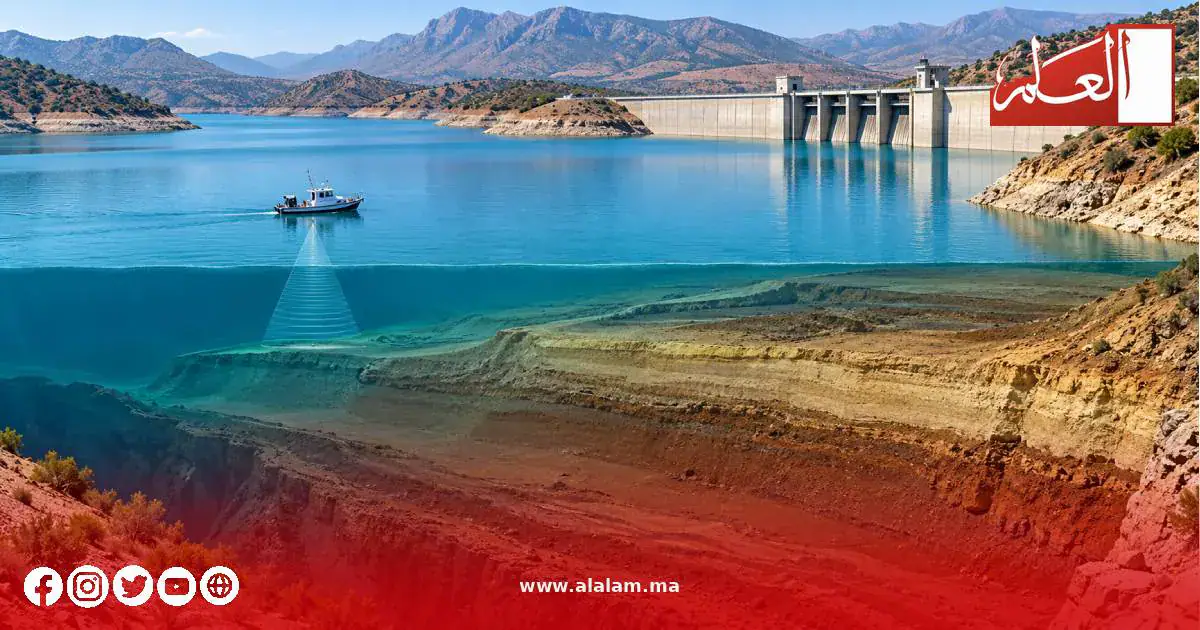
Morocco's Directorate of Research and Water Planning is set to conduct an assessment of sediment accumulation in 10 dams across the country. The study aims to update data on the actual water storage capacity of these dams and track changes compared to previous measurements. The dams included in the study are Wad Al-Makhazin, Al-Sharif Al-Idrisi, Al-Nakhla, Al-Wahda, Al-Mansour Al-Dhahabi, Ghis, Mohammed V, Wad Za, Mcharak Hamadi, and Al-Hassan Al-Dakhil.
The dams have varying storage capacities, ranging from 4.21 million cubic meters at Al-Nakhla dam to over 3.52 billion cubic meters at Al-Wahda dam. To determine the changes in water storage capacity, the study will involve topographic and bathymetric measurements to map the terrain and determine the depth, area, and volume of each dam. Multiple-beam measurement techniques will be used in deep areas, while single-beam techniques will be employed in shallower areas.
The data collected will be used to update the curves that relate water level to storage volume. The results will be compared to previous measurements to identify areas of sediment accumulation and track changes over time. The study will also examine the impact of soil erosion, floods, and heavy rainfall on sediment transport to the dams.
In addition to the assessment, two dams, Al-Sharif Al-Idrisi and Ghis, will undergo further analysis using hydrological and sediment transport models to simulate surface runoff, soil erosion, and sediment transport within the watersheds. These models will utilize data on terrain, climate, land use, and satellite imagery.
The study is divided into two groups, each consisting of five dams, with eight months allocated for each group. The expected outcomes include maps of dam depths and digital terrain models, enabling a more accurate estimation of available water storage capacity and tracking of sedimentation.
The Moroccan government's efforts to assess and manage its water resources come as the country faces challenges in maintaining its water infrastructure. The study's findings are expected to inform decision-making on water resource management and help mitigate the impacts of sedimentation on dam operations.
The assessment is a crucial step towards ensuring the optimal use of Morocco's water resources, which are essential for the country's agricultural, industrial, and domestic needs. By understanding the impact of sedimentation on its dams, Morocco can take proactive measures to maintain its water storage capacity and ensure a more sustainable future.
Key points
- The study aims to update data on the actual water storage capacity of 10 dams in Morocco.
- The assessment will inform decision-making on water resource management and help mitigate the impacts of sedimentation.
- The findings are expected to enable a more accurate estimation of available water storage capacity and tracking of sedimentation.