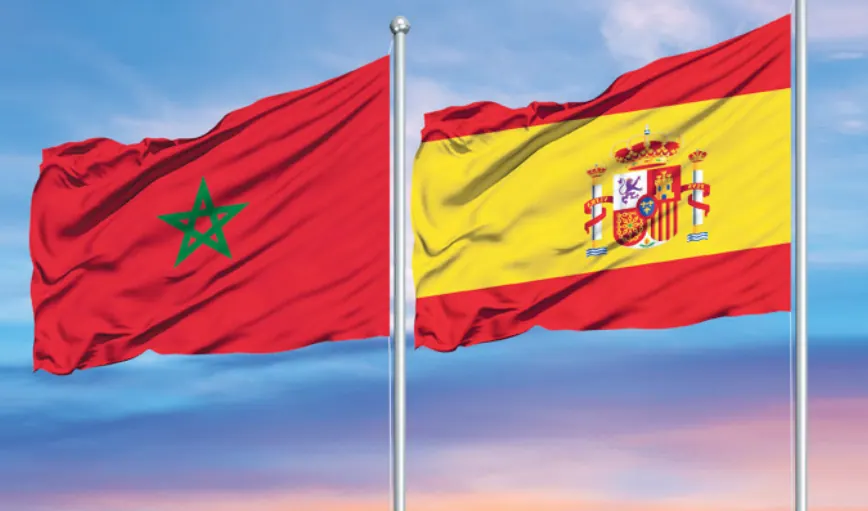
In July, trade exchanges between Morocco and Spain reached a new record, with Spanish exports to Morocco amounting to 1.159 billion euros, a 2.8% increase, and imports from Morocco standing at 816.3 million euros, a 2.5% rise. This performance was achieved before the migration crisis escalated, but various indicators suggest that trade between the two nations has continued to follow its own logic.
According to data published in Madrid, during the first seven months of the year, trade exchanges between Morocco and Spain continued to reach unprecedented levels, with a total value of 14.19 billion euros. Spanish exports to Morocco reached approximately 7.58 billion euros, a 3.4% increase, while Moroccan exports to Spain stood at 6.61 billion euros, a 3.9% rise.
The Institute for Foreign Trade (ICEX), a government body responsible for supporting Spanish companies internationally, organized a mission to Morocco in September and plans to send a large delegation of operators in October. This demonstrates the ongoing efforts to strengthen economic ties between the two countries. Morocco remains Spain's third-largest commercial partner outside the European Union, accounting for 3.3% of Spain's total exports in July.
In Africa, Morocco has solidified its position as a major destination for Spanish products, accounting for around 54.4% of Spain's total exports to the continent in July. These numbers highlight the growing interdependence between the two economies. The trade exchanges recorded in the first six months of 2026 already represent more than half of the 22.76 billion euros recorded for the entire year of 2025.
Spain remains Morocco's primary bilateral commercial partner within the European Union, for both exports and imports. The strong industrial integration between the two countries is a significant factor in this relationship. The automotive sector is one of the main drivers of Moroccan exports, with around 90% of Morocco's automobile production destined for external markets, primarily in Europe, and Spain absorbing nearly 20% of these exports.
The presence of major manufacturers such as Renault in Tangier and Casablanca, and Stellantis in Kenitra, has contributed to the development of an ecosystem that also attracts many Spanish suppliers. However, this interdependence also represents a form of vulnerability, as a lasting deterioration in economic relations could have negative consequences for both countries, particularly in terms of industrial employment, investment, and attractiveness to international groups.
As the two nations move forward, it is essential to recognize the importance of their economic relationship and work towards strengthening it further. With ongoing efforts to promote trade and investment, Morocco and Spain are likely to continue their strong trade relations, despite potential challenges. The two countries will likely explore new opportunities for cooperation and collaboration, building on their existing economic ties.
Key points
- Morocco and Spain have seen record trade exchanges, with a total value of 14.19 billion euros in the first seven months of 2026.
- Spain remains Morocco's primary bilateral commercial partner within the European Union.
- The automotive sector is a significant driver of Moroccan exports to Spain, with around 90% of Morocco's automobile production destined for external markets.