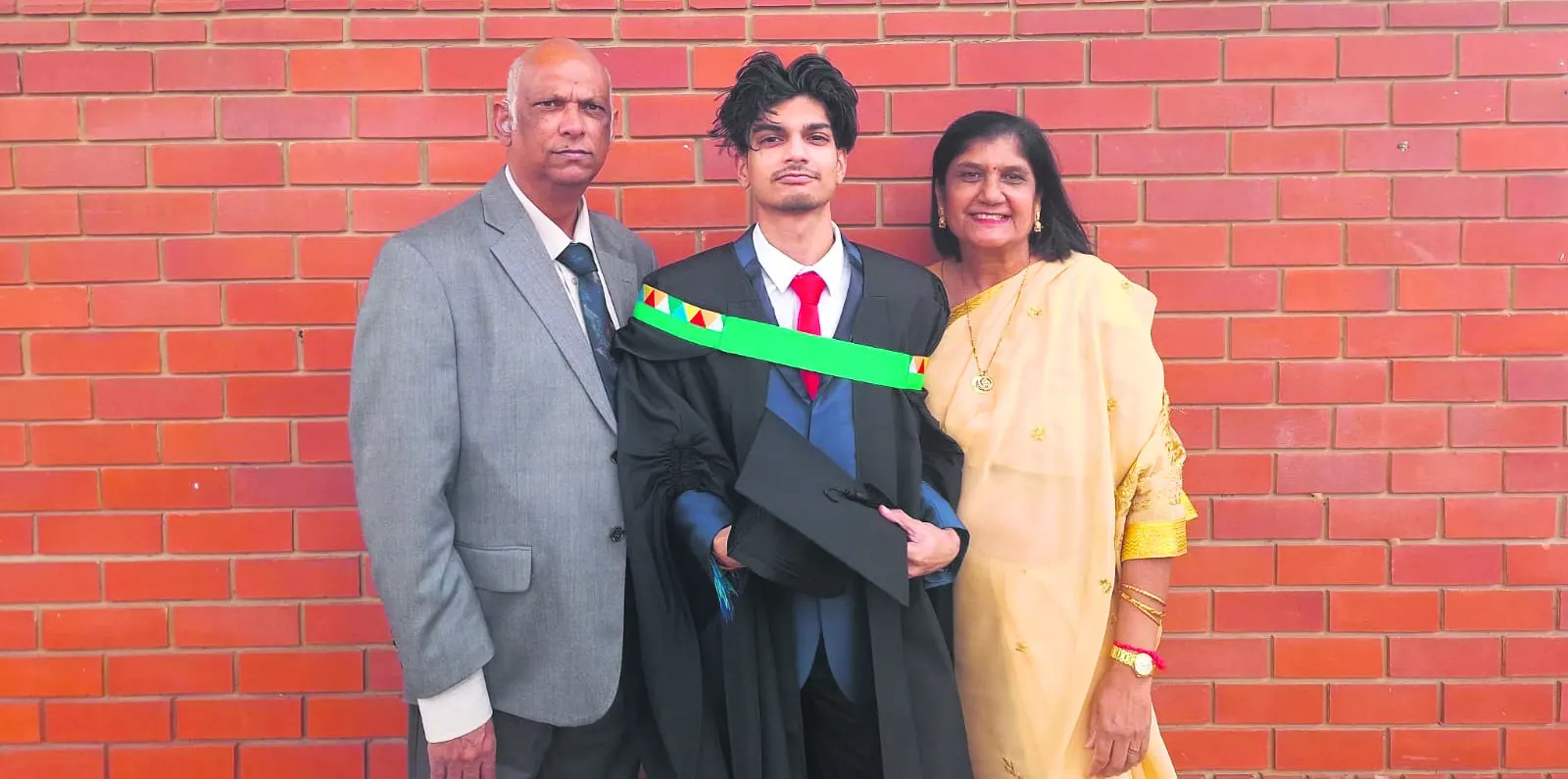
A University of KwaZulu-Natal (UKZN) engineering graduate has developed a South African Sign Language (SASL) to Speech Translation System, driven by his parents' struggles with communication. Akhil Hansrajh, who recently graduated with a BSc Engineering degree in Computer Engineering, created a computer vision-based system using artificial intelligence and machine learning. This technology tracks body landmarks to identify signs in real time, converting them into speech. Hansrajh's project aims to break down communication barriers faced by the hearing-impaired community.
Hansrajh's parents, who are hard of hearing, often encounter difficulties in everyday settings like banks, government departments, and municipal offices. As a result, his sister and he would frequently accompany them to act as interpreters. His system, trained on a custom SASL dataset, can recognise individual letters and words, producing speech through a text-to-speech model. This technology has the potential to empower hearing-impaired individuals to communicate more easily and effectively.
The system, developed as Hansrajh's final-year project, is one of the first assistive-technology projects in UKZN's Electrical, Electronic and Computer Engineering discipline to focus specifically on SASL. Hansrajh's supervisor, Dr Sulaiman Patel, noted that the project had personal significance for Hansrajh, who had to overcome mental health challenges during his studies. With Patel's support, Hansrajh regained momentum and received a highly commended award for his project.
Hansrajh's journey to graduation was not without challenges. He experienced mental health issues in the second semester of 2025, requiring an extension on his project submission. However, with Dr Patel's support, including referrals to student counselling and regular wellness check-ins, Hansrajh was able to recover and complete his studies. He plans to continue developing the system, particularly improving its ability to recognise words and produce cohesive, fluent speech.
Hansrajh's achievement has garnered praise from his school and university. Raisethorpe Secondary School principal Pragalathan Gounden expressed pride in Hansrajh's accomplishments, highlighting his dedication to his studies and parents. UKZN's Professor Tahmid Quazi recommended Hansrajh for an interview at a local company, which led to him securing a job and working full-time while completing his studies.
Hansrajh's future plans include pursuing a career in software, networking, or artificial intelligence and machine learning. He is grateful for his experience at UKZN, where he was able to meet like-minded individuals and apply theoretical knowledge to practical problems. Hansrajh's project has the potential to make a significant impact on the lives of the hearing-impaired community, and he hopes to continue developing the system to improve its effectiveness.
The project has been well-received by the university and the community. Hansrajh's achievement demonstrates the impact that technology can have on people's lives. His system offers a promising solution to communication barriers faced by the hearing-impaired community.
Key points
- The system uses a custom-built artificial intelligence model and machine learning framework to track body landmarks and identify signs in real time.
- Hansrajh's project aims to empower hearing-impaired individuals to communicate more easily and effectively.
- The technology has the potential to make a significant impact on the lives of the hearing-impaired community.