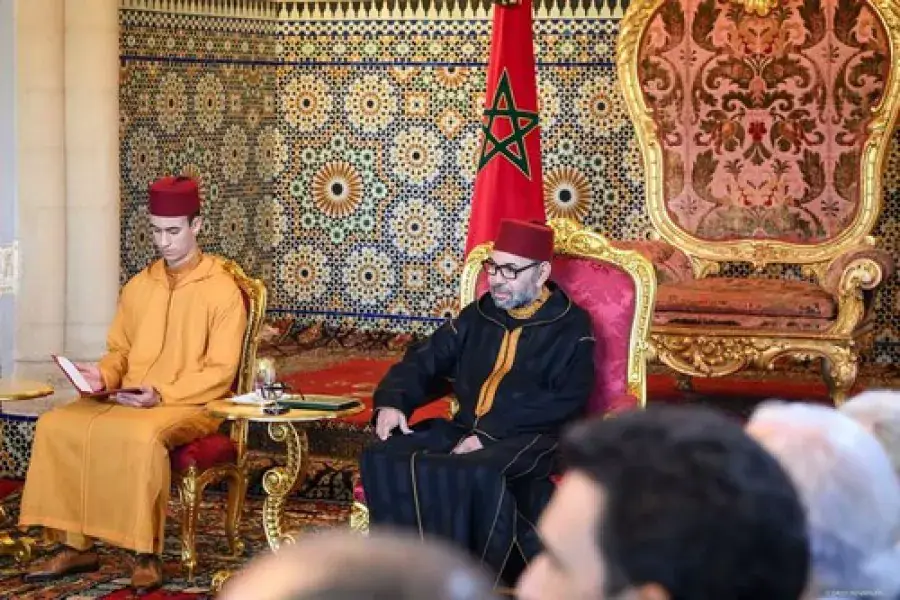
On November 25, 2026, King Mohammed VI, accompanied by Crown Prince Moulay El Hassan, chaired a ceremony at the Royal Palace in Rabat for the signing of two framework conventions. These conventions aim to finance the roadmap for the development of Morocco's defense and security industry and to mobilize the private and financial sectors for its deployment. The ceremony marked a significant step in the country's efforts to establish a robust defense industry.
The first convention, related to the financing of the roadmap's implementation, was signed by several high-ranking officials, including the Minister of Interior, Abdelouafi Laftit, and the Minister of Economy, Fouzi Lekjaa. The second convention, focused on mobilizing the private and financial sectors, was also signed by prominent figures, including the Director General of the Moroccan Agency for Development of Investments and Exports, Ali Seddiki. These agreements underscore the government's commitment to developing the defense industry.
According to Ali Seddiki, the roadmap for the development of the defense and security industry aligns with the Royal Vision for an industrial, emerging, and competitive Morocco. The industry aims to generate at least 50 billion dirhams in revenue annually, with over 65% expected to come from exports. Additionally, the sector is projected to create at least 50,000 direct and indirect jobs by 2035. Seddiki emphasized that the Vision Royal has transformed Morocco into a continental industrial leader.
The development of Morocco's defense industry is part of a broader strategy to enhance the country's industrial capabilities and promote economic growth. The industry is expected to focus on innovative and high-tech areas, including drone and autonomous systems production, cybersecurity, and artificial intelligence. An ecosystem for research and development will be established to support this endeavor, mobilizing local competencies and Moroccan expatriates.
To oversee the implementation of the roadmap, King Mohammed VI has established the DIFAA (Defense Industry Facilitation and Acceleration Agency). This agency will play a crucial role in promoting investment, managing support systems, and structuring the national industrial base. DIFAA will also leverage industrial compensation, public procurement, land resources, competencies, and innovation to support Morocco's industrial sovereignty and international influence.
The Moroccan government has secured significant funding for the defense industry project, with nearly 22 billion dirhams committed by public partners. This investment is expected to have a positive impact on the country's economy, with the potential to cover 40% of the Royal Armed Forces' and security agencies' needs. The development of the defense industry is seen as a strategic opportunity for Morocco to assert its sovereignty and competitiveness.
The signing of these conventions marks a significant milestone in Morocco's efforts to establish a robust and competitive defense industry. With a focus on innovation, job creation, and economic growth, the country's defense sector is poised for significant development. The implementation of the roadmap will be closely monitored, with DIFAA playing a key role in ensuring the project's success.
Key points
- Morocco's King Mohammed VI has presided over the signing of two framework conventions to develop the country's defense and security industry.
- The industry aims to generate at least 50 billion dirhams in revenue annually and create 50,000 jobs by 2035.
- The DIFAA agency will oversee the implementation of the roadmap and promote investment in the defense sector.
Reporting sources
- Industrie de défense et de sécurité... · Maliweb.net