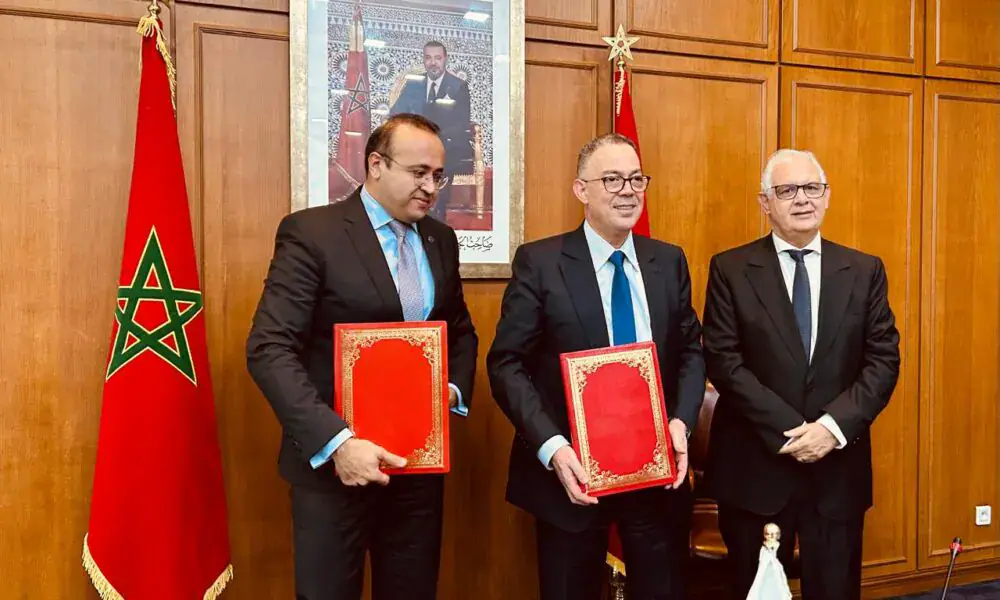
The Moroccan government and the African Development Bank have concluded a financing agreement worth $434.4 million, approximately 4.8 billion Moroccan dirhams, to accelerate economic reforms. The agreement was signed on November 13, 2026, in Rabat, Morocco's capital city. This new funding will support reforms in public enterprises, mobilization of private investment, and enhancement of climate and energy resilience. The agreement is part of the third phase of the Program to Support the Strengthening of Economic Governance and Climate Change Resilience.
The financing agreement aims to support Morocco's economic transformation, promoting inclusive growth and resilience to economic and climate shocks. The program focuses on improving public action efficiency, consolidating conditions favorable to investment, and restructuring the public enterprise portfolio. It also aims to modernize the framework governing public-private partnerships and implement measures to improve the business climate. These interventions are expected to strengthen private capital mobilization, support small and medium-sized enterprises, innovation, and integration into international value chains.
The second component of the financing agreement focuses on enhancing Morocco's climate and energy resilience. The program will support the modernization of the governance of the water and electricity sectors, taking into account climate change challenges in public policies. The goal is to promote a low-carbon economy and reduce the country's vulnerability to environmental and energy risks. This phase of the program will also consolidate the achievements of previous phases and address the economic repercussions of the crisis in the Middle East.
The financing agreement was signed in the presence of Moroccan Minister of Economy, Finance, and Public Performance Fouzi Lekjaa and African Development Bank Country Representative Achraf Hassan Tarsim. Lekjaa praised the solid partnership between Morocco and the African Development Bank, highlighting the bank's renewed confidence in Morocco's reform dynamics under the leadership of King Mohammed VI. Tarsim emphasized Morocco's ability to pursue reforms despite international environment challenges and reaffirmed the bank's commitment to supporting Morocco's economic transformation, growth, and job creation.
The program's first axis aims to improve public action efficiency and consolidate conditions favorable to investment. It includes support for the restructuring of the public enterprise portfolio, modernization of the public-private partnership framework, and measures to improve the business climate. These interventions are expected to contribute to strengthening private capital mobilization, supporting small and medium-sized enterprises, innovation, and integration into international value chains.
The African Development Bank's financing agreement with Morocco is part of the Global Energy and Fertilizer Crisis Response Facility. The program combines short-term support to address external shocks with long-term structural reforms. The financing agreement aims to preserve Morocco's budgetary maneuvering room and maintain priority spending without compromising investment and economic transformation dynamics.
The new financing agreement is expected to support Morocco's economic transformation, promoting inclusive growth and resilience to economic and climate shocks. The program will contribute to enhancing the country's climate and energy resilience, promoting a low-carbon economy, and reducing vulnerability to environmental and energy risks. The African Development Bank's support is seen as a vote of confidence in Morocco's reform efforts and its commitment to promoting sustainable economic growth.
Key points
- The African Development Bank has provided $434.4 million in funding to support Morocco's economic reforms and climate resilience.
- The financing agreement aims to promote inclusive growth, enhance climate and energy resilience, and support small and medium-sized enterprises.
- The program is part of the Global Energy and Fertilizer Crisis Response Facility, combining short-term support with long-term structural reforms.