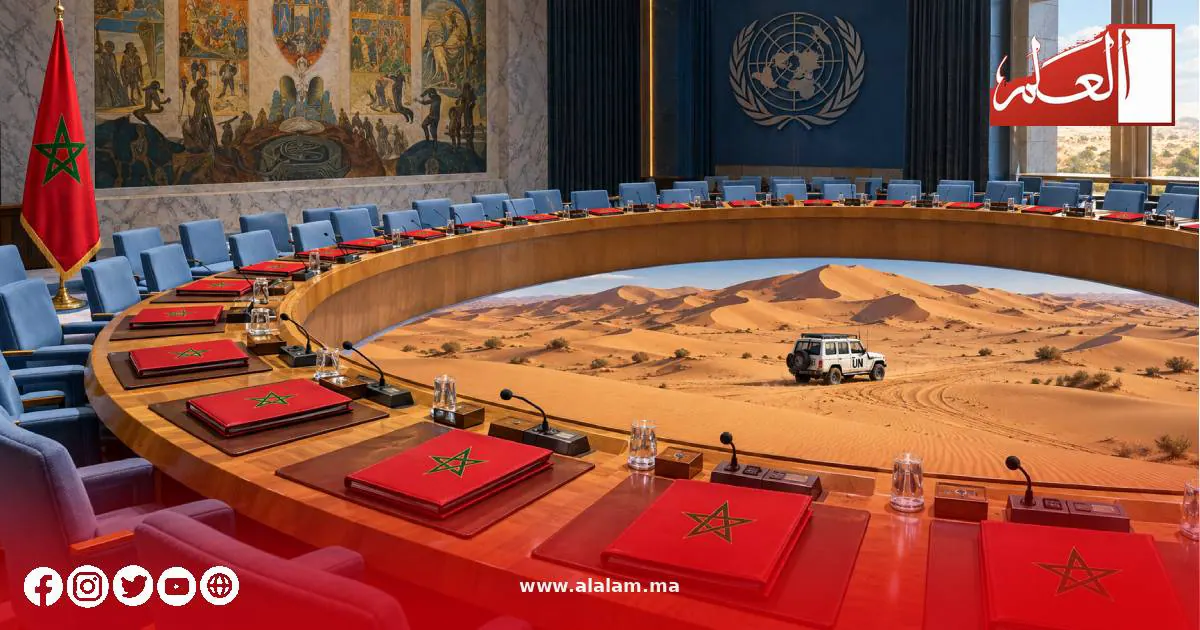
The UN Security Council is set to discuss the Western Sahara conflict on October 7-8, with Morocco's autonomy plan taking center stage. The plan, presented in 2007, has been endorsed by the council in its recent resolution 2797, which calls for negotiations based on this initiative. This development marks a significant shift in the international approach to resolving the conflict, with the focus now on the details of the autonomy plan rather than its principle.
The autonomy plan is not just a simple proposal, but a comprehensive project that requires careful consideration of its political, institutional, and legal aspects. The plan's implementation would involve the establishment of a regional authority with its own powers, institutions, and resources. This would include a regional parliament, government, and judicial system, as well as arrangements for the management of natural resources and the relationship with the central government.
The discussion on the autonomy plan is expected to be nuanced, with various stakeholders having different interpretations of its implications. The Polisario Front, which has been fighting for independence in Western Sahara, has expressed concerns about the plan, while Algeria, a key player in the region, has also weighed in on the issue. The international community, including the African Union and the European Union, has been closely following the developments in Western Sahara.
The UN Security Council's decision to discuss the autonomy plan is seen as a significant step towards resolving the conflict. The council's resolution 2797 emphasizes the need for a negotiated solution that is acceptable to all parties involved. The Moroccan government has welcomed the resolution, seeing it as an endorsement of its autonomy plan. However, the Polisario Front and Algeria have expressed reservations about the plan.
The future of the UN Mission for the Referendum in Western Sahara (MINURSO) is also expected to be discussed during the Security Council meetings. The mission has been on the ground since 1991, with a mandate to monitor the ceasefire and facilitate a referendum. However, with the shift in focus towards a negotiated solution, the role of MINURSO may need to be redefined.
The Western Sahara conflict has been a long-standing issue, with various attempts to resolve it having failed in the past. The autonomy plan is seen as a potential way forward, but its implementation will require careful consideration of the complexities involved. The UN Security Council's discussion on the plan is expected to provide a clearer direction on how to proceed.
The international community has a critical role to play in supporting the negotiations and ensuring that any solution is acceptable to all parties involved. The African Union and the European Union have been actively engaged on the issue, and their continued support will be essential in moving the process forward.
Key points
- The UN Security Council will discuss Morocco's autonomy plan for Western Sahara on October 7-8.
- The plan is seen as a significant step towards resolving the long-standing conflict.
- The future of the UN Mission for the Referendum in Western Sahara (MINURSO) will also be discussed.