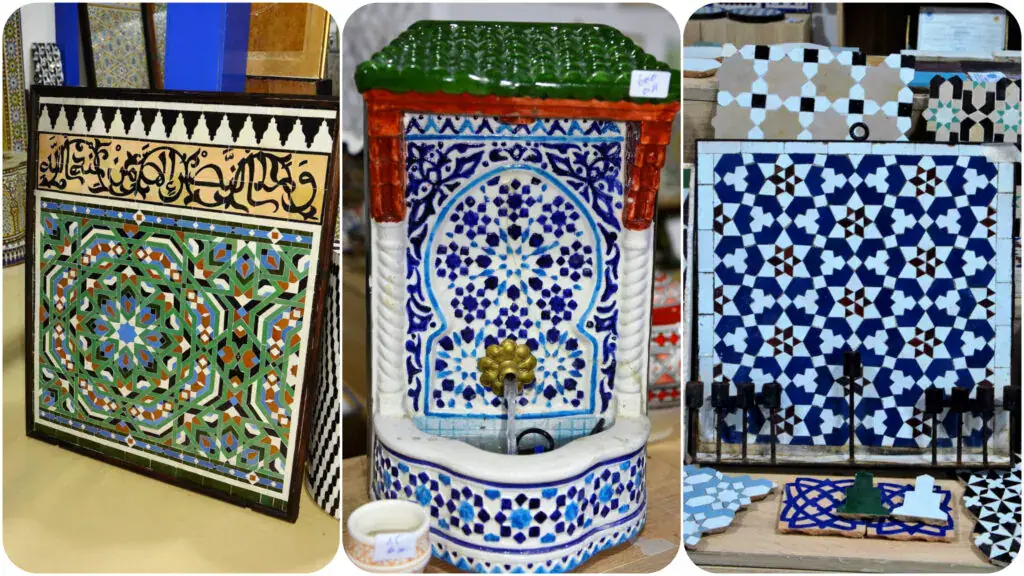
The city of Fez is hosting the sixth day of the National Ceramics and Zellij exhibition, which began on October 30 and will run until November 30. The event has drawn large crowds, with visitors eager to witness the traditional Moroccan Zellij art form. This ancient craft, originating from the region of Fez, is renowned for its intricate designs and patterns created from small, hand-cut pieces of clay.
The Zellij art on display features a wide range of designs, each with its own unique name. These include the Khatam, Lweza, Meshita, Shoka, Baayoui, Drayhem, Msisa, Azm, Qubba, Salib, Najma, Moayyan, and Muthanna. The art form is characterized by its use of small, hand-cut pieces of clay, which are then assembled to create larger, more complex designs. This labor-intensive process requires great skill and attention to detail, making each piece a true work of art.
The Zellij art form is an important part of Moroccan cultural heritage, with a rich history dating back centuries. The craft has been recognized by UNESCO as a cultural treasure, and efforts are being made to preserve and promote it for future generations. The exhibition in Fez provides a unique opportunity for visitors to learn about and appreciate this traditional art form, as well as to see it being created by skilled artisans.
The exhibition has been well-received by the public, with many visitors expressing their admiration for the beauty and craftsmanship of the Zellij art on display. The event has also attracted the attention of officials, who are working to promote and preserve Morocco's cultural heritage. The Ministry of Culture and Communication has been actively involved in supporting the exhibition and promoting the importance of Zellij art.
One of the highlights of the exhibition is the large, circular Zellij design known as the "Arba'ini" or "Khamsini". This design features 40 or 50 small pieces of clay, carefully arranged to create a stunning pattern. The Arba'ini is considered one of the most iconic and recognizable designs in traditional Moroccan Zellij art, and it is a testament to the skill and craftsmanship of the artisans who create it.
The exhibition also features a range of other traditional Moroccan crafts, including ceramics and textiles. Visitors can learn about the different techniques and materials used to create these crafts, as well as see them being made by skilled artisans. The event provides a unique opportunity for cultural exchange and education, and it is an important part of Morocco's efforts to promote and preserve its cultural heritage.
The National Ceramics and Zellij exhibition in Fez will continue until November 30, providing visitors with a unique opportunity to experience the beauty and craftsmanship of traditional Moroccan Zellij art. The event is a must-see for anyone interested in Moroccan culture and heritage, and it is a testament to the country's rich cultural traditions.
Key points
- The exhibition features over 60 unique Zellij designs, showcasing the diversity and richness of traditional Moroccan art.
- The Zellij art form has been recognized by UNESCO as a cultural treasure, and efforts are being made to preserve and promote it for future generations.
- The event provides a unique opportunity for cultural exchange and education, and it is an important part of Morocco's efforts to promote and preserve its cultural heritage.