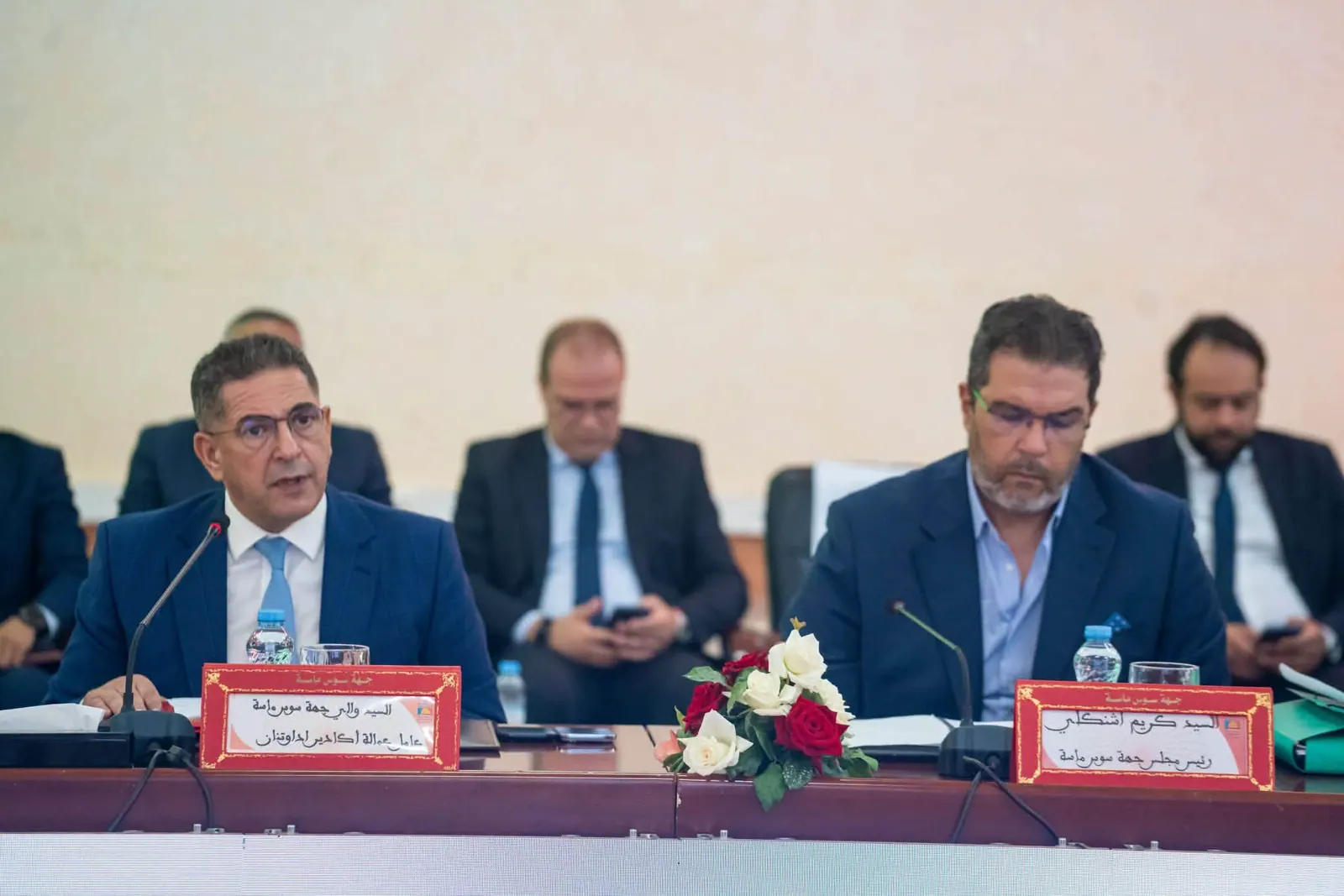
The Souss-Massa regional council is set to convene in Taroudant on October 5, 2026, to discuss the 2027 budget. The proposed budget has raised concerns regarding its preparation and presentation, as well as the allocation of funds for administrative costs versus development projects. According to documents obtained by Barlamane.com, the budget estimates revenues of approximately 931.13 million dirhams. The region's reliance on state transfers and limited self-generated resources has sparked questions about its financial sustainability.
The proposed budget allocates significant funds for administrative costs, including 23.888 million dirhams for council activities and 32.439 million dirhams for employee management. Additionally, 25.478 million dirhams are allocated for other administrative expenses. These allocations have raised concerns among observers, who argue that they may divert resources away from essential development projects. The region's development program, which includes several agreements and projects, has yet to demonstrate tangible results.
A key concern is the region's adherence to the regulatory framework governing budget allocation. The Organic Law 111.14 stipulates that the budget should comprise two parts: operating and investment expenditures. However, the presented budget appears to focus primarily on operating costs, raising questions about its conformity with the law. Furthermore, the budget's presentation and allocation of funds have sparked concerns about transparency and accountability.
The council's leadership and members will face scrutiny over their handling of the budget and development projects. The region's residents and stakeholders are eager to see tangible results from the allocated funds. The Souss-Massa region has significant development needs, and the budget allocation should prioritize projects that address these needs. The council's ability to balance administrative costs with development expenditures will be crucial in meeting these expectations.
The 2027 budget also highlights the region's challenges in generating self-sustaining revenue. The reliance on state transfers and borrowing to finance projects has raised concerns about the region's financial sustainability. The council must prioritize developing new revenue streams and managing debt effectively to ensure the region's long-term financial stability.
The Souss-Massa region's development program has been hampered by a lack of transparency and accountability. The council must provide detailed information on project implementation, timelines, and financial expenditures. This information will enable stakeholders to assess the program's effectiveness and hold the council accountable for its actions.
The October session of the Souss-Massa regional council will be crucial in determining the region's development trajectory. Council members must engage in a constructive and transparent discussion about the budget and development projects. The region's residents and stakeholders expect the council to prioritize development expenditures, ensure transparency and accountability, and develop a sustainable financial strategy.
Key points
- The Souss-Massa region's 2027 budget has sparked concerns about its adherence to regulatory frameworks and the allocation of funds for administrative costs versus development projects.
- The region's reliance on state transfers and limited self-generated resources has raised questions about its financial sustainability.
- The council must prioritize transparency, accountability, and sustainable financial management to ensure the region's long-term development and stability.