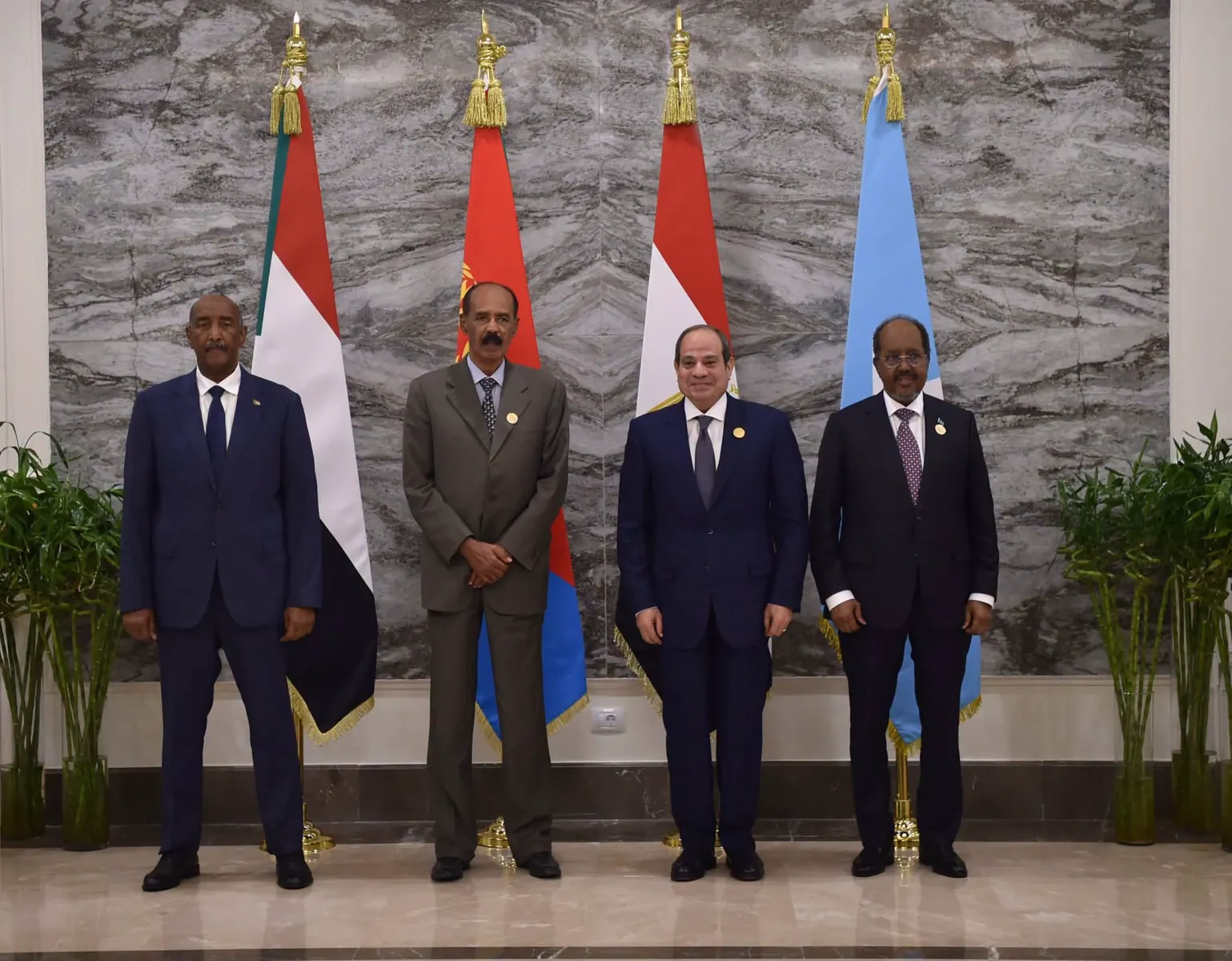
The leaders of Egypt, Somalia, Sudan, and Eritrea have come together to issue the Alamein Joint Declaration, establishing a unified front on key regional issues. Egyptian President Abdel Fattah Al-Sisi, Eritrean President Isaias Afwerki, Somali President Hassan Sheikh Mohamud, and Sudanese Transitional Sovereignty Council Chairman General Abdel Fattah al-Burhan met in New Alamein City on October 4 to outline a cohesive stance on pressing regional matters. The quadripartite summit aimed to address pressing concerns, including Red Sea governance, state sovereignty, and the management of transboundary rivers like the Nile.
A key aspect of the Alamein Joint Declaration is the emphasis on Red Sea governance being the exclusive responsibility of littoral states. The four nations underscored the importance of ensuring the freedom and safety of international navigation in the Gulf of Aden and the Bab-el-Mandeb strait. This stance is crucial, given the strategic significance of these waterways for global trade and regional security. By asserting their sovereignty over Red Sea governance, the four nations aim to promote stability and cooperation in the region.
The Alamein Joint Declaration also addresses the sensitive issue of transboundary rivers, particularly the Nile. The four nations emphasised the necessity of adhering to international law and the principle of no harm. They mandated cooperation through prior notification, consultation, and consensus, stating a complete rejection of any unilateral measures that harm the existing water uses of the Nile’s downstream states. This commitment to cooperation is vital for maintaining regional stability and ensuring the equitable distribution of the Nile’s resources.
The situation in Somalia was also a key topic of discussion during the summit. The declaration affirmed absolute support for the federal republic’s unity and explicitly rejected any interference targeting its sovereignty. The leaders stated they refuse any recognition or support for the so-called Somaliland, deeming it a direct violation of Somalia’s territorial integrity. They backed Mogadishu’s counter-terrorism efforts and called on international partners to provide sufficient, predictable, and sustainable funding for the African Union Support and Stabilization Mission in Somalia (AUSSOM).
On Sudan, the four nations pledged support for the country’s unity, sovereignty, and national institutions, whilst rejecting the establishment of any parallel entities and expressing total refusal of any support for mercenaries. The leaders encouraged the resumption of a Sudanese-owned and Sudanese-led political process. Egyptian Presidency Spokesperson Ambassador Mohamed El-Shenawy stated that Al-Sisi outlined Egypt’s efforts to achieve ceasefires and comprehensive political settlements, stressing the importance of African solidarity and dialogue.
The summit also touched on economic and development cooperation projects, with the leaders exploring ways to enhance regional integration in infrastructure, energy, and trade. The visiting presidents expressed their appreciation for Egypt’s role in supporting continental stability and its policy based on African solidarity, dialogue, and the peaceful settlement of disputes. This commitment to cooperation is expected to yield tangible benefits for the region, promoting economic growth and stability.
The Alamein Joint Declaration represents a significant step towards regional cooperation and stability. Key aspects of the declaration include a unified stance on Red Sea governance, support for Somalia’s territorial integrity, and a commitment to cooperation on transboundary rivers like the Nile. The four nations have established a periodic joint mechanism to coordinate regional security, ensuring a cohesive approach to pressing regional challenges.
Key points
- The Alamein Joint Declaration establishes a unified front on Red Sea governance, state sovereignty, and Nile rights among Egypt, Eritrea, Sudan, and Somalia.
- The four nations emphasised the importance of adhering to international law and the principle of no harm in managing transboundary rivers like the Nile.
- The declaration rejects any recognition or support for the so-called Somaliland, affirming Somalia’s territorial integrity.