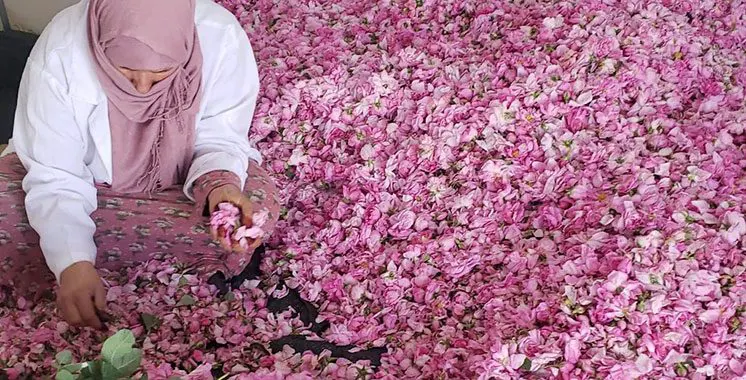
Researchers at Morocco's National Institute of Agricultural Research (INRA) have conducted a study on the essential oil of the Damask rose, also known as Rosa damascena, grown in Kelaat M'Gouna, a region in the Drâa-Tafilalet province. The study analyzed 14 naturally occurring substances in the oil, highlighting compounds such as farnesol, germacrene D, nonadécane, and eicosane. These compounds have shown promise in combating cell oxidation and certain bacteria. The research aims to explore new opportunities for valorizing this local resource, particularly in the production of natural products, cosmetics, and plant-based ingredients.
The Damask rose is an emblematic flower in Moroccan culture, particularly in the Kelaat M'Gouna region, where it is cultivated for its essential oil. The oil is extracted from freshly harvested petals and has been used for centuries in traditional medicine to treat various ailments, including respiratory issues, digestive problems, and menstrual irregularities. The study's findings suggest that the essential oil of the Damask rose may have antioxidant and antibacterial properties, making it a potential natural remedy for various applications.
The research is part of a broader effort to identify bioactive compounds from natural sources with antimicrobial properties. The World Health Organization has highlighted the growing concern of antibiotic resistance, with an estimated 4.95 million deaths worldwide in 2019 attributed to bacterial resistance to antimicrobials. The study's authors emphasize the need for alternative therapeutic strategies, particularly those based on plant-based resources, which offer a rich source of bioactive molecules with potential medicinal applications.
Rosa damascena has a long history of use in traditional medicine, particularly in the Middle East, Central Asia, and the Mediterranean region. The plant's flowers, leaves, and essential oil have been used to treat various health issues, including abdominal and thoracic pain, digestive problems, and menstrual irregularities. The essential oil has also been used as an antiseptic and antispasmodic agent.
The chemical profile of Rosa damascena is diverse, comprising essential oils, flavonoids, polyphenols, and organic acids. This diversity is responsible for the plant's wide range of pharmacological activities, including antimicrobial, antioxidant, anti-inflammatory, and neuroprotective properties. The study's findings on the essential oil's antibacterial and antioxidant properties are consistent with previous research on the plant's medicinal applications.
While the study's results are promising, the researchers emphasize that further studies are needed to confirm the properties of the essential oil. The research was conducted using computer simulations, and laboratory tests and additional studies are required to validate the findings. If confirmed, the study's results could lead to new opportunities for valorizing the Damask rose, a local product with significant economic potential.
The study contributes to a better understanding of the Damask rose, a culturally significant plant in Morocco, and its potential applications in traditional and modern medicine. The research also highlights the importance of preserving and valorizing Morocco's rich plant biodiversity, which offers a wealth of opportunities for the development of new natural products and remedies.
Key points
- Researchers at Morocco's INRA have explored the antibacterial and antioxidant properties of Damask rose essential oil from Kelaat M'Gouna.
- The study analyzed 14 naturally occurring substances in the oil, highlighting compounds with potential medicinal applications.
- The research aims to identify new opportunities for valorizing the Damask rose, a local product with significant economic potential.