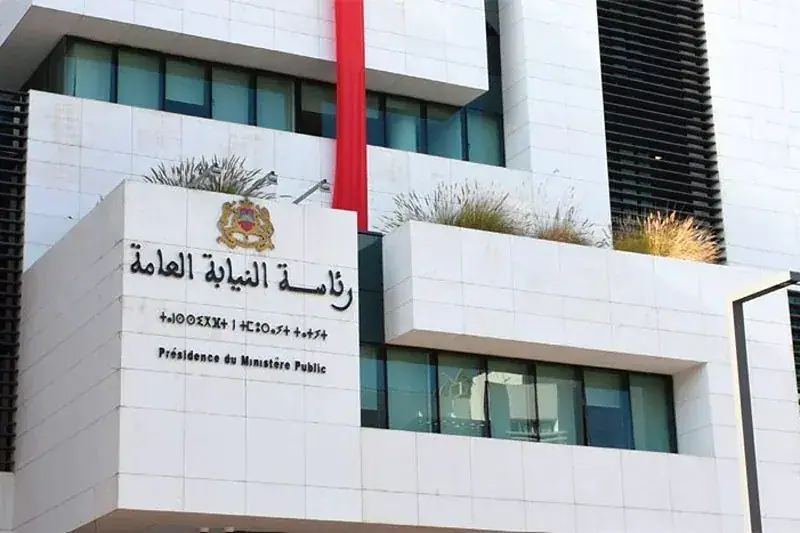
The President of Morocco's Public Prosecution, Hicham Balaoui, has issued a circular to prosecutors, urging them to rationalize appeals against judicial decisions. The circular aims to consolidate judicial efficiency and implement the Public Prosecution's strategic plan. Balaoui emphasized that appeals are a fundamental guarantee of a fair trial, allowing for the re-examination of cases and correction of potential errors.
According to Balaoui, the Public Prosecution is authorized to appeal against repressive decisions as a main party to the public action. However, he stressed that appeals should only be exercised when serious legal and material motives justify it, considering the impact on the duration of the public action and the rights of individuals. The President of the Public Prosecution cited a rise in appeals in 2026, with 12.07% of first-instance judgments and 1.14% of appeal court decisions being appealed.
Balaoui called on prosecutors to carefully examine the content and motivation of judgments before exercising appeals, and to assess the seriousness of legal or material motives justifying the re-examination of a case. He also emphasized the need for a thorough examination of first-instance judgments in delicate cases, evaluating the opportunity to appeal based on established facts, produced evidence, and the proportionality of the sentence.
The President of the Public Prosecution urged prosecutors to avoid systematic appeals, instead conducting an in-depth study of each case and verifying the existence of serious legal or material motives. He also called for the rationalization of appeals against instructions issued by investigating judges, including those related to detention and provisional release.
Balaoui's circular also emphasized the need for a regular follow-up of the outcome of appeals exercised by prosecutors, examining the judicial decisions rendered and identifying the motives for their acceptance, rejection, or inadmissibility. The President of the Public Prosecution stressed the importance of rationalizing appeals, calling on concerned officials to conform to the orientations contained in the circular.
The rise in appeals has prompted concerns about the efficiency of the judicial system and the rights of individuals. The Public Prosecution's strategic plan aims to address these concerns, promoting a more effective and fair judicial process. By rationalizing appeals, the Public Prosecution seeks to ensure that only legitimate and well-founded appeals are exercised, reducing the burden on the judicial system.
The Moroccan judicial system has been working to improve its efficiency and fairness, with a focus on reducing delays and ensuring that justice is served. The Public Prosecution's efforts to rationalize appeals are part of these broader efforts, aimed at promoting a more effective and fair judicial process.
Key points
- The President of Morocco's Public Prosecution, Hicham Balaoui, has expressed concern over a rise in appeals against judicial decisions in 2026.
- Balaoui has urged prosecutors to rationalize appeals, exercising them only when serious legal and material motives justify it.
- The Public Prosecution's strategic plan aims to consolidate judicial efficiency and promote a more effective and fair judicial process.