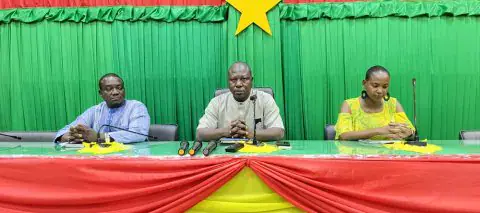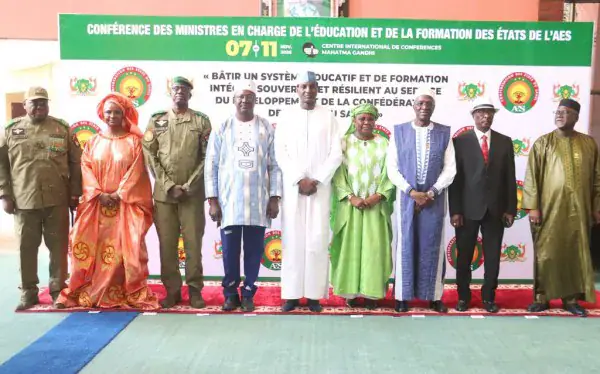
The education ministers of the Alliance of Sahel States, comprising Mali, Burkina Faso, and Niger, have gathered in Niamey, Mali, to discuss building a sovereign and resilient education system. The meeting, held under the theme "Building an Integrated, Sovereign, and Resilient Education and Training System for the Development of the Sahel States Confederation," aims to strengthen cooperation among the three countries in education and vocational training. This cooperation is crucial for the development of the region.
In his opening speech, Mali's Prime Minister, Ali Mahamane Lamine Zeine, emphasized the importance of education and vocational training in preparing the youth to contribute to the region's sovereignty and prosperity. He highlighted the need to reform the education systems to focus on the values of hard work, solidarity, responsibility, and attachment to the independence of the Confederation. The Prime Minister also stressed the importance of promoting scientific and technical education to meet the needs of strategic sectors such as agriculture, health, and infrastructure.
The Prime Minister further emphasized the need for a coherent education system, including harmonized programs, quality education, and mobility of education professionals. He encouraged the ministers to engage in in-depth discussions to establish a unified education system that would enable the youth to participate qualitatively in the construction of their economies. The meeting provides a platform for the ministers to share best practices, mutualize resources and expertise, and develop common programs.
Burkina Faso's Minister of Basic Education, Literacy, and Promotion of National Languages, Jacques Sosthène Dingara, speaking on behalf of his country, which holds the presidency of the AES, highlighted the strategic importance of education and training in building the confederal space. He noted that the three countries face similar challenges, including inadequate infrastructure and equipment, a shortage of qualified teachers and trainers, and the need to improve the quality of education.
Minister Dingara emphasized the need to promote the decolonization of knowledge by rehabilitating endogenous knowledge, languages, history, and intellectual traditions that have been marginalized in the education systems inherited from colonization. He expressed the hope that the meeting would lead to consensual and operational decisions, including the adoption of the Conference's modalities of functioning, a program of activities, and a roadmap for the third year of the AES.
The meeting, which took place on November 10-11, marks an important step in the three countries' efforts to build a common education system adapted to the realities and ambitions of the AES Confederation. The ministers adopted a framework document and the internal regulations of their Conference, as well as several recommendations aimed at strengthening education cooperation among the member states.
The gouverneur of Niamey region, General Assoumane Abdou Harouna, welcomed the delegates and transmitted fraternal greetings from the President of the Republic, General Abdourahamane Tiani, and encouragement from the Prime Minister, Ali Mahamane Lamine Zeine. He noted that the meeting provides a privileged framework for translating the aspirations of the AES peoples into concrete actions.
Key points
- The education ministers of the Alliance of Sahel States aim to build a sovereign and resilient education system.
- The meeting in Niamey focused on strengthening cooperation in education and vocational training.
- The ministers adopted a framework document and internal regulations for their Conference.