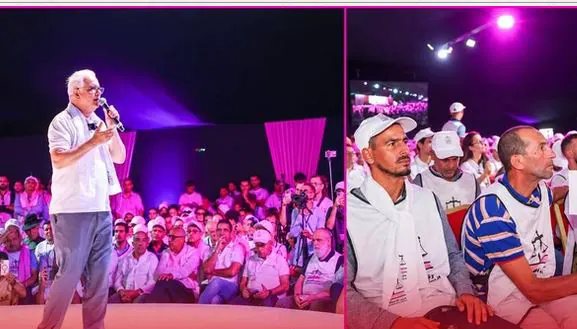
In a recent address, Nizar Baraka, Secretary-General of the Independence Party and head of its electoral list in Larache, emphasized the party's commitment to enacting a law targeting conflict of interest. This move aims to ensure fair opportunities and restore public trust in administration and public policies. Baraka highlighted that the spread of corruption and conflict of interest increases costs for citizens and deprives small and medium-sized enterprises of their legitimate opportunities.
During a meeting with the residents of Larache, Baraka expressed concerns that corruption and conflict of interest hinder the logic of merit and urged for measures to tackle these issues. He also underscored the importance of the family in Moroccan society, citing the historical leader of the Independence Party, Allal Al-Fassi, who stated that the family is the small homeland, and defending the larger homeland requires defending and protecting the family.
Baraka further stressed the need to review the direct social support index to alleviate concerns about its potential loss and enable families to access the job market without compromising their benefits. The goal, he clarified, is not to sustain assistance but to empower families to overcome poverty through education, training, and income-generating activities, with a particular focus on integrating young people who are not in education, training, or employment.
Meanwhile, Aziz Akhannouch, Head of Government and member of the National Rally of Independents' political bureau, addressed party supporters in Tangier, urging them to remain calm with only 48 hours left before the September 23rd election. Akhannouch emphasized the importance of confidence and calm, stating, "Those who have it, have it," as the competition between parties intensifies.
In a separate development, Morocco has signed a historic memorandum of understanding with Nutricrops OCP, a subsidiary of the Office Chérifien des Phosphates (OCP), to supply Brazil with 3.8 million tons of fertilizers. This agreement comes at a time of global supply challenges and climate change impacts, positioning Moroccan fertilizers as a crucial component in securing food supplies.
A collective of civil society organizations has expressed concerns about a decline in voter turnout, citing data from the Ministry of Interior. The groups are urging for measures to address this trend and encourage greater participation in the electoral process.
On a different note, a recent report on the religious situation in Morocco highlighted the country's national, regional, and international efforts to combat terrorism. The report, published by the Center for Advanced Moroccan Studies and Research, analyzed Morocco's proactive approach, including drying up financing sources and strengthening international security cooperation.
Key points
- Moroccan parties are pushing for anti-corruption laws and enhanced social support.
- The country is set to supply Brazil with significant amounts of fertilizers.
- Civil society groups are concerned about declining voter turnout.