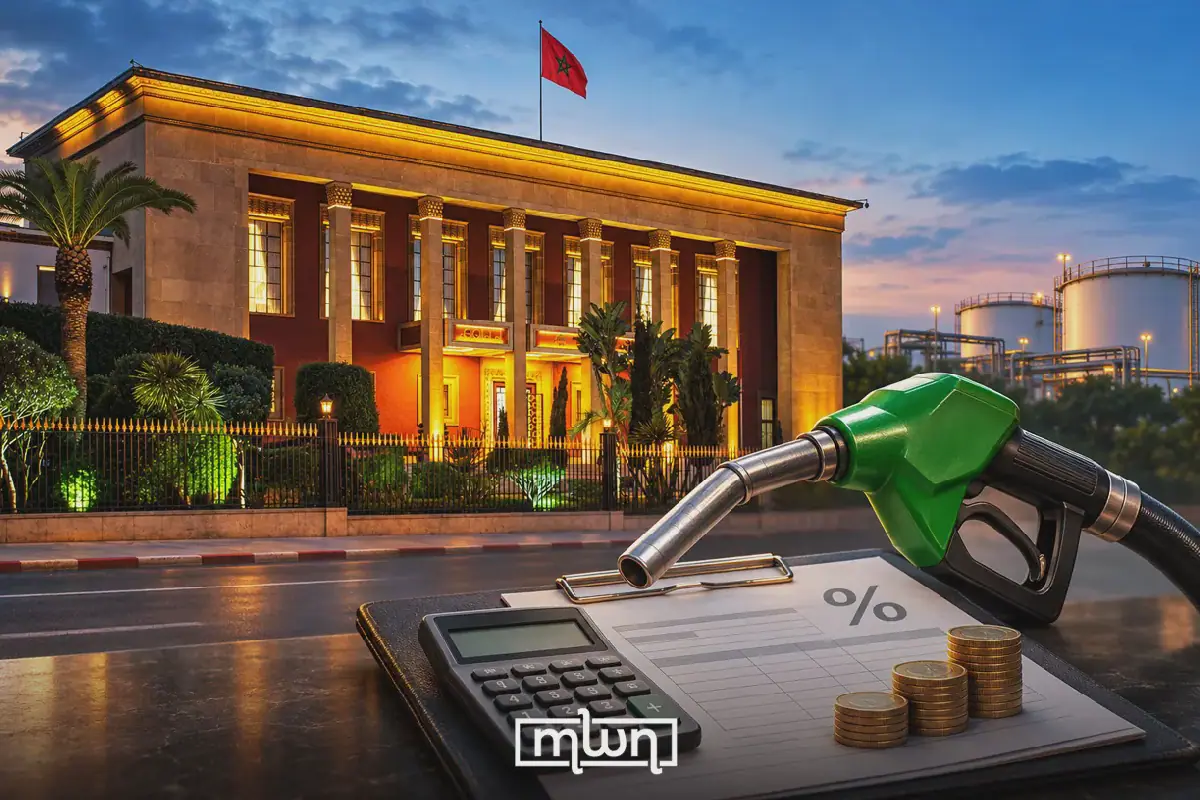
Morocco's opposition groups in the House of Representatives voted against an amendment to raise the corporate tax on fuel companies from 35% to 40%. The amendment targets 11 fuel companies with annual profits exceeding MAD 100 million ($10 million). The vote was part of the examination of the 2027 Finance Bill in the Finance and Economic Development Committee. The opposition parties that voted against the amendment include the Justice and Development Party (PJD), the Popular Movement, and the Left Alliance parliamentary group.
The opposition's vote against the tax increase has been criticized as contradictory, as some of these parties have previously denounced the fuel lobby and criticized the profits of major companies in the sector. The PJD and the Left Alliance have routinely attacked the fuel sector's largest players, making their vote against the tax aimed at these companies seem inconsistent. The government had assured that the tax increase would not be passed on to consumers, but the opposition remained skeptical.
The 2027 Finance Bill proposes raising the tax on companies that import or distribute fuel to 40% once their net profit reaches MAD 100 million ($10 million) or more. Currently, these companies fall under the general corporate rate of 35% at that threshold. The debate over the clause focused on whether the companies would absorb the increase from their profits or pass it on to consumers in the form of higher fuel prices.
The Popular Movement had proposed keeping the rate at 35%, warning that the companies could shift the burden onto drivers and demanding government guarantees against any pass-through. In contrast, the Left Alliance proposed widening the 40% rate by lowering the profit threshold to MAD 50 million ($5 million) and setting a 45% rate for fuel import and distribution firms with net profit of MAD 100 million ($10 million) or more.
The government limited its measure to the fuel sector, targeting 11 companies with annual profits above MAD 100 million ($10 million). The Left Alliance had initially backed the government's direction, arguing that the expected revenue would help fill the state treasury and pointing to a "big monopoly" in the fuel sector. However, they later voted against the clause, along with other opposition parties.
Driss Al Azami Al Idrissi, head of the PJD group, criticized the bill for lacking a guiding thread and a coherent reform vision, describing it as "closer to an accounting budget" that conceals electoral bets rather than building real economic change. He argued that the government had avoided addressing core imbalances draining the economy, such as rent and monopoly, which he held responsible for exhausting Moroccans' purchasing power.
The opposition's vote against the tax increase has sparked controversy, with critics accusing them of prioritizing the interests of fuel companies over those of consumers. The government's decision to limit the tax increase to the fuel sector has been seen as a compromise, but it remains unclear how the tax will affect fuel prices and the profits of fuel companies.
Key points
- The opposition's vote against the 40% tax on fuel firms has been criticized as contradictory given their previous stance on the fuel sector.
- The 2027 Finance Bill proposes raising the tax on fuel companies to 40% once their net profit reaches MAD 100 million ($10 million) or more.
- The debate over the tax increase focused on whether fuel companies would absorb the increase or pass it on to consumers in the form of higher fuel prices.