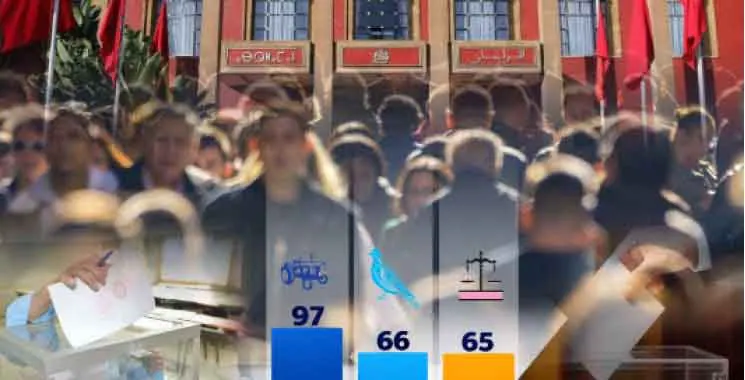
Morocco's legislative elections, held on September 23, 2026, have resulted in a complex picture of power dynamics. The ruling coalition, comprising the Parti de la Justice et du Développement (PJD) was not mentioned but rather PAM, RNI and Istiqlal, maintained a majority in the Chamber of Representatives, securing 228 seats out of 395. However, this represents a decline from their previous total of 270 seats. The PAM emerged as the leading party with 97 seats, followed by the RNI with 66 seats, and the Istiqlal with 65 seats.
The elections have sparked a nuanced debate about the performance of the government and the opposition. While some have interpreted the results as a sanction against the government, others argue that the outcome reflects a redistribution of power rather than a wholesale rejection of the ruling coalition. The fact that the three parties that formed the previous government have maintained their top three positions suggests that the electorate has not entirely turned against them.
A closer examination of the results reveals that the PAM, which was part of the previous government, has actually gained 10 seats, rising from 87 to 97. This development raises questions about the narrative of a uniform rejection of the government's performance. The RNI, on the other hand, has experienced a significant decline, losing 36 seats and dropping to second place.
The Istiqlal party has also faced a decline, losing 16 seats and falling to third place with 65 seats. Despite these losses, the ruling coalition remains dominant, with a significant majority in the Chamber of Representatives. The results have sparked discussions about the implications for the government's future policies and the role of the opposition.
The shift in power dynamics has significant implications for the government's policy agenda. With the PAM emerging as the leading party, it is likely that the party's agenda will play a more prominent role in shaping government policies. The RNI's decline, on the other hand, may lead to a re-evaluation of its role within the coalition.
The results have also raised questions about the performance of Prime Minister Aziz Akhannouch, who has faced criticism for the government's handling of various issues. The RNI's decline has been attributed, in part, to Akhannouch's leadership, but it is unclear how the results will impact his position.
In conclusion, Morocco's legislative elections have resulted in a complex and nuanced outcome. While the ruling coalition has maintained its majority, the results reflect a redistribution of power and a shift in the dynamics of the coalition. The implications of these changes will be closely watched in the coming months.
Key points
- The ruling coalition maintained a majority in the Chamber of Representatives but experienced a decline in seats.
- The PAM emerged as the leading party, gaining 10 seats, while the RNI and Istiqlal experienced declines.
- The results reflect a redistribution of power rather than a wholesale rejection of the ruling coalition.