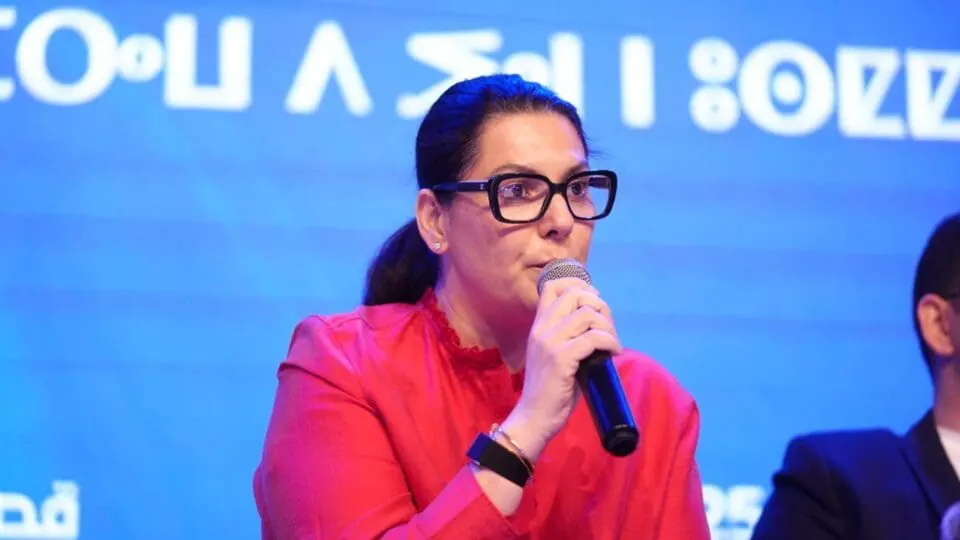
On Tuesday, King Mohammed VI of Morocco appointed Fatima Zahra El Mansouri, the collective leadership coordinator of the Authenticity and Modernity Party (PAM), as the country's new prime minister. According to a statement from the Royal Palace, El Mansouri was tasked with forming a new government. The appointment was made during a meeting at the Royal Palace in Rabat, in accordance with Article 47 of the Moroccan Constitution.
El Mansouri's appointment comes after the legislative elections held on September 23, in which the Authenticity and Modernity Party emerged as the largest party, securing 97 seats out of 395. The National Rally of Independents (RNI) came second with 66 seats, followed by the Independence Party with 65 seats. No single party achieved an absolute majority in the House of Representatives, necessitating negotiations to form a parliamentary majority.
The election results allow for a potential alliance between the PAM, RNI, and Independence Party, which together hold 228 seats. According to the Moroccan Constitution, the prime minister is appointed from the party that leads the parliamentary elections, while other government members are appointed on the prime minister's proposal.
After forming her government, El Mansouri will present her government's program to parliament. The government will not be fully installed until its program gains the confidence of the House of Representatives with an absolute majority of its members, which is at least 198 votes out of 395. This process is crucial for the government's legitimacy and effectiveness.
The appointment of El Mansouri as prime minister marks a significant step in Morocco's political process. As the coordinator of the PAM's collective leadership, she has experience in party politics and will be expected to navigate the complexities of forming a coalition government. Her task will be to build a government that can address the country's challenges and priorities.
The new government's agenda will likely focus on economic development, social issues, and reforms. Morocco has been working to strengthen its economy and improve living standards, and the new government will be expected to continue these efforts. El Mansouri's experience and the PAM's election victory position her to play a key role in shaping Morocco's future.
The international community has taken note of El Mansouri's appointment, with many countries likely to establish relations with the new government. Morocco plays a significant role in regional and international affairs, and its government will be expected to continue engaging with global partners. The country's stability and prosperity are of interest to its allies and neighbors.
Key points
- King Mohammed VI appoints Fatima Zahra El Mansouri as Morocco's new prime minister.
- El Mansouri's party, the Authenticity and Modernity Party, won 97 seats in the legislative elections.
- The new prime minister will need to form a coalition government to achieve an absolute majority in parliament.