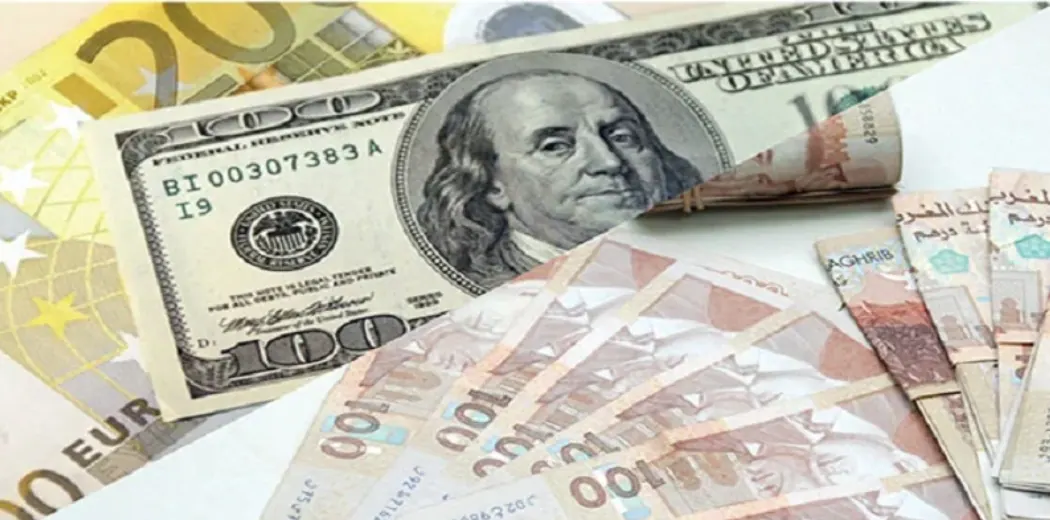
The Moroccan dirham has experienced a decline in value against major currencies, according to data released by Bank Al-Maghrib (BAM), the country's central bank. From September 17 to 23, 2026, the dirham depreciated by 0.3% against the euro and 1.5% against the US dollar. During this period, BAM did not conduct any adjudication operations on the foreign exchange market.
The official reserve assets in Morocco stood at 503 billion dirhams (MMDH) as of September 18, representing a 0.6% increase from the previous week and a 21% rise compared to the same period last year. This information was provided by BAM's weekly bulletin of indicators. The central bank's interventions during the same period averaged 149.6 MMDH per day.
BAM's interventions comprised various financial instruments, including 7-day advances worth 54.2 MMDH, longer-term pensions valued at 48.5 MMDH, and guaranteed loans amounting to 46.9 MMDH. On the interbank market, the daily average exchange volume was 3.5 MMDH, with an interbank rate of 2.25%. On September 23, BAM injected 63.7 MMDH through 7-day advances.
The Moroccan stock market, as reflected by the MASI index, saw a 0.3% appreciation from September 18 to 23. However, this gain was not enough to offset earlier losses, resulting in a year-to-date performance of -4.3%. Sectoral indices showed varied trends, with notable increases in the "Mines" sector (6.8%) and "Telecommunications" sector (1.2%).
Conversely, several sectors experienced declines, including "Building and Construction Materials" (-1%), "Food and Beverage Production" (-1.8%), "Distributors" (-2.4%), and "Insurance" (-1.7%). The overall trading volume on the stock market decreased from 1.6 MMDH to 1.3 MMDH, primarily driven by transactions on the central market.
The trends in Morocco's financial markets have been influenced by various domestic and international factors. The BAM's monetary policy decisions, including maintaining its key interest rate unchanged, have played a role in shaping market dynamics. The country's economic indicators, such as inflation and reserve levels, continue to be closely monitored by investors and policymakers.
As of now, Morocco's economic outlook remains subject to global and regional developments. The performance of key sectors, including mining and telecommunications, may contribute to future market movements. Meanwhile, the dirham's exchange rates against major currencies will likely continue to be a focus area for market participants and the central bank.
Key points
- Moroccan dirham depreciates against US dollar and euro
- Official reserve assets rise 21% year-over-year
- MASI index up 0.3% for the week, still down 4.3% year-to-date