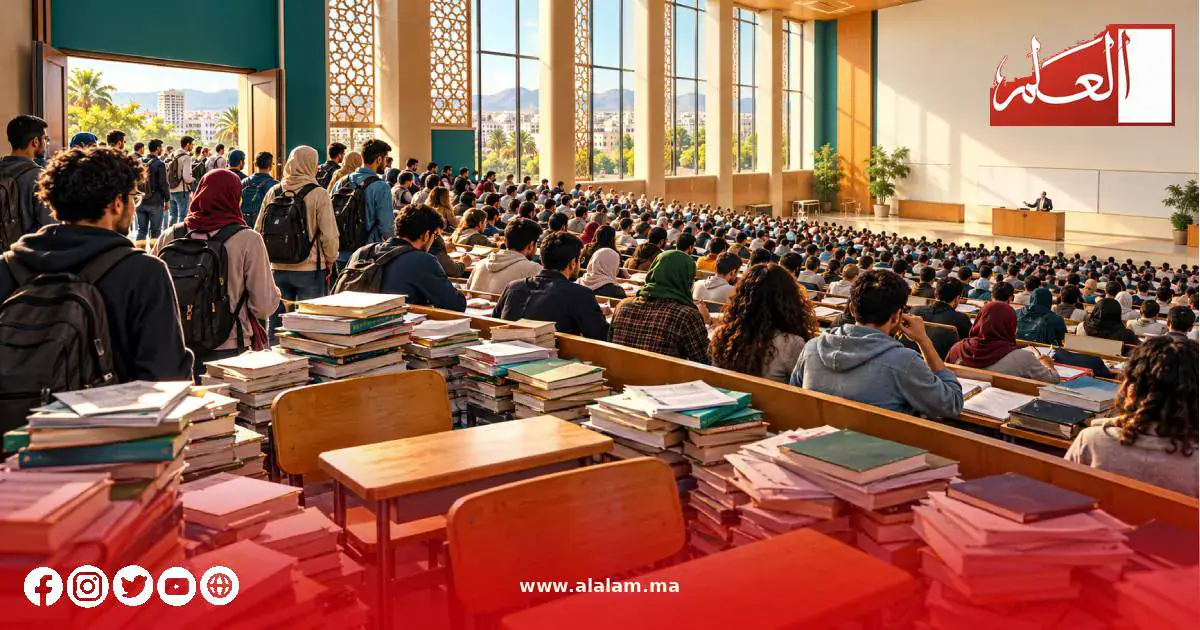
Morocco's higher education system is facing significant challenges, including a shortage of seats and infrastructure, which is affecting the quality of education. According to a recent report, the country's public universities have a total capacity of 598,612 seats, but the number of registered students is 1,090,803, leaving over 492,000 students without a seat. This shortage is putting pressure on the existing infrastructure and affecting the quality of education.
The report also highlighted that the growth in infrastructure has been slow, with only a 1.2% increase in capacity, adding just 7,039 seats, while the number of students grew by 1%. This slow growth is not keeping pace with the increasing demand for higher education, and the report warns that this could lead to further congestion and decreased quality of education. The situation is particularly challenging in institutions with open admissions, which bear the brunt of the large number of students.
The report also raised concerns about the human resources available to support education, with only 25,111 permanent professors, representing 59% of the academic staff, while 41% are non-permanent or contract workers. This has resulted in a worrying teacher-student ratio of one professor for every 43 students in public universities, highlighting a significant shortage of qualified teaching staff. The lack of permanent professors and the reliance on non-permanent staff are affecting the quality of education and research.
In addition to the academic challenges, the report also highlighted the shortage of social services for students, including accommodation and financial support. The 25 available university residences can only accommodate 56,226 students, a small fraction of the growing number of students coming from distant regions. Furthermore, while 430,140 students receive scholarships, a large proportion of students, over half of those registered, do not receive financial support, exacerbating social challenges and increasing dropout rates.
The report emphasized the urgent need for legislative reform and modernization of governance to address these challenges. The proposed reforms aim to modernize the higher education system, improve the quality of education, and increase the employability of graduates. The plan includes the creation of a strategic council and the development of programs that meet international standards and labor market requirements.
The Moroccan government has set an ambitious goal to reform the higher education system by 2030. The reforms aim to improve the quality of education, increase access to higher education, and make the system more responsive to the needs of the labor market. The government recognizes that addressing these challenges will require significant investment in infrastructure, human resources, and social services.
The challenges facing Morocco's higher education system are complex and multifaceted, requiring a comprehensive and coordinated response. The report's findings highlight the need for urgent action to address the shortage of seats, infrastructure, and human resources, as well as the need for legislative reform and modernization of governance. By addressing these challenges, Morocco can improve the quality of education and increase access to higher education for its citizens.
Key points
- Morocco's higher education system faces significant challenges, including a shortage of seats and infrastructure, affecting the quality of education.