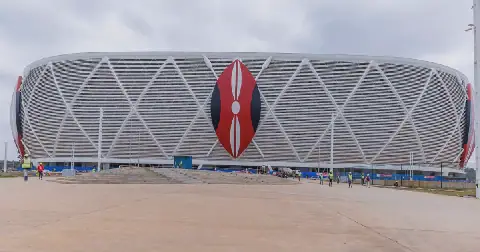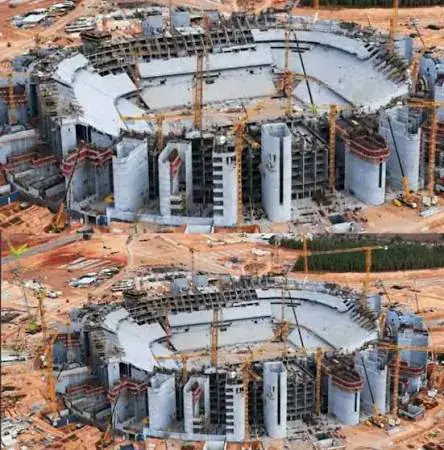
The construction of Morocco's largest stadium, Hassan II, in Benslimane, continues as part of the country's preparations to host the 2030 World Cup. The project involves transforming the site into an integrated sports complex, including a stadium and surrounding infrastructure. A recent development saw the awarding of a contract to CMS-GTR for external infrastructure work.
The contract, valued at approximately MAD 2.7 billion, has a specified completion period of 18 months. The scope of work includes roads, paths, squares, and technical equipment surrounding the stadium. This phase of the project aims to ensure smooth traffic flow for spectators and vehicles, as well as organize various logistical aspects related to major sports events.
The external infrastructure work encompasses several key components. These include the construction of access and exit roads, intersections, internal paths, and service roads. Additionally, the project involves building pedestrian walkways, sidewalks, and engineering structures. The installation of water, electricity, telecommunications, and fiber-optic networks is also planned.
Furthermore, the project includes the implementation of rainwater and wastewater drainage systems, as well as safety and access control equipment. The construction of walls, barriers, and gates, along with the development of open spaces, green areas, and landscaping, are also part of the scope. This comprehensive approach underscores Morocco's ambition to host the 2030 World Cup.
The Hassan II Stadium is expected to be one of the largest stadiums globally and a key component of Morocco's bid to host the 2030 World Cup. The project's investment in external infrastructure reflects the country's commitment to creating a world-class sports facility that meets international standards. The stadium is envisioned as a central element in Morocco's sports infrastructure.
As the project progresses, the Hassan II Stadium continues to solidify its position as one of Morocco's flagship sports initiatives. The development is seen as an opportunity for Morocco to showcase its organizational and engineering capabilities. The project is also expected to leave a lasting legacy beyond the 2030 World Cup.
The successful completion of the Hassan II Stadium development project will not only provide a state-of-the-art sports venue but also contribute to Morocco's sports infrastructure and legacy. The project's progress will be closely watched as Morocco prepares to host the 2030 World Cup.
Key points
- The Hassan II Stadium development project involves a MAD 2.7 billion investment in external infrastructure.
- The project aims to create a comprehensive sports complex, including a stadium and surrounding infrastructure.
- The development is expected to be completed within 18 months.
Reporting sources
- الأشغال الخارجية لملعب الحسن الثاني تدخل مرحلة جديدة باستثمار 2.7 مليار درهم · almountakhab.com