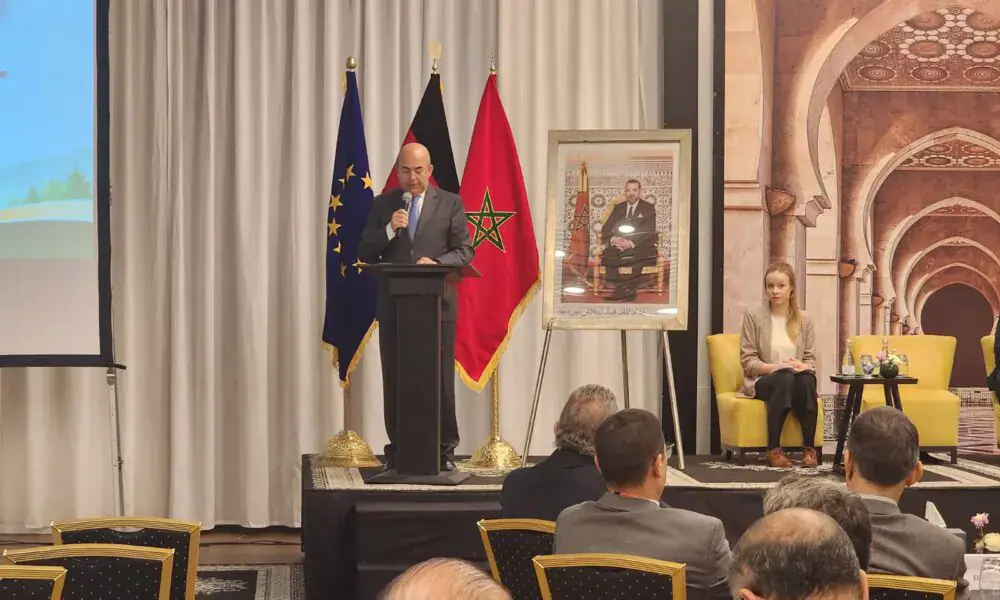
The Green Jobs project, launched in 2018, has come to a close after eight years of operation in Morocco. The project, which had a total budget of 11 million euros, was a joint effort between the Moroccan National Agency for Water and Forests (ANEF) and the German Development Agency (GIZ), with support from the German Federal Ministry for Economic Cooperation and Development (BMZ). The project aimed to promote green entrepreneurship and economic development in rural and forest areas.
The project covered four regions in Morocco: Tanger-Tétouan-Al Hoceïma, Fès-Meknès, Rabat-Salé-Kénitra, and Béni Mellal-Khénifra. During its eight-year operation, Green Jobs supported 120 collective economic structures and created 2,373 jobs, including 862 for women and 730 for young people. Additionally, the project improved the incomes of 2,319 beneficiaries and increased the turnover of 52 structures.
The project's approach focused on providing multidimensional support to beneficiary structures, including technical and entrepreneurial training, equipment, financial management, digital marketing, and access to commercial outlets. The project's strategy was aligned with Morocco's "Forests of Morocco 2020-2030" strategy, which targets several high-potential economic sectors, including aromatic and medicinal plants, ecotourism, continental aquaculture, forest services, apiculture, and organic saffron.
According to Abderrahim Houmy, Director General of ANEF, the project has not only achieved impressive numbers but also contributed to the emergence of human success stories and collective achievements. The project's impact goes beyond statistics, with many beneficiaries strengthening their skills, developing their activities, and building new perspectives to improve their living conditions.
Rico Langeheine, Resident Director of GIZ, highlighted the project's approach, which was based on understanding the real needs of cooperatives and the specificities and potential of each territory. He emphasized that sustainable valorization of natural resources can be a powerful driver of local economic development, job creation, and environmental preservation.
The project also focused on training, with 3,498 people benefiting from entrepreneurial and technical training, and 2,458 trained in environmentally friendly practices. A total of 3,685 people adopted these practices in their activities. The project's second phase focused on consolidating achievements, transferring skills, and institutionalizing them within ANEF.
The project's sustainability is now ensured through three levers: scaling up successful experiences, integrating the Green Jobs approach into ANEF's operational systems, and strengthening economic support for cooperatives. The project's closure marks the beginning of a new dynamic in promoting green jobs and sustainable development in Morocco's territories, with a focus on developing partnerships with the private sector, accessing markets, and certification.
Key points
- The Green Jobs project created 2,373 green jobs in Morocco over eight years.
- The project supported 120 collective economic structures and improved the incomes of 2,319 beneficiaries.
- The project's approach focused on providing multidimensional support to beneficiary structures, including technical and entrepreneurial training, equipment, and access to commercial outlets.