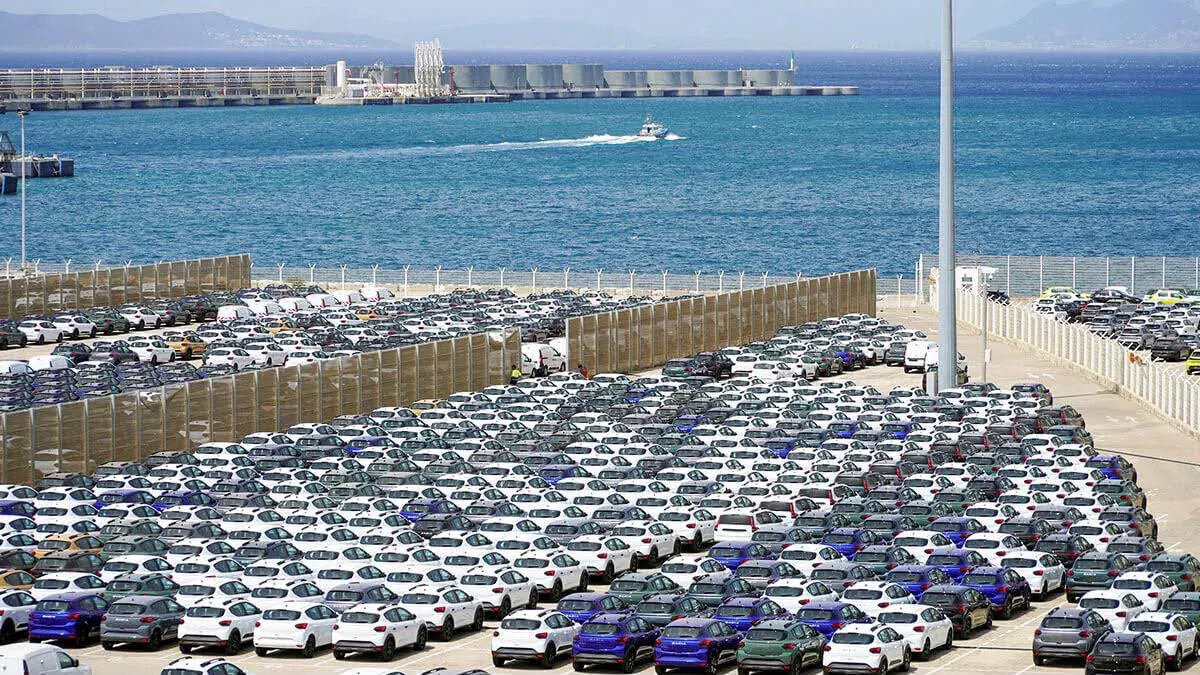
Morocco's exports to the European Union have undergone a significant shift, with automotive and industrial equipment emerging as the leading sectors. According to data from the European Commission, these sectors accounted for $12.9 billion, or 50.6%, of Morocco's total exports to the EU in 2025. This marks a substantial change from previous years, when agricultural products dominated Moroccan exports to the EU.
The EU's imports from Morocco totaled $25.5 billion in 2025, with agricultural products, such as tomatoes, citrus fruits, and red fruits, accounting for $3.7 billion, or 14.6%. This represents a significant decline in the share of agricultural products, which have long been a mainstay of Moroccan exports to the EU. The growth of the industrial sector, including automotive, aerospace, and electronics, has contributed to this shift.
The automotive sector has been a key driver of Morocco's industrial growth, with major investments in Tangier and Kenitra. The expansion of this sector has been supported by the government's efforts to develop the country's industrial capabilities and integrate into regional value chains. Morocco's strategic location and competitive labor costs have also made it an attractive destination for foreign investors.
Despite the decline in agricultural products' share, they continue to play a significant role in Moroccan exports to the EU. The proximity of Morocco to Europe, combined with its well-developed cold chain and packaging infrastructure, has enabled the country to maintain a strong presence in the EU market for fresh produce.
The overall trade in goods between Morocco and the EU totaled $62.2 billion in 2025, with the EU exporting $36.7 billion to Morocco and importing $25.5 billion. This resulted in a trade surplus of $11.2 billion in favor of the EU. The data highlights the need for Morocco to diversify its economy and increase the value-added of its products.
The growth of Morocco's industrial sector has been driven by a combination of foreign investment and government support. The country's automotive sector has attracted significant investment, with several major manufacturers establishing operations in Morocco. The aerospace and electronics sectors have also seen significant growth, with Morocco becoming a major hub for these industries in Africa.
The shift in Morocco's exports to the EU has significant implications for the country's economic development. The growth of the industrial sector is likely to continue, driven by investment in key sectors such as automotive, aerospace, and electronics. However, the agricultural sector will need to adapt to the changing market dynamics and focus on increasing the value-added of its products.
Key points
- Morocco's exports to the EU were driven by automotive and industrial equipment in 2025.
- The country's agricultural exports to the EU declined in 2025, accounting for 14.6% of total exports.
- The overall trade in goods between Morocco and the EU totaled $62.2 billion in 2025.