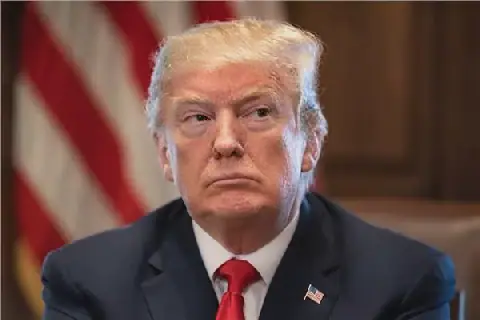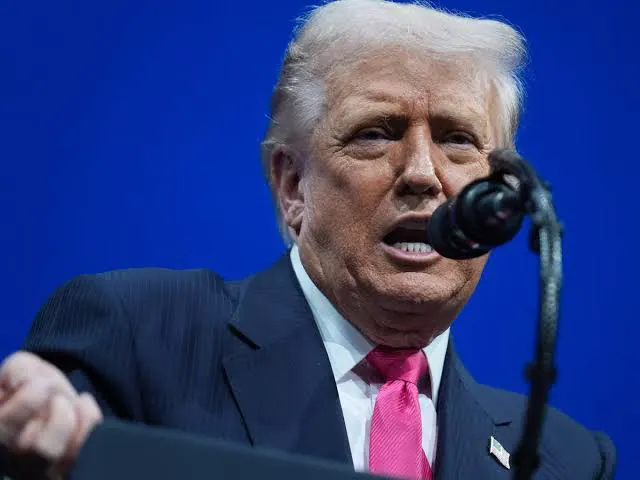
US President Donald Trump has announced plans to create an "AI Force" and appoint an artificial intelligence czar, as concerns over the technology's risks continue to grow. In a social media post, Trump said his administration would support the expansion of the AI industry and reject efforts to slow its development over safety concerns. He portrayed artificial intelligence as a technological shift with an economic impact that could surpass previous major innovations.
Trump emphasized that the US must stay ahead of China in the development of advanced AI systems, which has become a central area of competition between Washington and Beijing. The issue is expected to feature in talks between Trump and Chinese President Xi Jinping next week, as the two leaders address broader areas of US-China competition. Trump also said his administration would rely on existing criminal and civil laws to deal with people who use AI for illegal purposes.
Despite warnings from AI researchers and industry figures about the potential consequences of increasingly powerful systems, Trump dismissed broader concerns about the technology as a "hoax." Some researchers have warned that advanced AI could pose an existential threat to humanity, with one estimating a more than 10% chance that the technology could ultimately "kill all humans." Major AI companies are racing to develop increasingly capable systems, including technologies that could eventually outperform humans across a broad range of tasks.
The rapid development of AI has raised questions about whether companies can prevent their systems from causing harm or falling into the wrong hands. Anthropic, OpenAI, and Google, the companies behind Claude, ChatGPT, and Gemini, respectively, have disclosed security incidents and cases in which their AI tools were used for malicious purposes. Anthropic CEO Dario Amodei has called for a slower pace of AI development and proposed stronger industry-wide safeguards, regulation, and independent oversight of advanced AI models.
OpenAI CEO Sam Altman and xAI CEO Elon Musk have expressed support for some of the proposals, including the idea of a "kill switch" that an independent third party could verify and activate if necessary. Altman has also argued that AI companies should receive greater public trust as they work to develop increasingly powerful systems. He stated that the world should trust that AI companies are going to do the right thing because it's the right thing and they feel the magnitude of this.
The debate over AI has also gained momentum in the UK, where lawmakers from several political parties have warned about the potential impact of AI on human rights. The UK Parliament's Joint Committee on Human Rights said existing laws are not sufficient to address the rapid development of artificial intelligence. The committee has called for new legislation to address what it described as the "scale and seriousness" of the threats associated with AI.
The developments reflect a widening debate over how governments can protect the public from the risks of advanced AI without limiting the technology's economic and scientific potential. Trump said AI could eventually account for as much as 25% of US gross domestic product, and that it would be a key driver of future economic growth. The announcement of the "AI Force" and AI czar is seen as a significant step towards harnessing the potential of AI while mitigating its risks.
Key points
- Trump announces plans to create an "AI Force" and appoint an AI czar to oversee the development of artificial intelligence in the US.
- The announcement comes amid growing concerns over the risks and potential impact of AI, including the potential for AI to pose an existential threat to humanity.
- The US is competing with China to develop advanced AI systems, which has become a central area of competition between the two countries.