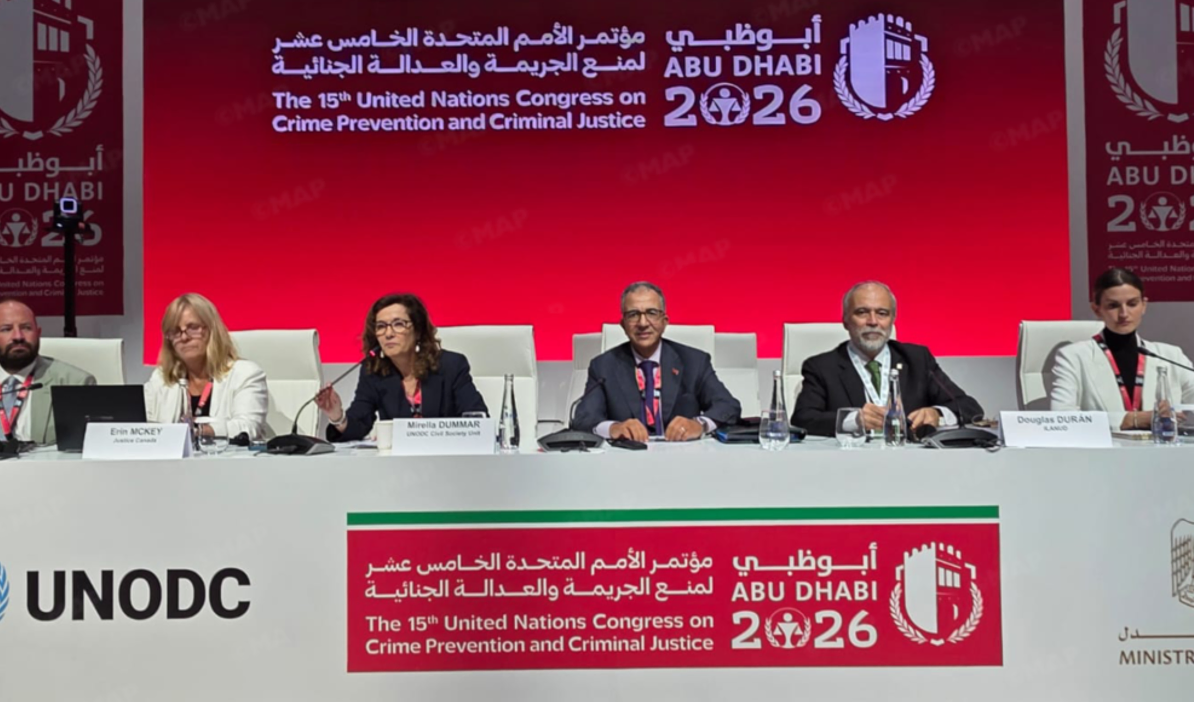
Morocco's experience in crime prevention, driven by data and a human-centered approach, was highlighted at the 15th UN Congress on Crime Prevention and Criminal Justice in Abu Dhabi. The country's representative, Hicham Mellati, presented the national strategy, emphasizing the importance of evidence-based policies and a justice system focused on human beings. This approach aims to prevent crime through proactive measures, including observation and analysis of crime trends.
The Moroccan response to crime involves a multi-faceted approach, incorporating data analysis, human-centered justice, and collaboration with public policies and civil society. A key component is the National Observatory on Crime, established to monitor and analyze crime trends, providing reliable data for informed decision-making. The Observatory brings together various stakeholders, including judicial institutions, law enforcement agencies, and academic partners.
The National Observatory on Crime has conducted several studies on crime in Morocco, adopting a national perspective that considers the country's specificities. The Observatory relies on data from judicial and security institutions, which have specialized units for collecting and analyzing crime data. This enables the development of effective policies and evaluation of their impact.
To enhance analysis, Morocco is working on establishing a national crime map, using geographic information systems to track crime patterns and frequency. This tool will support informed decision-making in justice and targeted prevention measures. The human-centered approach also involves updating the national legislative framework and implementing institutional reforms to prioritize victim support and rehabilitation.
Morocco has made significant strides in supporting victims of crime, with over 500 social assistants working within the judicial system to provide socio-legal services. Specialized cells for victims of violence and human trafficking have been established, along with shelters for victims. The "Moussalaha" program, launched in 2017, is a model for preventing extremism and reducing recidivism through rehabilitation and social reintegration.
The "Moussalaha" program has achieved notable success, with 456 participants in 20 sessions, and an additional 24 participants in a current session. The program's results show no cases of recidivism among beneficiaries, demonstrating its effectiveness. Furthermore, the program's gender-sensitive approach has led to the release of 14 female participants, with the most recent beneficiary released in August.
The Moroccan delegation's presentation at the UN Congress highlighted the country's commitment to evidence-based crime prevention and human-centered justice. The experience shared can inform international efforts to prevent crime and promote social, economic, and environmental development. Key aspects of Morocco's approach include its reliance on data analysis, collaboration with stakeholders, and focus on rehabilitation and social reintegration.
Key points
- Morocco's crime prevention approach prioritizes data-driven policies and a human-centered justice system.
- The country's National Observatory on Crime provides reliable data for informed decision-making.
- The "Moussalaha" program has achieved significant success in preventing extremism and reducing recidivism.