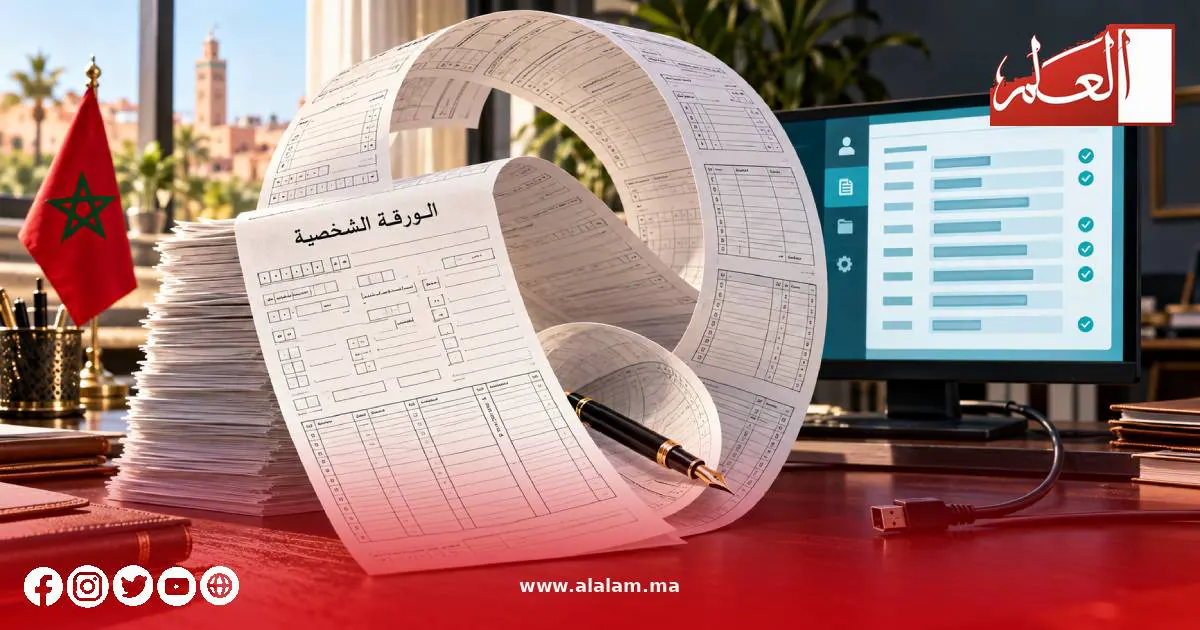
The Moroccan Ministry of National Education has been criticized for its annual practice of requesting personal data from teachers and administrators at the start of each academic year. This practice, which involves filling out a "personal sheet" with details such as name, date of birth, and employment history, has been deemed unnecessary and a waste of time. The ministry already has access to this information, having collected it during the hiring process and throughout employees' careers.
The "personal sheet" has become an annual ritual in Moroccan schools, with teachers and administrators being asked to provide information that the ministry already possesses. This includes details such as job title, grade, and employment history, which are already documented in the ministry's files and databases. Critics argue that this practice is not only redundant but also a relic of a bygone era, when paper-based records were the norm.
The issue has sparked a wider debate about the digitization of administrative processes in Morocco's education sector. While the ministry has made efforts to digitize certain aspects of its operations, critics argue that more needs to be done to streamline processes and eliminate unnecessary paperwork. The current practice is seen as a prime example of how not to implement digital transformation, with employees being asked to perform tasks that could be automated.
The scale of the issue should not be underestimated, with thousands of teachers and administrators being required to fill out the "personal sheet" every year. This has resulted in a significant waste of time and resources, with many employees having to devote hours to completing the form. Moreover, the practice has been criticized for perpetuating a culture of mistrust, with employees being asked to verify information that the ministry already has on file.
So, what is the solution? Critics argue that the ministry should make use of its existing digital infrastructure to simplify the process. By allowing employees to access their personal data online and make any necessary updates, the ministry can eliminate the need for the "personal sheet" altogether. This would not only save time and resources but also improve data accuracy and reduce the risk of errors.
The benefits of digitization are clear, but the ministry's current approach has been criticized for being piecemeal and inadequate. Rather than investing in new technologies, the ministry needs to rethink its approach to administrative processes and focus on creating a more streamlined and efficient system. This will require a fundamental shift in the way the ministry operates, but the potential rewards are significant.
In conclusion, Morocco's education ministry needs to rethink its annual practice of requesting personal data from teachers and administrators. By embracing digitization and streamlining its administrative processes, the ministry can eliminate unnecessary paperwork, reduce waste, and improve data accuracy. Ultimately, this will enable the ministry to focus on what really matters – providing quality education to Morocco's students.
Key points
- The Moroccan Ministry of National Education has been criticized for requiring teachers and administrators to resubmit personal data every September.
- The practice has been deemed unnecessary and a waste of time, as the ministry already has access to this information.
- Critics argue that the ministry needs to rethink its approach to administrative processes and focus on creating a more streamlined and efficient system.