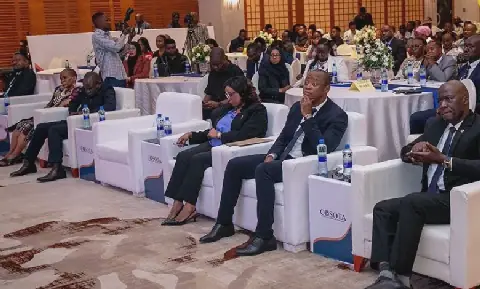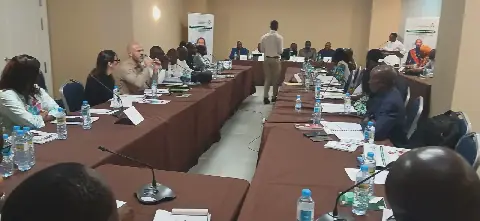
Morocco boasts a unique blend of geostrategic, energy, and technological advantages that position it as a potential regional digital hub. The country's strategic location at the crossroads of Europe, Africa, and the Atlantic, along with its stable institutions, robust telecommunications networks, and significant energy potential, make it an attractive destination for digital investments. The launch of Oracle's cloud region in Casablanca in April 2026, hosted by Moroccan operator N+ONE, is a notable achievement that demonstrates the feasibility of global players leveraging local infrastructure to deploy their services.
However, Redouane El Haloui, Secretary General of the African Federation of Digital Enterprises (FADB) and CEO of RED INNOVATION, emphasizes that Morocco's ambition should not solely focus on attracting hyperscalers. Instead, the country needs to concentrate on building a national digital industry capable of generating value around investments, producing Moroccan and African champions, and conquering new markets. El Haloui highlights the importance of a predictable investment environment, competitive infrastructure, and genuine economic demand in establishing a thriving digital hub.
El Haloui identifies a significant challenge in the industrial and land status of data centers. Currently, these infrastructures can be located in industrial zones alongside manufacturing, logistics, or service activities. Nevertheless, data centers possess distinct economic and technical characteristics that necessitate specific attention. El Haloui advocates for clear and harmonized administrative recognition of data centers' unique features, including their categorization, identification of suitable land, and streamlined authorization procedures.
The energy sector in Morocco has made considerable progress, with laws 13-09 and 82-21, and their evolutions and application texts, structuring the possibilities of renewable energy production, self-production, and supply. The regulatory framework for energy constitutes a significant achievement. However, investors now face the challenge of accessing competitive, contractual, and guaranteed electricity with controlled connection deadlines. El Haloui stresses the need for a coordinated approach between the Centres régionaux d'investissement, energy and telecommunications actors, and concerned administrations to provide investors with rapid visibility on available land, electrical capacities, connectivity, authorizations, and forecast deadlines.
Attracting major industrial investments in data centers requires an explicit industrial identity and an adapted investment pathway. El Haloui recommends clarifying the land categorization of data centers, accompanied by a coordinated system that enables investors to quickly assess available land, electrical capacities, connectivity, authorizations, and forecast deadlines. Furthermore, he emphasizes that attractiveness must be evaluated based on genuine demand, with clients, contracts, operational infrastructures, and a market capable of utilizing these capacities.
Data centers are energy-intensive and consume significant amounts of water, raising concerns about their environmental impact in a context of water stress. El Haloui believes that Morocco can transform this environmental constraint into a technological competitive advantage. He advocates for measurable results, rather than solely relying on environmental commitments. The country's solar and wind energy potential, combined with advancements in the regulatory framework, offers a considerable advantage. El Haloui suggests prioritizing dry cooling, liquid cooling associated with water-saving dissipation circuits, thermal optimization, and the use of treated wastewater.
To ensure the sustainability of data centers, El Haloui recommends the generalization of indicators such as PUE, which measures energy efficiency, and WUE, which measures water usage. This approach will enable the evaluation of the entire system and promote the adoption of environmentally friendly technologies. By addressing these challenges and opportunities, Morocco can build a robust digital industry that contributes to the country's economic growth and competitiveness.
Key points
- Morocco needs to build a national digital industry capable of generating value around investments and emerging as champions in the sector.