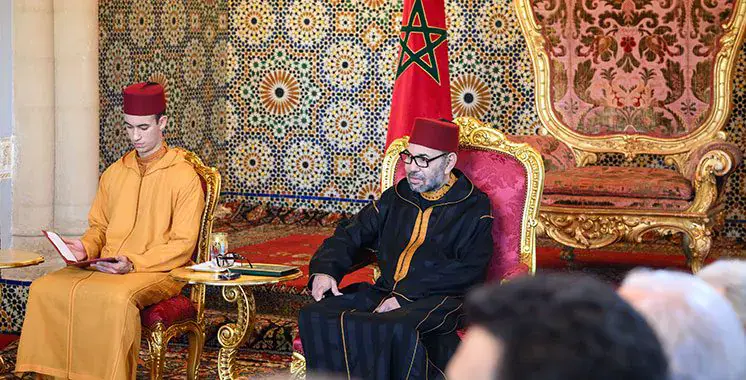
On November 25, 2026, King Mohammed VI, accompanied by Crown Prince Moulay El Hassan, presided over the signing of two framework agreements at the Royal Palace in Rabat. These agreements aim to facilitate the mobilization of the private and national financial sector for the deployment of the roadmap for the development of the defense and security industry. The agreements were signed by several ministers and officials, including the Minister of Interior, Abdelouafi Laftit, and the Director General of the Moroccan Agency for Development of Investments and Exports, Ali Seddiki.
The roadmap for the development of Morocco's defense industry has reached a new milestone with the signing of these agreements. According to Ali Seddiki, the industry is expected to generate at least 50 billion dirhams in revenue per year, with over 65% of this revenue coming from exports. The industry is also expected to create at least 50,000 direct and indirect jobs by 2035. Seddiki emphasized that the King's vision for the industry is to create a sovereign, competitive, and innovative base for defense and security.
The two framework agreements signed aim to mobilize nearly 22 billion dirhams for the development of the defense industry. This funding will be used to support the growth of the industry, which is expected to cover 40% of the needs of the Royal Armed Forces and security agencies. The agreements also aim to promote investment, innovation, and industrialization in the sector. Seddiki noted that the industry will focus on developing new and innovative areas, such as drones, autonomous systems, and cybersecurity.
The Moroccan government has established an agency, DIFAA (Defense Industry Facilitation and Acceleration Agency), to oversee the development of the defense industry. DIFAA will be responsible for promoting investment, managing support systems, and structuring the national industrial base. The agency will also focus on developing the skills and competencies needed to support the growth of the industry.
King Mohammed VI has emphasized the importance of developing a sovereign and competitive defense industry in Morocco. The industry is expected to play a key role in the country's economic development and will be supported by a national research and development ecosystem. Seddiki noted that the industry will also create opportunities for Moroccan companies to export their products and services.
The development of Morocco's defense industry is part of a broader strategy to promote economic growth and industrialization in the country. The industry is expected to contribute to the country's emergence as a leader in the region and will be supported by a range of initiatives aimed at promoting investment, innovation, and entrepreneurship.
Key points
- Morocco's defense industry is expected to generate at least 50 billion dirhams in revenue per year, with over 65% of this revenue coming from exports.
Reporting sources
- Industrie de défense : Mobilisation de près de 22 milliards de dirhams · Aujourd'hui Le Maroc