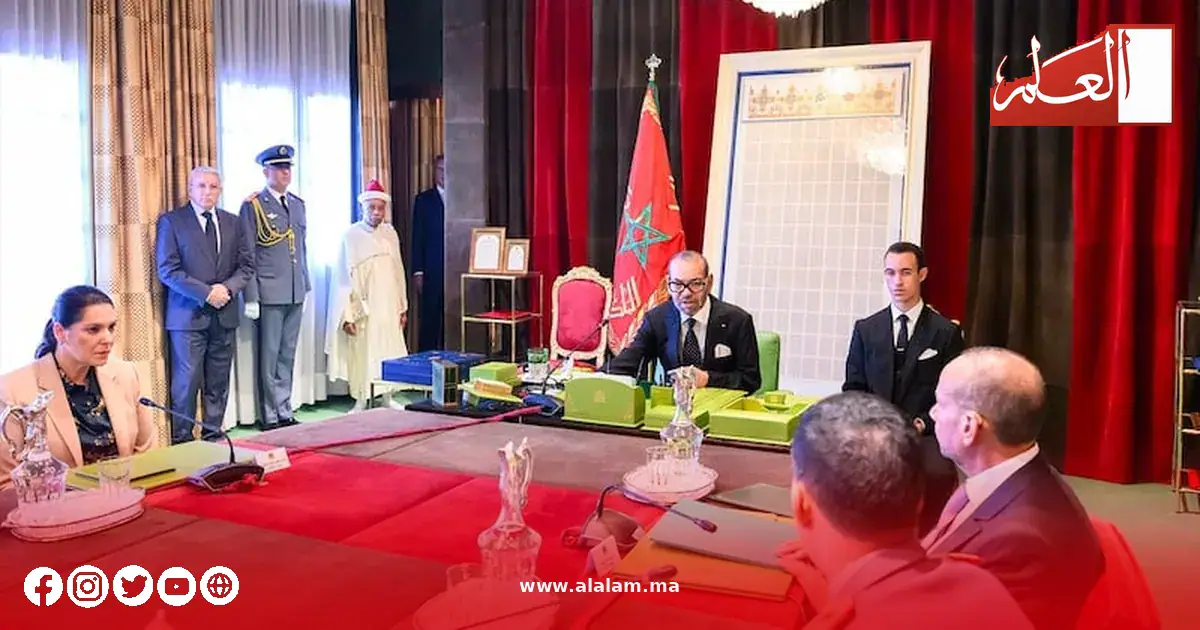
King Mohammed VI has tasked Ali Seddiki, General Director of the Moroccan Agency for Investment and Export Development, with overseeing the practical implementation of Morocco's national defense industry roadmap. This move follows a meeting at the Royal Palace in Rabat on November 18, where the King presented the roadmap for developing the national defense industry. The roadmap aims to build a comprehensive industrial base that enhances Morocco's defense sovereignty and opens up opportunities for economic development and technological advancement.
The roadmap, which has a horizon of 2035, sets out to create 50,000 direct and indirect jobs, cover 40% of the Royal Armed Forces' and security agencies' needs, and generate over 65% of the industrial base's revenue from exports. To achieve these goals, the roadmap focuses on priority areas such as drones, autonomous systems, land and sea systems, defense electronics, cybersecurity, and artificial intelligence applications. The plan also relies on partnerships with foreign companies to integrate Morocco into global value chains and expand the export capabilities of the national industry.
Seddiki's appointment is part of a broader effort to establish a strategic agency to oversee the implementation of the national policy in this field and support investors. The agency is expected to work alongside an industrial holding company that will structure industrial systems, mobilize public and private investment, and encourage the emergence of national champion companies. The roadmap also provides for the mobilization of Moroccan expertise, both domestically and abroad, and the early orientation of young people towards the defense industry.
A budget of four billion dirhams has been allocated from the Hassan II Fund for Economic and Social Development to support the implementation of the roadmap. The plan also involves simplifying investment procedures and mobilizing national private sector investment. The King has instructed the relevant authorities to prepare the necessary governance structures, financing plans, and investment incentives to support the development of the defense industry.
The development of Morocco's defense industry is seen as a key component of the country's strategy to enhance its defense sovereignty and promote economic development. The industry is expected to build on Morocco's existing industrial expertise, particularly in sectors such as aerospace, automotive, and electronics. The roadmap is also expected to contribute to the country's efforts to diversify its economy and reduce its dependence on imports.
The implementation of the roadmap is expected to have a positive impact on Morocco's economy, particularly in terms of job creation and export growth. The defense industry is seen as a key sector for growth, with significant potential for exports and job creation. The King's tasking of Seddiki with leading the practical implementation of the roadmap reflects the government's commitment to moving forward with the development of the defense industry.
The development of Morocco's defense industry is part of a broader effort to promote economic development and enhance the country's defense capabilities. The roadmap is expected to contribute to the country's efforts to build a strong and diversified economy, and to enhance its defense sovereignty. The implementation of the roadmap will require close coordination between government agencies, private sector companies, and other stakeholders.
Key points
- The roadmap aims to create 50,000 direct and indirect jobs and generate over 65% of the industrial base's revenue from exports by 2035.