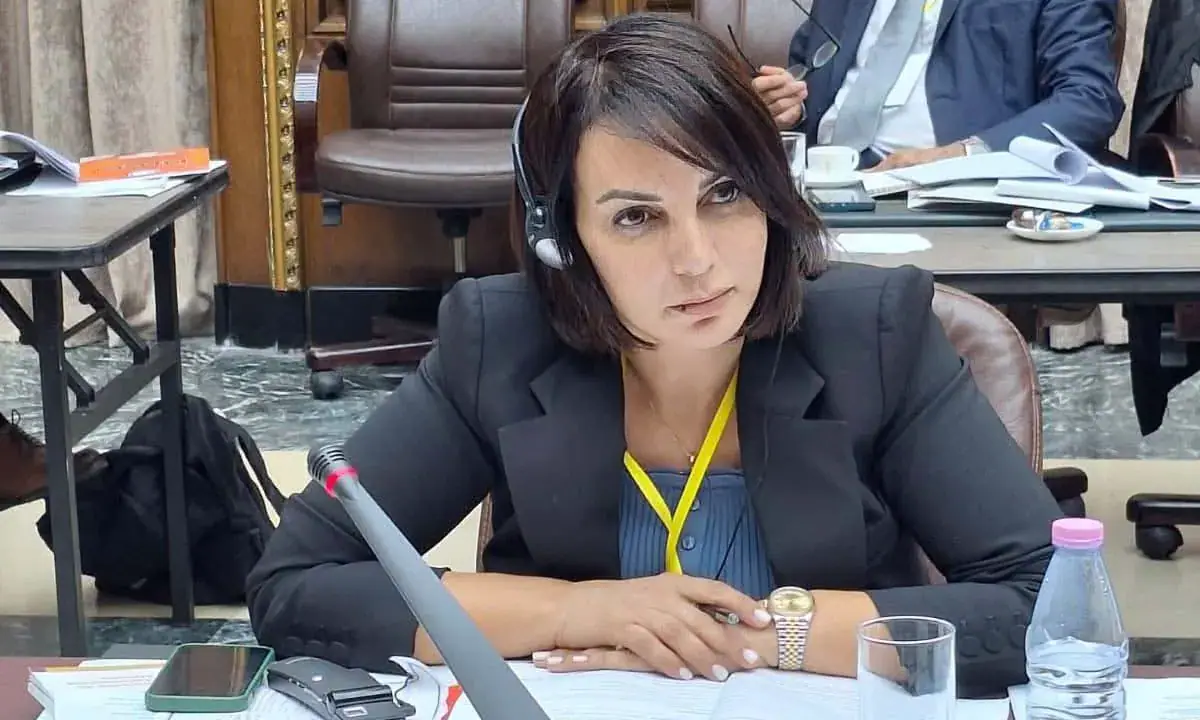
Morocco's Constitutional Court has ruled that a request to verify the parliamentary membership status of Madiha Khair, a representative from the Beni Mellal constituency, is not admissible. This decision was made in the context of a broader ruling on incompatibility cases between membership in the House of Representatives and government positions. The court's decision was based on the fact that Khair was relieved of her government duties before the request was filed.
The court's ruling was grounded in the provisions of Article 14 of Organic Law No. 27.11 relating to the House of Representatives. This article aims to prevent the accumulation of parliamentary and governmental positions by the same individual. According to the law, incompatibility arises from holding both positions simultaneously, necessitating a resolution to this incompatibility. The court's decision was influenced by a royal decree issued on October 18, 2026, relieving Khair of her governmental duties.
Madiha Khair was appointed as a government member on October 16, 2026, by Royal Decree No. 1.26.91. However, her tenure in the government was short-lived, as she was relieved of her duties just two days later, on October 18, 2026, through Royal Decree No. 1.26.93. This sequence of events was crucial in the court's assessment of her eligibility to remain a member of parliament. The court found that since Khair was no longer a government member when the request was made, her parliamentary membership was not in conflict with her governmental position.
The request to verify Khair's eligibility was submitted by the Speaker of the House of Representatives on October 23, 2026. The court's decision implies that the request was premature and did not meet the legal requirements for initiating proceedings to declare a parliamentary seat vacant. This ruling is part of a broader set of decisions by the Constitutional Court concerning the incompatibility of parliamentary membership with governmental positions.
In related cases, the Constitutional Court has declared the seats of several MPs vacant who were appointed to the new government. However, Madiha Khair's case was distinguished by the fact that she was relieved of her government duties before the submission of the request. This distinction was critical in the court's decision to reject the request regarding her parliamentary membership.
The court's ruling underscores the legal framework governing the compatibility of parliamentary and governmental positions in Morocco. It highlights the importance of adhering to the specific legal provisions and timelines in such cases. The decision also reflects the court's role in ensuring that the principles of incompatibility are applied consistently and in accordance with the law.
The outcome of this case has implications for the composition of the Moroccan parliament and the interpretation of laws regulating public office. It demonstrates the court's commitment to upholding the law and ensuring that public officials' positions are consistent with legal requirements. The case of Madiha Khair serves as a precedent for understanding the legal parameters of political office in Morocco.
Key points
- The Constitutional Court's decision was based on the fact that Madiha Khair was relieved of her government duties before the request to verify her parliamentary membership status was filed.