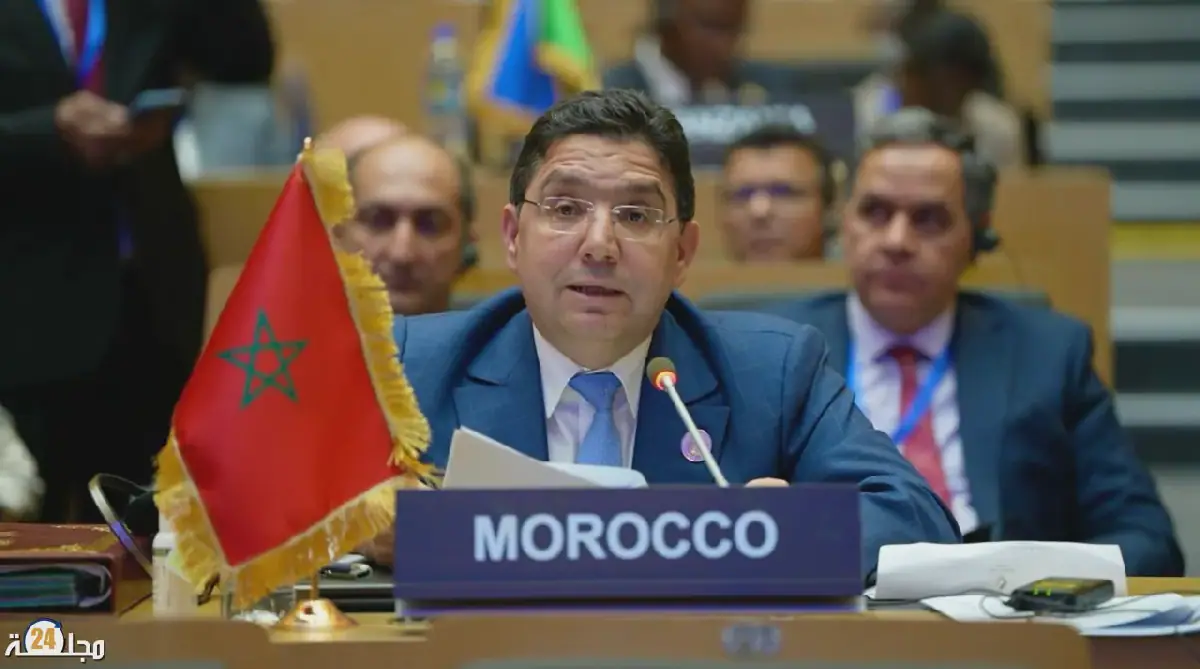
Moroccan Foreign Minister Nasser Buriṭah stated that Russia's veto on a UN resolution extending the MINURSO mission in Western Sahara did not catch Morocco off guard. In a television interview on October 31, 2026, Buriṭah explained that Morocco had been monitoring developments and was prepared for all possibilities, including the non-adoption of the resolution. He emphasized that Morocco's approach to this development is guided by the King's directives to shift from managing the file to changing the rules governing it.
Buriṭah revealed that Morocco had two options in dealing with the potential Russian veto: either continue to manage the situation by making concessions and amending the draft resolution to avoid the veto or consider the development as an opportunity to change the working rules. He indicated that the Russian side had informed Morocco of its intention before the vote, adding that Morocco's preparedness was reflected in the royal statement issued shortly after the vote.
The Minister attributed the stagnation of the political process to Algeria, arguing that some parties treated UN meetings as an end in themselves rather than a means to achieve a final solution. He questioned the usefulness of continuing meetings that seemed to be going around in circles, stressing that Morocco does not reject working under the UN umbrella but insists that the political process must be productive and have clear determinants.
Buriṭah emphasized that the current stage requires determining the basis for negotiation, the parties involved, and addressing the humanitarian situation in the Tindouf camps. He highlighted Morocco's efforts over the past few years to build a parallel international dynamic to the UN process by strengthening the positions of countries supporting Moroccan sovereignty over Western Sahara.
The Minister noted that Morocco has worked to open consulates in the southern provinces and expand international support for the autonomy initiative. He cited recent positions from the United States in 2020, Spain in 2021, France in 2024, and Britain in 2025, among other countries, as evidence of this dynamic. Buriṭah argued that UN Resolution 2797 came in the context of this dynamic and that the current stage allows Morocco to build on its achievements to bring about change in the management of the file.
Regarding the future of the autonomy initiative, Buriṭah stressed that the Moroccan proposal, presented in 2007 and developed over the years, remains the country's primary reference for achieving a political settlement. He described it as Morocco's final proposal but emphasized the need for a clear framework for discussions to avoid the ambiguity that characterized the previous process.
Buriṭah concluded that Morocco will continue its development path in the southern provinces through projects, infrastructure, and attracting investments. He called for removing remaining obstacles and managing the file with a logic of clarity and reason, moving away from maneuvers and short-term gains.
Key points
- Morocco's Foreign Minister Nasser Buriṭah says Russia's veto on a UN resolution extending the MINURSO mission in Western Sahara was expected and that Morocco is prepared to change the rules governing the file.
- Buriṭah attributed the stagnation of the political process to Algeria and emphasized the need for a clear framework for discussions to achieve a political settlement.
- Morocco will continue its development path in the southern provinces, and the current stage requires removing obstacles and managing the file with clarity and reason.