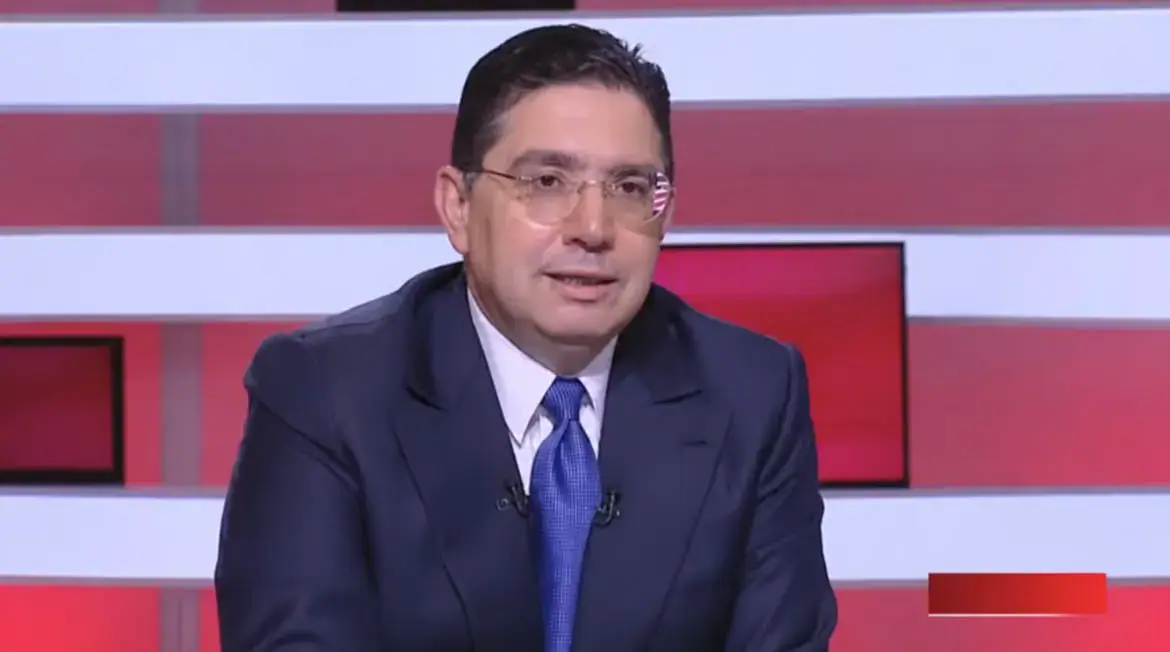
Moroccan Foreign Minister Nasser Buriṭah stated that Morocco was aware of Russia's decision to veto a US-drafted resolution on Western Sahara, and chose not to seek amendments to save the text. Buriṭah made these comments during a TV program on October 31, following the expiration of the MINURSO mandate. He revealed that Russia had informed Morocco of its stance, and that the matter had been discussed.
Buriṭah emphasized that Russia's veto may not pose a threat, but rather presents an opportunity to reassess certain rules. He mentioned that, under the direct instructions of King Mohammed VI, he met with his Russian counterpart, Sergey Lavrov, without attempting to influence the Kremlin's stance. The next step, according to Buriṭah, is to transfer the Western Sahara file from the UN's Fourth Committee, which handles decolonization and special political issues.
The Fourth Committee is the body referred to in the Royal Palace's statement on October 30, which indicated that similar efforts would be pursued soon within other UN bodies. Buriṭah stressed that removing Western Sahara from the list of non-self-governing territories is a straightforward process, given the absence of a veto in the General Assembly. This, he explained, requires only a communication and clarification effort with member states.
According to Buriṭah, the international dimension of the Western Sahara file was reflected in three elements: the presence of MINURSO on the ground, regular Security Council sessions, and the Tindouf camps in southwestern Algeria. He noted that recent developments have led to a decline in the first two elements. The Royal Palace's statement described the non-renewal of MINURSO's mandate as a significant step toward the definitive closure of the Western Sahara file at the UN.
Buriṭah affirmed that Morocco is a responsible state with balanced diplomacy, and will grant MINURSO the time and means necessary for a respectful and orderly withdrawal. He stated that the Kingdom intends to arrange the legal and practical consequences of the non-renewal of the mandate, in the absence of a UN decision before October 31. Buriṭah also recalled Morocco's commitment to peacekeeping operations, citing the participation of nearly 2,000 Moroccan soldiers in the Democratic Republic of Congo and Central Africa.
The minister emphasized that Morocco will no longer see MINURSO signs and blue flags, except for a Moroccan building that still displays the UN flag. He added that arrangements for the withdrawal of MINURSO are being discussed with the UN Secretariat, outside the framework of the Security Council. Buriṭah criticized the presence of separatist elements under the protection of MINURSO and the voices calling for its continuation in the name of human rights.
Buriṭah outlined two options Morocco faced on the eve of the vote: negotiating amendments to the US draft resolution or considering Russia's veto as an opportunity to reassess the rules governing the file within the Security Council. He stated that Moroccan diplomacy chose the second path, aiming to change some "rules of the game" and consolidate the Kingdom's gains.
Key points
- Morocco's Foreign Minister Nasser Buriṭah says the end of MINURSO's mandate marks a new phase in Western Sahara.