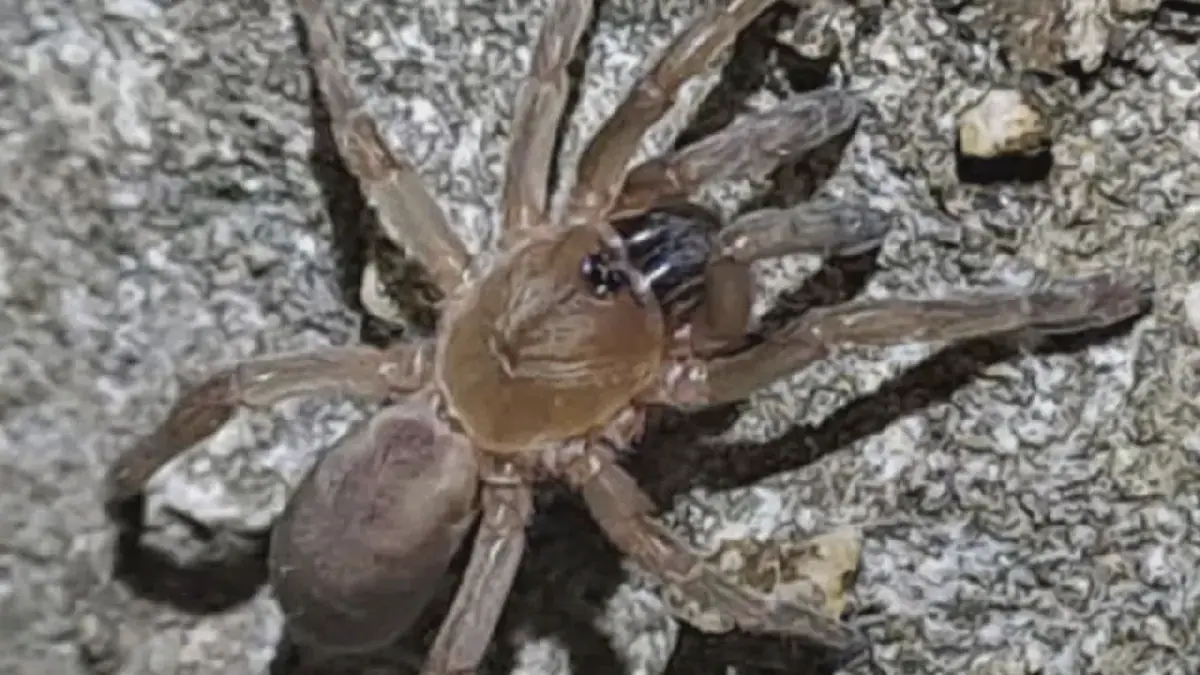
A team from the Durrell Wildlife Conservation Trust has made a groundbreaking discovery on the island of Vacoas, located off the southeastern coast of Mauritius. In 2023, the team spotted a new species of spider, which has been identified as the Mauritian tidal trapdoor spider (Idioctis marevallum). The spider was found in a rocky coastal area, an unusual habitat for this type of spider. The discovery has left scientists amazed, with Dr. Max Tercel, the entomologist behind the find, likening it to stumbling upon a hidden treasure.
The Mauritian tidal trapdoor spider is a unique species that has adapted to living in a habitat that is frequently submerged by the sea. Unlike other trapdoor spiders, which dig their own burrows, this species occupies cavities in coral rock. These cavities were created by worms and mollusks thousands of years ago. To protect its shelter, the spider seals the entrance with a trapdoor made of silk, sand, and algae. At high tide, the spider's refuge is completely submerged and regularly exposed to waves.
Dr. Max Tercel, the entomologist who made the discovery, described the moment he spotted the spider as one of great surprise. He was examining cracks in the rock with a flashlight when he saw the spider's legs protruding from its burrow. Tercel noted that he had only previously observed this type of spider in lush forests and grasslands, making the discovery even more remarkable. Nik Cole, a representative of the Durrell Wildlife Conservation Trust in Mauritius, also expressed his excitement about the find.
The discovery was made by a team from the Durrell Wildlife Conservation Trust, which was working on the island with partners. The team was conducting research on the island's wildlife when they stumbled upon the spider. The trust's work on the island has led to a greater understanding of the unique ecosystem and the species that inhabit it. The discovery of the Mauritian tidal trapdoor spider has shed new light on the adaptability of spiders and their ability to thrive in a variety of environments.
The Mauritian tidal trapdoor spider's unique habitat and adaptations have sparked interest among scientists. The spider's ability to live in a rocky coastal area, where the tide frequently submerges its shelter, is a remarkable example of its adaptability. The discovery has also highlighted the importance of preserving and protecting unique ecosystems, such as the one found on the island of Vacoas.
The Durrell Wildlife Conservation Trust is a Jersey-based organization that works to conserve and protect wildlife and their habitats. The trust's work on the island of Vacoas is part of a larger effort to understand and protect the unique ecosystems of the region. The discovery of the Mauritian tidal trapdoor spider is a significant find for the trust and highlights the importance of continued research and conservation efforts.
The discovery of the Mauritian tidal trapdoor spider has generated excitement among scientists and conservationists. The spider's unique adaptations and habitat make it an important find for the scientific community. As researchers continue to study the spider and its habitat, they hope to gain a greater understanding of this remarkable species and its place in the ecosystem.
Key points
- The Mauritian tidal trapdoor spider is a new species of spider that has been discovered on an island off the coast of Mauritius.
- The spider has adapted to living in a rocky coastal area, where the tide frequently submerges its shelter.
- The discovery highlights the importance of preserving and protecting unique ecosystems, such as the one found on the island of Vacoas.