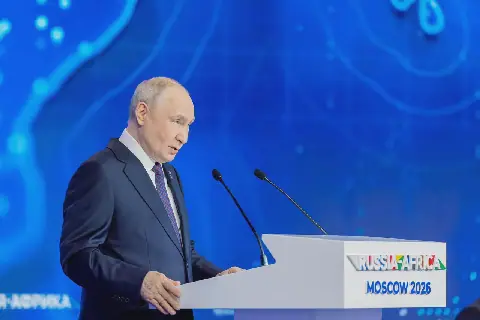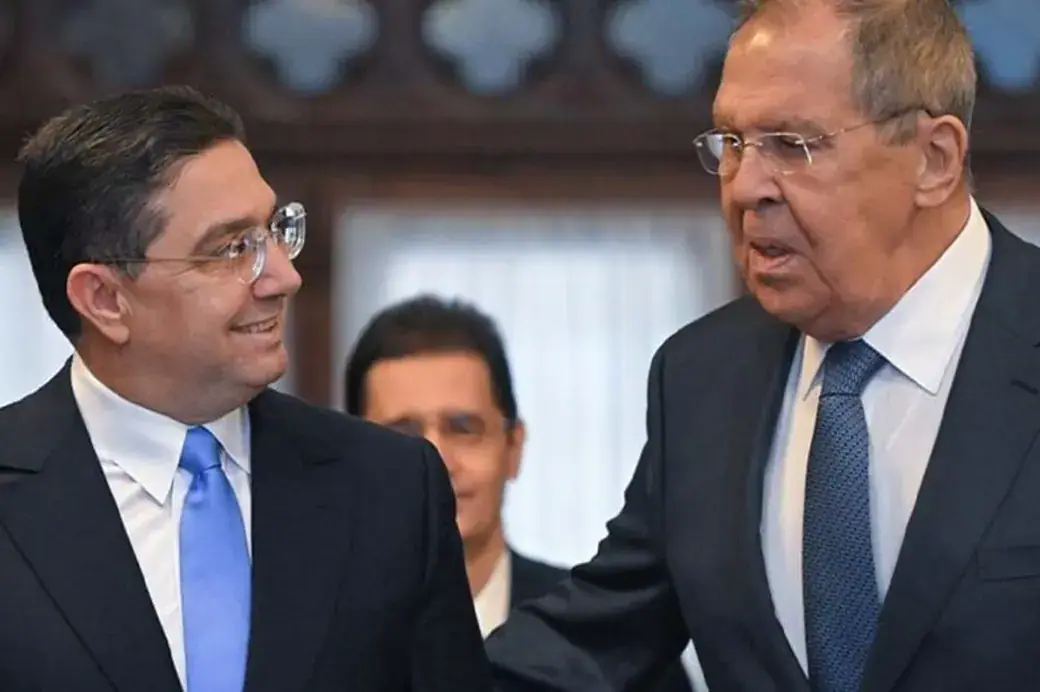
Moroccan Foreign Minister Nasser Buriṭah held bilateral talks with his Russian counterpart, Sergey Lavrov, in Moscow on Wednesday. The meeting took place on the sidelines of a gathering of African foreign ministers, coinciding with the third Russia-Africa Summit. These discussions occur as the international community awaits a United Nations Security Council vote on a new US resolution regarding the UN Mission for the Referendum in Western Sahara (MINURSO).
The talks between Buriṭah and Lavrov come at a critical juncture, just days before a UN Security Council vote scheduled for October 30. The vote will determine the future of MINURSO and its role in Western Sahara. The discussions are expected to focus on the US resolution and its implications for the autonomy initiative proposed by Morocco. Russia's stance is crucial, given its permanent seat on the Security Council and potential influence on the negotiations.
Despite Algeria's close ties with Russia, Morocco hopes that Moscow will maintain a balanced approach, supporting a political solution based on Morocco's autonomy proposal. This approach aligns with the UN Security Council's Resolution 2797, adopted on October 31, 2025. The resolution extended MINURSO's mandate until October 31, 2026, and reaffirmed the council's support for a political solution, with Morocco's autonomy plan serving as the foundation for negotiations.
Russia's position on Western Sahara is significant, as it has previously chosen to abstain from voting on key resolutions. In the case of Resolution 2797, Russia's abstention allowed the measure to pass with 11 votes in favor. This move was seen as a demonstration of Moscow's willingness to engage in diplomatic efforts, despite its close relationship with Algeria, which has historically opposed Morocco's autonomy proposal.
The discussions between Buriṭah and Lavrov are also expected to touch on other regional issues, including the recent developments in the Western Sahara conflict. Morocco's autonomy proposal has been met with resistance from Algeria and the Polisario Front, which have advocated for a referendum to determine the territory's future. The international community remains divided on the issue, with some countries supporting Morocco's proposal and others calling for a more inclusive solution.
The meeting between Buriṭah and Lavrov highlights the complexities of international diplomacy in the Western Sahara conflict. As the UN Security Council prepares to vote on the US resolution, Morocco is seeking to build support for its autonomy proposal. Russia's stance will be crucial in shaping the outcome of the vote and the future of MINURSO.
The Western Sahara conflict has been a longstanding issue, with Morocco and the Polisario Front engaged in a decades-long dispute over the territory. The conflict has led to a significant humanitarian crisis, with thousands of refugees and internally displaced persons affected. A peaceful resolution to the conflict remains elusive, with diplomatic efforts ongoing to find a solution that satisfies all parties involved.
Key points
- Moroccan Foreign Minister Nasser Buriṭah meets with Russian counterpart Sergey Lavrov in Moscow to discuss Western Sahara developments.