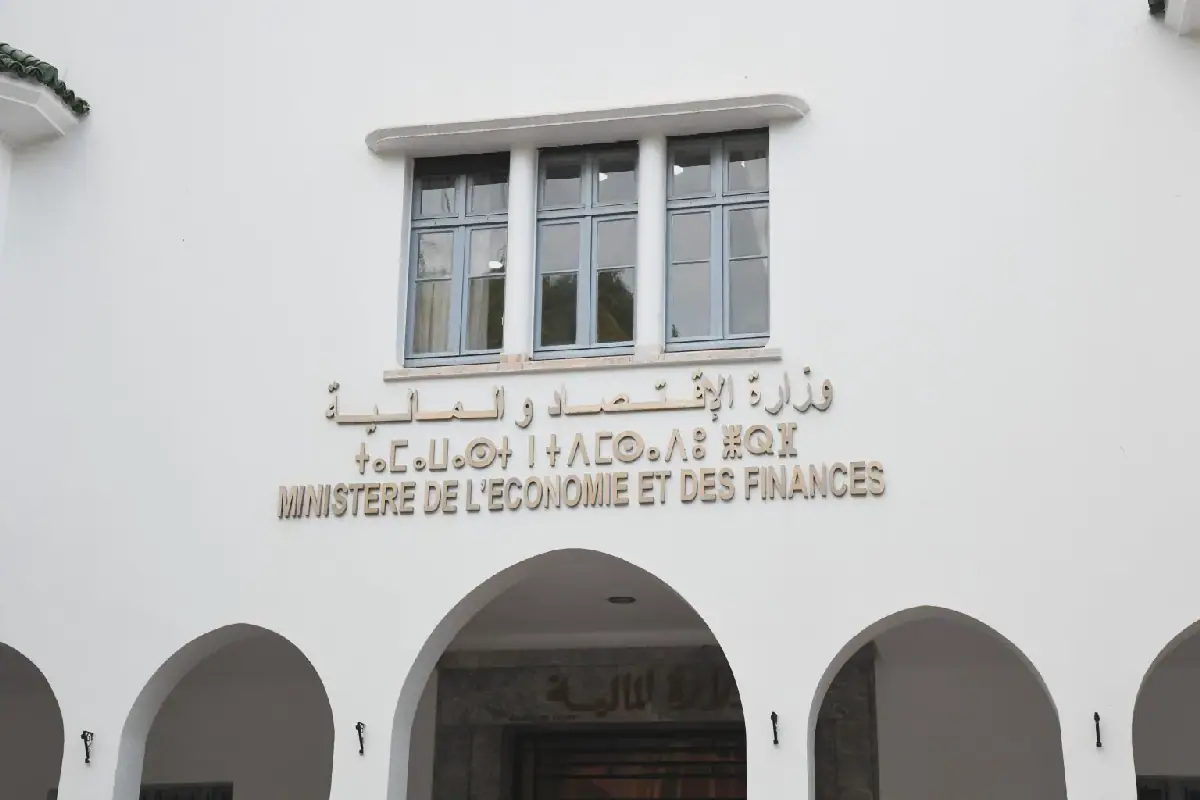
Morocco's Ministry of Economy and Finance reported a 13% decline in the budget deficit to 46.7 billion dirhams as of October 2026, compared to 60.3 billion dirhams in the same period last year. This decrease was primarily due to a significant rise in ordinary revenues. The government's efforts to improve revenue collection and control expenditures have contributed to this positive trend.
The ministry's data showed that ordinary revenues increased by 30.6 billion dirhams, outpacing the growth in total expenditures, which rose by 17.1 billion dirhams. This was largely driven by a 32.8 billion dirham increase in tax revenues, representing an 11.7% growth rate. As of October 2026, tax revenue collection reached 85.6% of the 2026 finance law projections.
Non-tax revenues, however, declined by 2.5 billion dirhams to 46.9 billion dirhams as of October 2026. This decrease was mainly attributed to lower revenues from public enterprises and companies, which totaled 17 billion dirhams. Key contributors to these revenues included the Office Chérifien des Phosphates (OCP) with 6.2 billion dirhams, Bank Al-Maghrib with 4.5 billion dirhams, and the National Agency for Land Conservation, Cadastre, and Cartography with 4 billion dirhams.
On the expenditure side, ordinary expenditures rose by 26.2 billion dirhams to 324.2 billion dirhams as of October 2026. This increase was primarily driven by higher spending on goods and services, as well as interest on debt and compensation payments. Despite this growth, the government's investment spending continued to rise, reaching 89.1 billion dirhams, up by 2.9 billion dirhams from the previous year.
The Treasury's special accounts also showed a significant improvement, posting a surplus of 1.8 billion dirhams as of October 2026, compared to a deficit of 10.2 billion dirhams in the same period last year. This represents an improvement of 12.1 billion dirhams. The government's efforts to enhance revenue collection and manage expenditures have contributed to this positive trend in the special accounts.
The improvement in Morocco's budget deficit is a welcome sign for the country's economic prospects. The government's focus on increasing revenue collection and controlling expenditures has helped to mitigate the impact of external challenges. However, the country still faces significant economic challenges, including high unemployment and inflation rates.
The Ministry of Economy and Finance will likely continue to implement measures aimed at consolidating the budget and promoting sustainable economic growth. These efforts are crucial to maintaining macroeconomic stability and improving living standards for Moroccans. The government must balance the need for fiscal discipline with the need to invest in key sectors, such as education, healthcare, and infrastructure.
Key points
- Morocco's budget deficit decreased by 13% to 46.7 billion dirhams as of October 2026.
- Ordinary revenues increased by 30.6 billion dirhams, driven by a 32.8 billion dirham rise in tax revenues.
- The government's investment spending rose to 89.1 billion dirhams, up by 2.9 billion dirhams from the previous year.
Reporting sources
- هكذا صمدت الميزانية رغم “المقاصة” وتراجع تحويلات مقاولات الدولة · Al Ahdath Al Maghribia