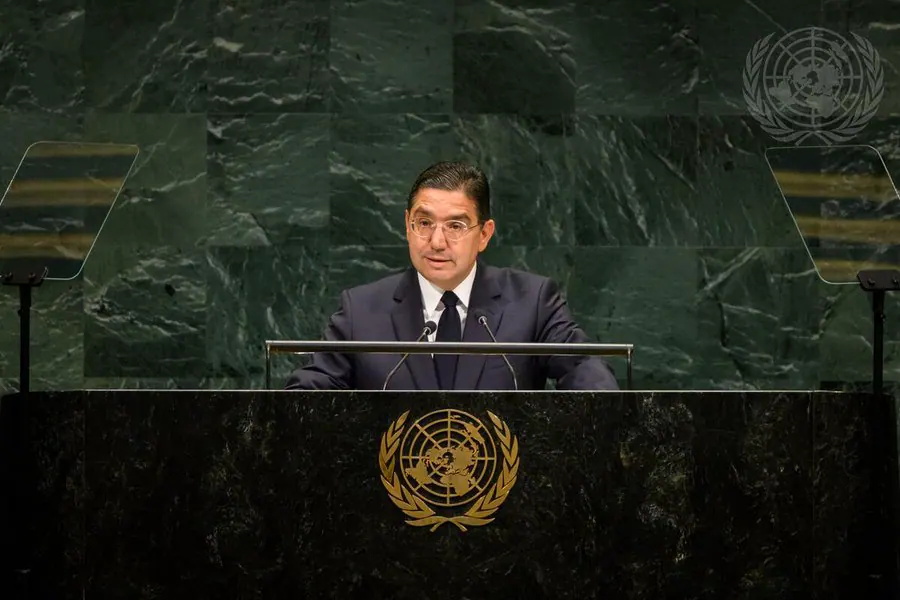
Morocco's Foreign Minister Nasser Bourita has emphasized the need for stronger national and continental support to prevent conflicts in Africa. He made these remarks during a ministerial meeting organized by Egypt, Kenya, the United Nations, and the African Union on national peace infrastructures. The meeting took place amid growing security challenges across Africa, with conflicts increasingly crossing national borders and involving armed groups, terrorist organizations, and transnational criminal networks.
According to the African Union, more than 45 million people were forcibly displaced across Africa by the end of 2025. Bourita pointed to emerging risks linked to new technologies, particularly artificial intelligence, saying that insufficient regulation could contribute to the spread of disinformation, hate speech, and tensions. He recalled a message from King Mohammed VI at the 29th African Union Summit in 2017, in which the king called on the African Union to transform its approach to address emerging threats on the continent.
Bourita stressed that effective conflict prevention depends primarily on national ownership, strong institutions, and responses adapted to the circumstances of each country. He said national peace infrastructures should be firmly anchored in national institutions and designed to strengthen early warning, inclusive dialogue, and mediation. This approach, he emphasized, would enable African countries to anticipate crises, address their underlying causes, and intervene before tensions develop into conflicts.
The minister highlighted the importance of coordination between states, the African Union, Regional Economic Communities, and the United Nations. He added that such coordination must remain firmly anchored in the principles of the UN Charter and the AU Constitutive Act, including the peaceful settlement of disputes, sovereignty, territorial integrity, non-interference, and good-neighborliness. This, he said, would ensure a cohesive and effective approach to conflict prevention.
Bourita also emphasized that the priority is not to create more structures, but to better coordinate the work of existing institutions. He said international partnerships should support national priorities and strengthen existing capacities rather than replace national institutions. This approach, he stressed, would enable African countries to develop robust and sustainable conflict prevention mechanisms.
The ministerial meeting was organized to discuss ways to strengthen national peace infrastructures and prevent conflicts in Africa. The meeting brought together representatives from various countries and international organizations to share experiences and best practices in conflict prevention. The discussions focused on the need for a collective and coordinated approach to addressing emerging security challenges in Africa.
In conclusion, Bourita's call for stronger African action to prevent conflicts highlights the need for a proactive and coordinated approach to addressing emerging security challenges on the continent. The emphasis on national ownership, strong institutions, and coordination between existing institutions provides a framework for effective conflict prevention. By working together, African countries can develop robust mechanisms to anticipate and address emerging crises, reducing the risk of conflicts and promoting peace and stability.
Key points
- Morocco's Foreign Minister Nasser Bourita calls for stronger African action to prevent conflicts.
- Effective conflict prevention depends on national ownership, strong institutions, and responses adapted to each country's circumstances.
- Coordination between states, the African Union, and international organizations is crucial for a cohesive and effective approach to conflict prevention.